

Dog Incontinence: The Sleeping Leak, the Spay Connection, and the Never-Punish Rule

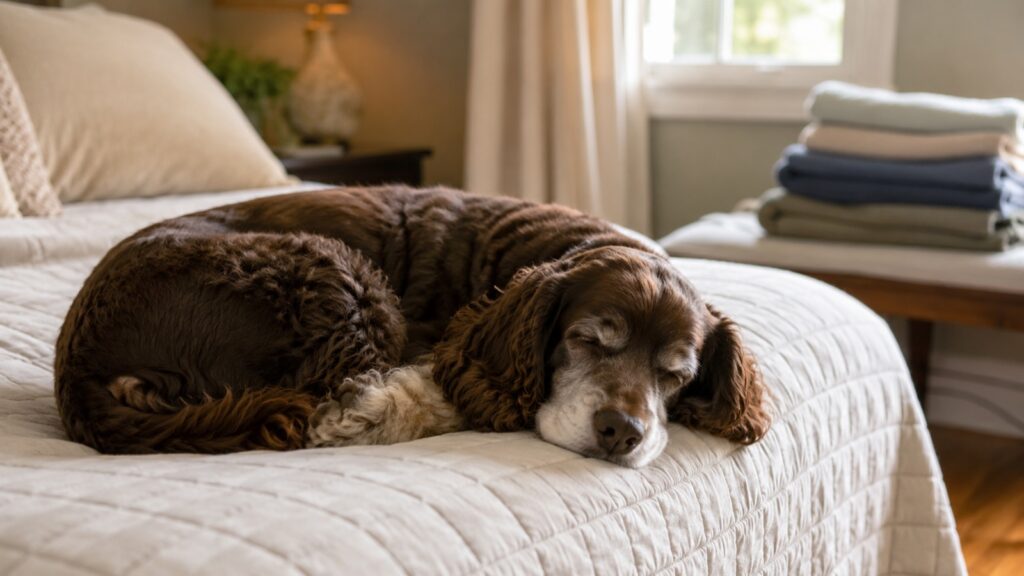
It usually announces itself as a damp circle where she was sleeping: a housetrained dog of many faultless years, leaking without waking. Start with the sentence that reframes everything: incontinence is a plumbing problem, not a training failure. She is not doing anything; something is failing to hold. And the most common version (the middle-aged spayed female’s sleeping leak) responds well to prescription medication in most cases once the diagnosis is right. Here is the sorting, the fixes, and the home playbook that protects both the mattress and the dignity.
Quick answer
True incontinence is urine leaking the dog does not control, classically while asleep or lying down. Urinating in the wrong place while awake is a different problem with its own causes: urgency, more urine being made, pain, mobility trouble, or cognitive decline (the sorting below). A common cause, and the classic one in adult spayed females, is urethral sphincter weakness (USMI – “spay incontinence”), where hormonal and anatomical changes weaken the valve years after surgery; most affected dogs respond well to prescription medication that supports the valve.
Other causes the vet visit sorts: urinary infections (the great mimic), the drinking-more diseases (kidney disease, Cushings, diabetes; extra volume overwhelming the system), bladder stones, prostate disease, anatomical problems, and neurological issues.
The rules while you sort it: never punish (she cannot help it and the shame is real), see the vet within a few days (a urine test is usually step one), urgently if she is straining, in pain, vomiting, very weak, or producing little or no urine, and run the home playbook: washable bedding, more pee opportunities, and your vet’s advice on a pet-safe skin protectant if the skin gets urine-scalded.
Leak or accident? The fork that picks the page
The two problems can look identical on the floor: the LEAK (wet bedding where she slept, drips while walking or rising, dampness on the back legs, a dog unaware it happened) is this page: involuntary and medical.
The ACCIDENT is a full urination in the wrong place from a dog who walked there and squatted; it can come from urgency, volume, pain, mobility, or memory, not defiance. It runs a different list: the senior workup for new drinking-and-volume diseases, the cognitive checklist when a gray-muzzled dog seems to have forgotten the rules themselves (lost housetraining is a core dementia flag), mobility trouble that makes the yard too far (the setup guide), and anxiety stories.
The overlap note: the drinking-more diseases can produce BOTH (volume overwhelms a normal valve), which is why the workup starts with history, exam, and urine testing, often plus the water-intake measurement our senior guides teach when drinking-more is suspected. And the rule that outranks all sorting: never punish either version. The leak is involuntary; the senior accident is medical until proven otherwise; and punishment adds fear to a dog already troubled by her own body; it is the one response that makes every cause worse.
The spay connection, the fixes that work, and the home playbook
USMI – the headline cause
In a meaningful share of spayed females (larger breeds overrepresented, onset typically years after the spay in middle age), hormonal and anatomical changes reduce the urethral valve’s closing pressure, so leaks show up when she is relaxed or deeply asleep, and the bed tells the story.
It is nobody’s fault and not, by itself, an argument against spaying. Timing and benefits are individual decisions, and the mammary-tumor side of that ledger is part of the same conversation. And it is the most satisfying diagnosis on this page because the medication genuinely helps most dogs: phenylpropanolamine-class drugs support the valve’s tone (response and side effects vary, which is why blood-pressure checks ride along on the monitoring), and estrogen-replacement approaches offer a second lane, with the two sometimes combined in stubborn cases: all prescription, all titrated by your vet, none of it from this page per the house rules.
For the minority that medication cannot hold, referral options exist (collagen injections at the valve, surgical procedures); worth knowing the ladder has more rungs. The rest of the list gets found by the workup: urine testing and treatment for infection, imaging for stones, bloodwork (the senior panel) for the drinking-more diseases, prostate and anatomical checks where the signs point there, and a neurological exam when leaking comes with hind-end weakness (the IVDD picture); that combination moves fast.
The home playbook while treatment lands: washable waterproof bed covers (buy two: one on, one in the wash), more frequent pee opportunities including last-thing-at-night, free water unless your vet directs otherwise (restricting it concentrates urine, risks dehydration, and can hide the increased thirst the workup needs to see), gentle cleaning for urine-damp skin, with your vet’s advice on a pet-safe skin protectant if scald starts, and belly bands or dog diapers used honestly, as bridge and backup during treatment, checked and changed often, never as a substitute for the diagnosis. Most of these stories end quietly: the right prescription, a dry bed.
When to see your veterinarian
Within a few days for any new leaking, and call ahead about a urine sample (the clinic will say whether they want one and how to collect and store it). PROMPTLY for leaking plus drinking-more, blood in the urine, or new leaking in a male dog. URGENTLY (same day, emergency if after hours) for repeated straining that produces little or no urine (especially in a male; a blocked urethra is life-threatening), pain, vomiting, marked weakness, or leaking with hind-end weakness or wobbling.
References and further reading
- Merck Veterinary Manual. Urinary incontinence in dogs.
- VCA Animal Hospitals. Urinary incontinence in dogs.
Frequently asked questions
Why does my spayed female dog leak urine while sleeping?
The classic USMI story: hormonal and anatomical changes after spaying can reduce the urethral valve’s closing pressure, so leaks appear when she is relaxed or deeply asleep; onset typically years later, larger breeds most often. The reframe that matters: it is plumbing, not behavior, and most dogs respond well to prescription treatment.
What can the vet give a dog for incontinence?
For valve weakness: phenylpropanolamine-class medication that supports sphincter tone, or estrogen-replacement approaches: prescription, titrated, monitored, and effective for many dogs. The workup first though: infections, stones, and the drinking-more diseases all impersonate a weak valve and need their own fixes.
Should I restrict my dog’s water to stop the leaking?
Not on your own: restricting water concentrates urine, risks dehydration, and can hide the increased thirst the workup needs to see. Keep water available unless your veterinarian gives different instructions, and manage the output with medicine, opportunity, and washable bedding.
Are dog diapers a good solution for incontinence?
As a bridge and a backup, honestly useful during diagnosis and while medication takes hold, changed often with skin checks (urine scald is real). As a substitute for the vet visit – no. Many dogs (USMI cases especially) respond well to medication, but infections, stones, anatomical problems, and neurological disease need their own treatment: a diaper over any of them just hides the clock.
Educational content, not a substitute for veterinary advice. If your dog seems unwell, contact your veterinarian.
This guide is educational and is not a substitute for veterinary diagnosis or care. If you are worried about your dog, talk to your veterinarian.