

Dog Surgery Recovery: A Surgeon’s Guide to Spays, Neuters, and Every Incision After

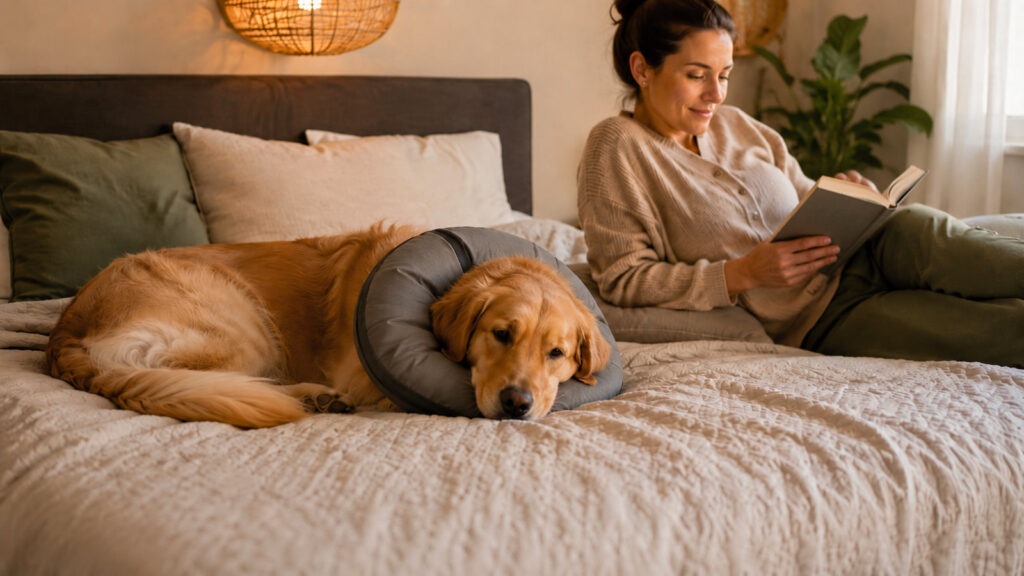
Every year millions of dogs come home from surgery (spays and neuters above all, dentals and lump removals close behind) into the care of owners handed a discharge sheet and a cone. The recovery is where surgical outcomes are actually won or lost: the operating room’s work may take an hour; protecting it can take weeks of yours. This is the guide from the surgical side of the table: the rules that matter most, how to read the incision, how to keep tongues off it, and the short list that means call now.
Quick answer
Your surgeon’s discharge instructions outrank everything on this page: they know the procedure. The usual shape: 10-14 days of genuine activity restriction (leash-only potty trips, no running-jumping-stairs-play; the incision’s internal layers heal slower than the skin lies), the incision stays DRY (no baths, no swimming, no licking, with a barrier your surgical team approves, worn honestly), and a daily incision check (photograph day one, compare daily). Normal healing: clean edges, mild pink, a little firmness, bruising in pale dogs.
Call the clinic for: spreading redness, discharge or smell, a gap in the edges, a lump swelling under the incision, worsening lethargy, repeated vomiting, inability to stand, or difficulty waking your dog.
A routine spay is abdominal surgery; the full two weeks matters. A routine neuter is usually lighter, though the exact procedure and any complications change the plan. Many seniors recover well; their health, the procedure, and honest pre-op screening all shape the arc.
The two-week rule – and why the incision lies to you
Skin closes fast and photographs well: by day five most incisions look done, which is exactly when owners relax and dogs tear internal sutures. The truth from the surgical side: an incision heals in layers. The skin can look closed while the deeper layers (the abdominal wall a spay opened, the tissue a lump removal crossed) are still rebuilding strength over weeks. At day five that tidy-looking spay is holding at a fraction of full strength, and one counter-jump can undo the repair.
Hence the non-negotiables: leash-only bathroom trips (yes, even the fenced yard; zoomies do not schedule appointments), no stairs at speed, no couch launches, no play with housemate dogs (the other dog does not know about the sutures), and for the athletes who cannot settle, ask your vet whether prescribed calming support makes sense (our calm-support guide explains that conversation); it beats a torn closure every time. The restriction ends when your VET says – not when the incision photographs well.
Reading the incision like the professional who checks it
- Day one, photograph it: good light, same angle daily after. Daily photographs make changes easy to notice and share.
- Normal: edges closed neatly together, mild pink, slight firmness along the line (healing ridge, expected and good), light bruising (dramatic-looking in pale-skinned dogs and usually fine), and a very small amount of clear-to-pink seep right after surgery; continuing discharge gets reported.
- Call-the-clinic: redness SPREADING beyond the line, any discharge past day one (especially yellow-green or smelly), edges gapping, more than a few drops of blood, or heat over the site.
- Call-now: a soft swelling growing under the incision (fluid pocket, bleeding, infection, or a deeper closure problem; the clinic’s exam makes that call, especially on spays), the incision opening, blood that keeps coming, or a dog flat, refusing food, or vomiting past the first anesthesia-hangover day.
- The neuter footnote: some scrotal bruising and swelling on day two is a common surprise after a neuter. It still gets the daily photograph, and marked pain, active bleeding, or a scrotum that keeps enlarging gets the call.
The cone conversation, honestly
One lick can undo an incision (tongues are sandpaper with bacteria), so the barrier is not optional; the FORM is negotiable. The classic cone works, and most dogs adjust faster than owners expect. But a dog who stays distressed in it, will not eat or drink, or seems painful needs a call, not endurance.
The alternatives that can work, matched to dog and incision site and cleared by your surgical team for YOUR incision: inflatable donut collars (comfortable, sleep-friendly – but measure honestly: long-nosed dogs can reach around small ones), surgical recovery suits (excellent for belly incisions, spays especially; useless for leg sites), and soft-fabric cones (gentler and floppier; some determined dogs fold them).
The alternatives that fail: bandanas, socks-on-paws for body incisions, and supervision alone (no one watches at 3 a.m.). The rule: whatever barrier you choose, it works FULL-TIME until the recheck: a cone worn 90 percent of the time protects 90 percent of an incision, which is not how incisions work.
The recovery timeline, day by honest day
Day 0-1: The anesthesia hangover: wobbly, sleepy, maybe whimpery or clingy, small appetite (feed per the discharge instructions; smaller is fine), a skipped stool can be normal. Warm quiet spot, water available, other pets managed away. Repeated vomiting, inability to stand, or a dog who cannot be roused is not a hangover – call.
Day 2-3: your dog feels dramatically better than the incision is. The danger window opens; hold the line. Appetite and personality return; report their absence.
Day 4-10: the boring middle where compliance wins outcomes: leash trips, incision photos, cone diplomacy, and mental enrichment as the exercise substitute: food puzzles and sniff-games spend energy the leash restriction banks.
Day 10-14: the recheck, suture or staple removal if placed, and the vet’s actual green light, after which activity returns GRADUALLY over another week, not in one celebratory fetch marathon.
Seniors: the same arc with honest additions: pre-op bloodwork and the anesthesia conversation our dental guide covers, sometimes slower to shake the hangover, though sedation or weakness that worsens or fails to improve as the team expects gets reported, not blamed on age, plus traction paths (the setup guide) doing double duty for a wobbly first night.
Call now – not at the recheck – if
The incision opens or gaps, anything protrudes (cover with a clean damp cloth and go – now), a swelling under the site grows, bleeding restarts or discharge turns colored or smelly, your dog vomits repeatedly or cannot keep water down (any day), is flat or refusing food, gums go pale, or breathing changes. And call for the small stuff too: post-surgical questions are the calls clinics genuinely want.
References and further reading
Frequently asked questions
How long does a dog spay take to heal?
Skin: 10-14 days to the recheck. The abdominal wall underneath: weeks longer to full strength, which is why the activity restriction is the whole treatment and why day-five friskiness is the danger window, not the finish line. Gradual return after the vet’s green light.
When can my dog jump on the couch after being spayed?
After the recheck clears it (typically past day 10-14), and gradually even then. The couch launch is precisely the move internal sutures fear most; ramps or lifted access (or a fortnight of floor-level cuddles) bridge the gap.
What does an infected spay incision look like?
Spreading redness beyond the line, yellow-green or smelly discharge, heat, growing swelling, gapping edges, or a dog going flat, versus normal healing’s clean edges, mild pink, slight ridge, and fading bruise. Photograph daily from day one and the difference announces itself; send the photo with the call.
Can my dog sleep without the cone?
Not unless your surgical team has specifically said it is safe; nights are when licking happens unsupervised. If the hard cone ruins sleep, an inflatable donut or recovery suit worn full-time beats a cone worn part-time: the barrier only counts when it is always on.
Educational content, not a substitute for veterinary advice. Follow your surgeon’s discharge instructions: they know your dog’s specific procedure.
This guide is educational and is not a substitute for veterinary diagnosis or care. If you are worried about your dog, talk to your veterinarian.