

Vestibular Disease in Dogs: Suddenly Wobbly, Off Balance, and Usually Better Soon

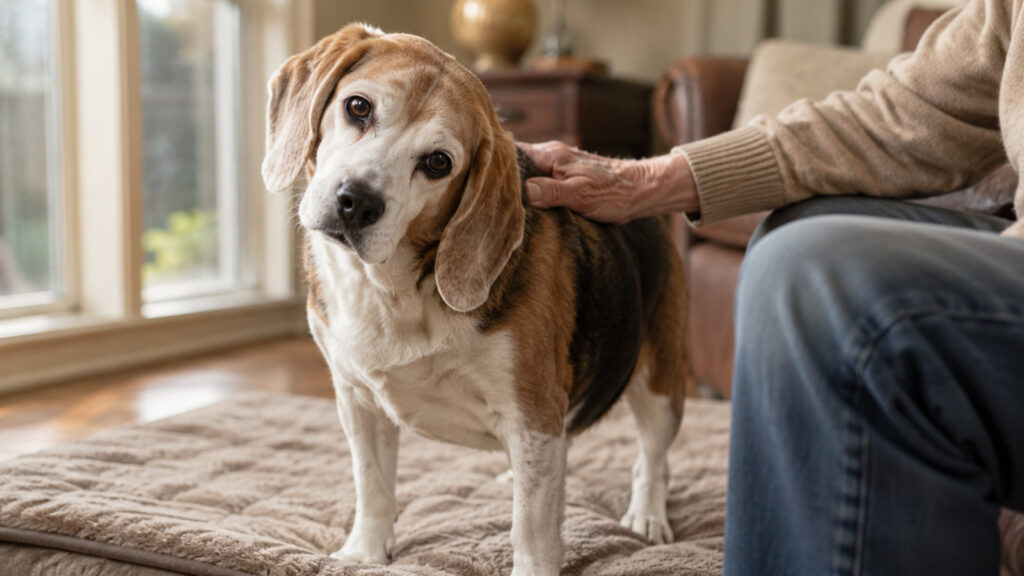
It is one of the most frightening things a dog owner ever sees: your older dog suddenly cannot stand without tipping over, the head is tilted hard to one side, the eyes are flicking back and forth, and they may be drooling or vomiting. Most owners think stroke, and many think it is the end. Here is the thing to hold onto: the most common cause looks exactly this dramatic and usually starts improving within three days.
Quick answer
Sudden loss of balance, a head tilt, circling, and rapid eye flicking in an older dog is most often idiopathic vestibular disease – “old dog vestibular disease” – a disturbance of the inner-ear balance system. It is not usually a stroke, it is rarely painful, and most dogs improve noticeably within 72 hours and are close to normal in one to three weeks. It still needs a vet visit the same day, because an inner-ear infection and some serious causes look identical at the start.
My dog is wobbly and off balance all of a sudden – the signs
Vestibular disease switches on fast, often over minutes to hours. The classic picture: a head tilt held to one side, stumbling or falling toward that side, walking in circles that curve the same way, eyes that flick rhythmically (your vet will call this nystagmus), and the nausea that comes from a world that will not stop spinning – drooling, refusing food, vomiting. Some dogs cannot stand at all on the first day. The signs are terrifying to watch precisely because the balance system fails all at once, but the dog is generally not in pain – disoriented and seasick, not hurting.
Is it a stroke?
That is almost always the first question, and it is the right one to ask a vet rather than decide at home. True strokes are less common in dogs than people assume, and the “old dog vestibular” picture – sudden head tilt, circling, eye flicking in a senior who is otherwise mentally present – is far more often the inner-ear version. The honest distinction requires an exam: your vet checks whether the signs map to the inner ear or to the brain itself, looks in the ears, and reviews the rest of the nervous system. Same-day is the right urgency: not because most cases are dire, but because the treatable look-alikes – a middle or inner ear infection above all – should not wait.
What recovery usually looks like
| Timeframe | What typically happens |
|---|---|
| First 24 to 48 hours | The worst of it: balance at its poorest, nausea, little appetite; many dogs need help standing |
| By about 72 hours | Clear improvement begins – steadier steps, eye flicking slows or stops, interest in food returns |
| One to three weeks | Most dogs are back to normal or very close to it |
| Long term | A mild head tilt persists in some dogs – harmless, and most adapt completely |
The 72-hour mark matters for another reason: a dog who shows no improvement by then does not fit the idiopathic pattern, and that is exactly the signal your vet uses to look deeper for the less common causes.
How you can help at home
- Make a padded, low camp. A ground-floor rest area with rugs or yoga mats for footing, away from stairs. Block access to drops and hard corners.
- Help with the mechanics. Support walks for potty trips (a towel under the belly works as a sling), food and water within easy reach, hand-feeding if the nausea allows.
- Ask about anti-nausea medication. The seasickness is the worst part for most dogs; your vet can treat it, and eating usually follows.
- Keep the world steady. Same room, same routine, night light on – a spinning world is easier to relearn when nothing else moves.
- Do not carry everywhere. Once your vet confirms the diagnosis, gentle assisted movement helps the brain recalibrate faster than total rest.
See a vet the same day – and urgently if
Every sudden balance loss deserves a same-day exam. Treat it as an emergency if your dog cannot stand at all after resting, has a seizure, seems unaware of you, has been unwell for days beforehand, or shows no improvement at all by 72 hours. And if the signs came with a known ear infection, say so – the treatment path changes.
What the vet will do
Expect a neurological exam (watching the eyes, the stance, the reflexes), a good look in both ears, and often bloodwork to check the background health of a senior dog. If everything points to the idiopathic version, treatment is supportive: anti-nausea medication, help with hydration and footing, and time. If an ear infection is found, treating it treats the balance problem. Imaging enters the conversation only when the pattern does not fit – no improvement, recurring episodes, or signs that point past the inner ear. Idiopathic means no specific cause is found after the exam points away from ear infection, toxins, trauma, and brain disease – it is a diagnosis of exclusion, not a guess made from the doorway.
References and further reading
- VCA Animal Hospitals. Vestibular disease in dogs.
- PetMD. Vestibular disease in dogs.
- Veterinary Partner (VIN). Vestibular disease in dogs and cats.
Frequently asked questions
Why is my old dog suddenly off balance and falling over?
The most common cause in seniors is idiopathic vestibular disease – a sudden disturbance of the inner-ear balance system that causes a head tilt, circling, eye flicking, and nausea. It usually improves within 72 hours, but it needs a same-day vet visit to rule out ear infection and other causes that look the same.
How long does old dog vestibular disease last?
The worst is over in the first two to three days, and most dogs are normal or nearly normal within one to three weeks. A mild permanent head tilt is common and harmless.
Is vestibular disease in dogs painful?
Generally no – it is disorienting rather than painful. The misery mostly comes from the motion-sickness nausea, which your vet can treat.
Can vestibular disease in dogs come back?
It can recur in some dogs. A repeat episode is worth mentioning to your vet, and frequent recurrences are one of the signals to look deeper than the idiopathic diagnosis.
Educational content, not a substitute for veterinary advice. If your dog seems unwell, contact your veterinarian.
This guide is educational and is not a substitute for veterinary diagnosis or care. If you are worried about your dog, talk to your veterinarian.