

When Is a Dog a Senior? The Age Chart by Size

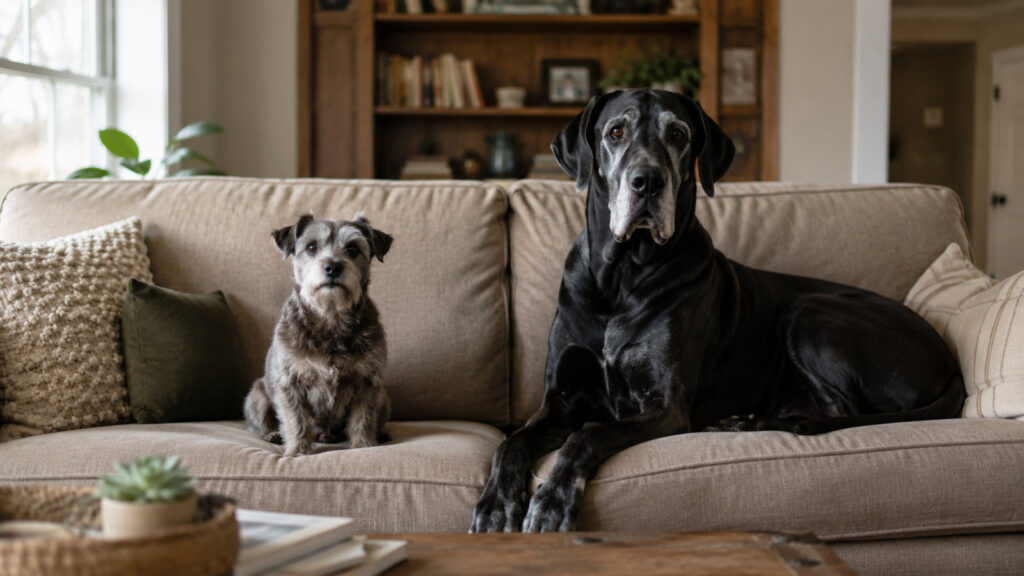
“Is my dog a senior yet?” has a better answer than a single number, because dogs age on different clocks. A Yorkie at seven is solidly middle-aged; a Great Dane at seven is elderly. The line that matters is not a birthday but a fraction: veterinary guidelines define the senior years as roughly the last 25 percent of a dog’s expected lifespan – which is why the answer slides with size.
Quick answer
By the AAHA definition – the last quarter of expected lifespan – small breeds become seniors around age 10, medium breeds around 9, large breeds around 7, and giant breeds around 6. Crossing the line changes practical things: twice-yearly vet visits, senior bloodwork, closer attention to weight, joints, teeth, thirst, and behavior. It is a stage of life, not a diagnosis – many dogs live a third of their lives as seniors, and live them well.
The age chart, by size
| Size class | Typical lifespan | Senior begins around | Geriatric around |
|---|---|---|---|
| Toy and small (under 20 lb) | 13-16 years | 10 | 13 |
| Medium (20-50 lb) | 12-14 years | 9 | 12 |
| Large (50-90 lb) | 10-12 years | 7 | 10 |
| Giant (over 90 lb) | 6-10 years | 6 | 8 |
Two notes on reading it honestly. These are population averages – your dog’s genetics, weight history, and luck all move the line. And “geriatric” is not a grim word; it is the stage where checkups matter most and where small interventions buy the most comfort.
Why big dogs age faster
It is one of biology’s stranger deals: across species, larger animals usually live longer – elephants outlast mice – but within dogs, the giants age fastest. Rapid growth and higher rates of age-related disease shorten the big breeds’ clocks, and the practical consequence is the one that matters here: a Bernese Mountain Dog needs senior-level veterinary attention at an age when a Dachshund is still in its prime. If you own a large or giant breed, the senior conversation with your vet starts years earlier than most owners expect.
What actually changes at the senior line
Nothing about your dog changes on the birthday itself – what should change is the care rhythm:
- Vet visits go from yearly to twice-yearly. The five big senior conditions – joints, cognition, teeth, kidneys, heart – develop quietly, and six-month intervals improve the chance of catching them early enough to matter.
- Bloodwork gets a baseline. Senior panels establish what normal looks like for your dog, so next year’s drift is visible instead of invisible.
- Weight becomes a managed number. Extra pounds accelerate arthritis and strain the heart; the leaner senior is the more comfortable senior.
- You start watching the quiet signals. Thirst, appetite, sleep, stairs, breath, and behavior – each is a data stream now. The guides on slowing down, drinking more, and sleeping more cover what each change can mean.
- The home gets easier. Traction on hard floors, a ramp where the couch jump used to be, a warm draft-free bed.
The deeper version of this transition – including what Dr. Fossum did in her own Labrador’s senior years – is the whole point of her book, Senior Dogs: The Essential Guide.
When to involve your veterinarian
Book the first “senior wellness” visit when your dog crosses the age line for their size – and ask for a senior panel as a baseline. If your dog is already past the line and has not had bloodwork in over a year, that is the appointment to make this month.
References and further reading
- AAHA. 2023 Senior Care Guidelines for Dogs and Cats.
- Fossum TW, Ford S. Senior Dogs: The Essential Guide (2024).
Frequently asked questions
Is a 7-year-old dog a senior?
For large breeds, yes – and for giants, past it. For small breeds, seven is comfortably middle-aged. Size sets the clock; the last quarter of expected lifespan is the senior stage.
What is the difference between senior and geriatric?
Senior is the stage; geriatric is its later portion, when age-related conditions are most likely and care gets most attentive. The table above shows both lines by size.
Do senior dogs need different food?
Often, but by needs rather than label – weight management, joint support, or a condition-specific diet if kidneys or heart require it. Your vet can match the diet to the dog, which beats matching it to the word “senior” on a bag.
How can I slow my dog’s aging?
You cannot stop the clock, but you can change what the years contain: lean weight, daily gentle exercise, dental care, mental stimulation, and twice-yearly checkups that catch problems early. That combination is one of the most practical ways to protect a dog’s later years.
Educational content, not a substitute for veterinary advice. If your dog seems unwell, contact your veterinarian.
This guide is educational and is not a substitute for veterinary diagnosis or care. If you are worried about your dog, talk to your veterinarian.