

Old Dog Sleeping All Day: How Much Is Too Much?

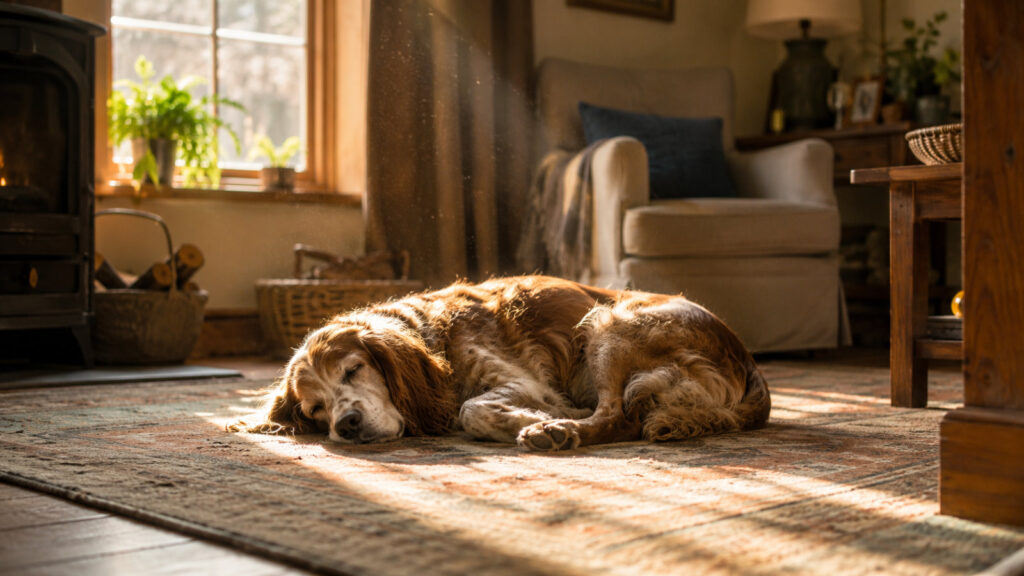
An old dog asleep in a sunbeam is one of the most peaceful sights a home can offer – and also, for many owners, a quiet worry: is this much sleep still normal? Most of the time, yes. Senior dogs genuinely need more sleep, and the afternoon nap schedule is aging working as designed. But there are patterns of sleep that are not rest, and knowing the difference is worth two minutes of your attention.
Quick answer
Senior dogs normally sleep 16 to 18 hours a day, naps included – several hours more than a young adult dog. It stops being normal when the total keeps climbing past that, when the pattern changes suddenly, when a dog sleeps through things they used to love, or when nights turn restless while days become unusually sleepy – that reversal points toward cognitive change. Gradual and content is aging; sudden, deeper, or flipped is a signal.
Why old dogs sleep more
Aging bodies do more of their maintenance during sleep – tissue repair, immune housekeeping, the brain filing its day – and they tire faster while awake. A senior also spends energy differently: the same walk costs more than it did at three years old, and the recovery takes longer. So the drift from 12-14 hours toward 16-18 is expected, and a senior who sleeps that much while still greeting you at the door, enjoying meals, and joining the household’s life is almost certainly fine. The key word is content.
Normal sleep versus a signal
| What you see | What it usually means |
|---|---|
| 16-18 hours with good energy awake | Normal senior sleep – especially if it crept up gradually over years |
| Sleeping through meals, walks, or greetings they used to love | Not rest – withdrawal. Pain, illness, and depression all look like this; vet visit |
| Total climbing past ~18 hours, or a sudden jump over weeks | The pace is the problem; sudden change is a medical pattern, not an aging one |
| Restless nights, pacing or vocalizing after dark, then sleeping all day | The day-night reversal – a classic sign of canine cognitive dysfunction; see sundowning and night care |
| Hard to rouse, disoriented on waking, or “sleep” that looks like collapse | Urgent – that is not sleep |
The reversal deserves its own paragraph
The pattern owners most often misread is the flip: a dog who paces, pants, or wanders at 2am and then sleeps the entire day. The daytime half looks like this page’s topic – “he sleeps all day” – but the night half is the real story. Day-night reversal is one of the recognizable signs of canine cognitive dysfunction, and it responds best to early management. If your senior’s heavy day sleeping comes with restless nights, start with our dog dementia guide and its night-care page – and mention the pattern, in exactly those words, to your vet.
Helping a senior sleep well
Good senior sleep is mostly good senior care: real daytime activity (a sniffy morning walk does more for night sleep than any bed upgrade – see senior exercise), an orthopedic bed away from drafts and household traffic, a consistent evening routine, and a last bathroom trip before lights out. If stiffness makes settling hard – circling, repositioning, sighing before lying down – that is a comfort problem with solutions; our slowing down guide covers the joint side of restless nights.
When sleep needs your veterinarian
Book a visit for sudden increases in sleep, sleeping through meals or favorite events, night restlessness with day sleeping, or sleep paired with any other change – appetite, thirst, weight, breathing. Go urgently for a dog who is hard to wake, disoriented on waking, or whose breathing looks labored during rest.
References and further reading
- American Kennel Club. Can senior dogs sleep too much?
- PetMD. Should you worry if your older dog sleeps all day?
- Fossum TW, Ford S. Senior Dogs: The Essential Guide (2024).
Frequently asked questions
How many hours a day should an old dog sleep?
Around 16 to 18 hours including naps is normal for seniors. The number matters less than the trend and the waking hours: gradual and content is fine, sudden or withdrawn is not.
Why does my old dog sleep all day and stay up at night?
That reversal is a classic sign of canine cognitive dysfunction, especially with pacing, panting, or confusion after dark. It is worth a vet conversation and our dementia guide – early management can help many dogs.
Is my old dog sleeping too much or depressed?
The divider is engagement: a healthy sleeper still lights up for meals, walks, and you. Sleeping through the things they loved suggests pain, illness, or low mood – all vet-visit territory, all addressable.
Should I wake my senior dog during the day?
Not from normal naps – but do structure the day with gentle activity, sniff walks, and mealtime rhythm. A well-exercised senior sleeps deeper at night, which protects everyone’s sleep, including yours.
Educational content, not a substitute for veterinary advice. If your dog seems unwell, contact your veterinarian.
This guide is educational and is not a substitute for veterinary diagnosis or care. If you are worried about your dog, talk to your veterinarian.