

Senior Dog Care: The Complete Guide

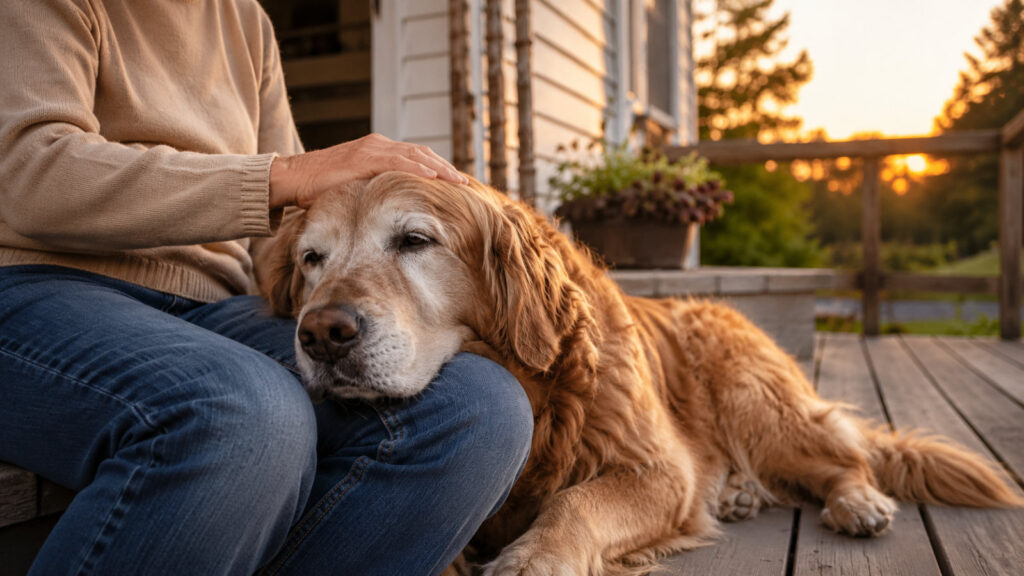
Dr. Fossum wrote a whole book about senior dogs for one reason she puts plainly in its preface: “we too have a senior dog that we love.” This guide distills that book – and everything our veterinary library covers – into one place: when the senior years actually begin, the five health conditions that account for most of what goes wrong, and the habits that give an old dog the longest, most comfortable last chapter possible. Nearly half the dogs in America are seniors. If yours is one of them, you are in the right place, and you have plenty of company.
Quick answer
A dog becomes a senior in roughly the last quarter of their expected lifespan – around age 10 for small breeds, 9 for medium, 7 for large, and 6 for giant breeds. Five conditions account for many of the senior health problems owners notice: osteoarthritis, cognitive decline, dental disease, kidney disease, and heart disease. The care plan that changes outcomes is unglamorous: twice-yearly vet checkups, weight management, gentle daily exercise, mental stimulation, and acting on small changes early instead of calling them “just old age.”
When do the senior years begin?
The honest answer is: it depends on size. Big dogs age faster than small ones, so “senior” arrives on a sliding scale – the American Animal Hospital Association defines it as the last 25 percent of a dog’s estimated lifespan. For a Chihuahua that may mean age 10 or later; for a Great Dane it can mean age 6. The full chart, and why it matters for scheduling care, lives in when is a dog a senior.
The five conditions that account for most senior trouble
The book is organized around five diseases because they are the ones that actually show up. Each has early signs owners routinely miss – and each is far more manageable caught early:
| Condition | Early signs owners miss | Where we cover it |
|---|---|---|
| Osteoarthritis | Stiff after rest, hesitating at stairs, shorter walks – read as “slowing down” | Old dog slowing down |
| Cognitive dysfunction (CCD) | Night restlessness, staring, getting “lost” in familiar rooms | The dog dementia guide |
| Dental disease | Breath written off as “dog breath,” reluctance to chew hard treats | Vet dental checks (guide coming) |
| Chronic kidney disease | Drinking more, urinating more, gradual weight loss | Kidney disease in older dogs |
| Heart disease | A cough, tiring on walks, breathing faster at rest | The dog heart health guide |
The care plan that actually moves the needle
Chapter by chapter, the book comes back to the same pillars – none of them expensive, all of them compounding:
- Twice-yearly veterinary checkups. Senior diseases develop gradually and quietly; six-month exams with age-appropriate bloodwork can catch them while they are still easier to manage. Early detection is one of the best gifts you can give a senior dog.
- A healthy weight. Obesity worsens nearly everything on the list above, and weight is the one risk factor entirely in your hands.
- Gentle, consistent exercise. Movement preserves muscle and joints; the couch accelerates their loss. The how is in senior dog exercise.
- Mental stimulation. Sniff walks, food puzzles, and training keep an aging brain engaged – the same enrichment that supports dogs with cognitive decline helps prevent boredom in every senior.
- A senior-friendly home. Traction on slick floors, ramps where jumps used to be, a warm bed away from drafts, food and water easy to reach.
- Acting on change. Eating less, drinking more, sleeping differently, slowing suddenly – each has its own guide below, and none of them is “just old age” until a vet has said so.
The changes owners ask about most
Four changes bring most owners to their vet – or to a search bar – and each has a dedicated guide: slowing down, panting and drinking more, not eating, and sleeping all day. And for the question that sits quietly behind all senior care – how to think about quality of life when the time comes to think about it – we wrote the kindest guide we could.
The full depth on every condition here – including Dr. Fossum’s personal recommendations from her own Labrador’s senior years – is in the book: Senior Dogs: The Essential Guide to Maximize Quality Time With Your Best Friend.
When to see your veterinarian
For a senior dog, twice a year even when everything seems fine – and promptly for any of the changes above that arrive suddenly or keep progressing. In senior medicine, “we caught it early” is the sentence that changes everything after it.
References and further reading
- Fossum TW, Ford S. Senior Dogs: The Essential Guide to Maximize Quality Time With Your Best Friend (2024).
- AAHA. 2023 Senior Care Guidelines for Dogs and Cats.
- Merck Veterinary Manual (dog owner editions).
Frequently asked questions
At what age is a dog considered a senior?
Roughly the last quarter of expected lifespan: around 10 for small breeds, 9 for medium, 7 for large, and 6 for giant breeds. Size drives the clock – big dogs age faster.
How often should a senior dog see the vet?
Twice a year, with age-appropriate bloodwork – senior conditions develop quietly, and six-month checks catch them at the treatable stage.
What are the most common health problems in older dogs?
Osteoarthritis, cognitive dysfunction, dental disease, chronic kidney disease, and heart disease – the five the book is built around. All are more manageable caught early.
What can I do at home to keep my senior dog healthy?
Keep weight in check, walk gently every day, feed the brain as well as the body, make the house easy on old joints, and treat any new change – appetite, thirst, sleep, energy – as information for your vet rather than “just age.”
Educational content, not a substitute for veterinary advice. If your dog seems unwell, contact your veterinarian.
This guide is educational and is not a substitute for veterinary diagnosis or care. If you are worried about your dog, talk to your veterinarian.