



Why should I buy Dr. Fossum’s Hemp/CBD Extract?
Dr. Fossum’s Pet Care is a company founded and managed by veterinarians. We employ numerous veterinarians and veterinary technicians. The 5 pillars of our company are to: 1) develop products based on science and perform research on those products to ascertain safety and efficacy, 2) educate veterinarians regarding the appropriate use of hemp-derived products in companion animals, 3) be compliant with all regulations and to go above and beyond current requirements for hemp-derived products, 4) always be transparent with pet owners and animal health workers regarding our products, and 5) be sustainable. We believe in One Health and recognize the interconnection between people, animals, plants, and their shared environment.
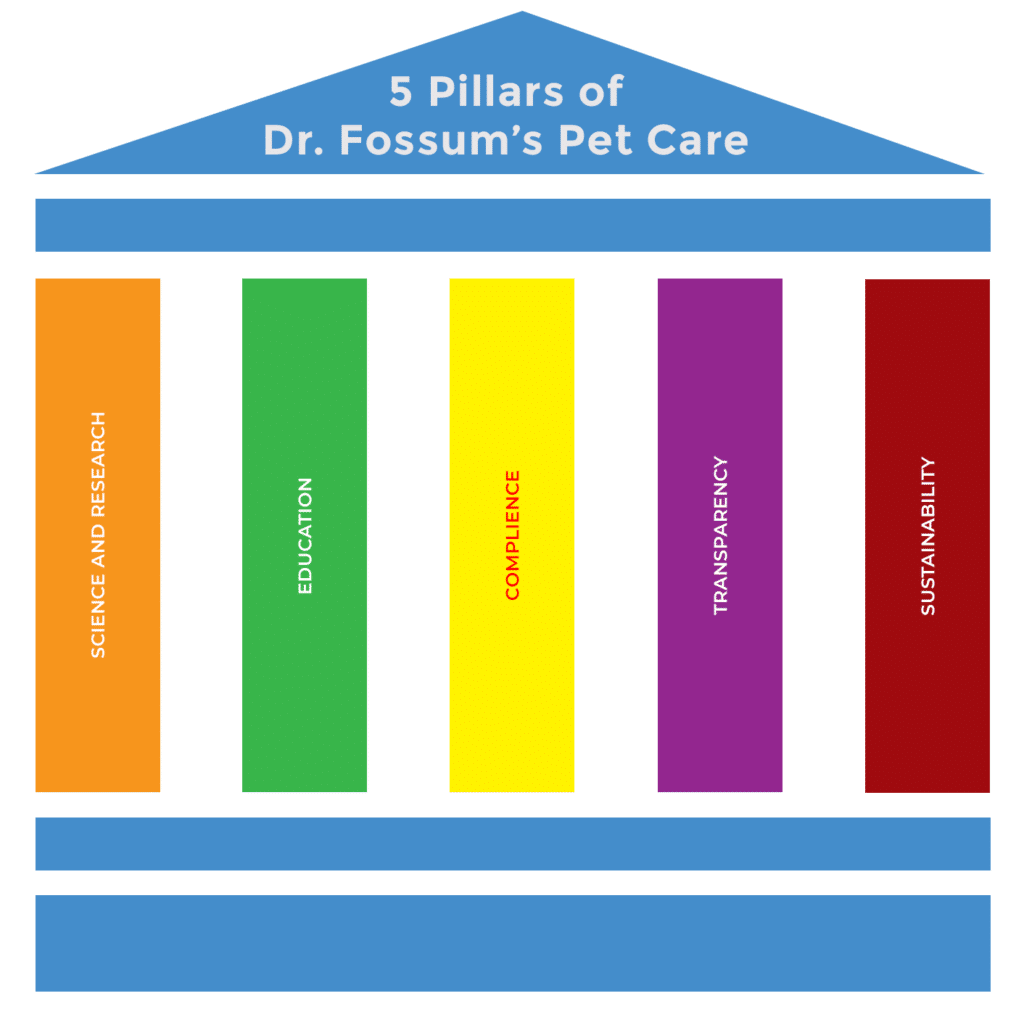
SCIENCE and RESEARCH – As veterinarians, we strive to ensure that our products are based on science and animal welfare. Dr. Fossum has many years of designing and executing clinical trials and we have devised our products to be reproducible and consistent from batch to batch.
EDUCATION – Dr. Fossum has given over 1000 global lectures on veterinary surgery and the use of hemp-derived products in companion animals. Education is part of what we do – it’s in our DNA. We will continue to work with the veterinary community to discover the bounty that the hemp plant offers.
COMPLIANCE – Another pillar of our company is compliance. Dr. Fossum’s Pet Care is an NASC Certified Supplier. We have passed an independent audit of our facilities by the National Animal Supplement Council and have earned permission to display the NASC Quality Seal. You can verify our current status on the NASC supplier listing. The NASC seal assures consumers that our product manufacturing facility has been audited and that Standard Operating Procedures (SOPs) are being followed. NASC also interacts with the FDA to ensure that companies they certify remain compliant. NASC requires real-time adverse event monitoring by it’s certified companies. Obtaining NASC certification is a rigorous, lengthy process that requires truth in labeling, third-party independent laboratory testing, and stability and shelf-life studies. We have contracted for stability and shelf-life studies by internationally recognized UL Laboratories. Stability and shelf-life studies are not required to sell our products, but we want you to be assured that our products remain stable and efficacious. UL Laboratories analyzes products for taste; smell; appearance; potency of active ingredients; chemical degradation; and chemical, biological, and microbial characteristics.
TRANSPARENCY – Our fourth pillar is transparency. You will notice on the box and label that we have a QR code. When you scan the code using your smartphone you will be taken to a page on our website that contains the Certificate of Analysis (COA) for that batch. Our raw materials are tested for potency and purity and are sourced from US companies. If you have questions about the science of hemp or how to use our products it is as easy as picking up the phone to speak to our support staff of veterinarians and veterinary technicians.
SUSTAINABILITY – The essence of the hemp plant is sustainability. Hemp plants can help mitigate our monoculture farming of wheat, corn, and soybeans. Our farmlands are becoming drier, which leads to soil erosion. The hemp plant is very fast growing and has a tap root that helps with soil stabilization. It uses 25% of the water that it takes to grow alfalfa. It can accumulate heavy metals like selenium, herbicides, and pesticides in its stalk and stems thereby cleaning the soil of these toxins. Hemp cultivation could be the best and most effective way to decrease atmospheric carbon dioxide. Plastic made from hemp is strong, non-toxic, and biodegradable. To produce the same amount of paper it takes four acres of timber as long as 20 years to grow, compared to one acre of hemp that takes 100 days to grow. Thus, in addition to benefiting from all of the benefits we can obtain from this amazing plant, we are also helping the environment!
Who is Dr. Theresa (Terry) Fossum?
Theresa (Terry) W. Fossum is the co-founder and CEO of Dr. Fossum’s Pet Care. She is a world-renowned board-certified veterinary surgeon, author of the best-selling textbook Small Animal Surgery (in its 5th edition), and a serial entrepreneur. Her background includes over 30 years of academic veterinary medicine. Terry grew up on a ranch in northern Idaho, where she developed her love of animals. She has won numerous awards for her teaching and research. Dr. Fossum has served as the principal investigator for millions of dollars in research funding from industry and the federal government. She has served as a Special Assistant to the Secretary of Energy and is the founder and former Director and Executive Director of the Texas A&M Institute for Preclinical Studies (TIPS), a 60-million-dollar venture at Texas A&M University which promotes public-private partnerships to speed the development of medical devices and drugs. She has over 100 publications, 5 books, and numerous book chapters to her credit and has been invited to lecture at over 1000 international veterinary meetings.

Why should I use hemp extract for my pet?
Interest in hemp extract for companion animals is growing, and CBD and CBG are being studied for their role in supporting normal function. Clinical research in dogs and cats is still limited and much of what is written is anecdotal, so weigh the potential benefits against the risks with your veterinarian. NASC members log adverse events in a shared database that the FDA can access, and reported events for hemp extracts have been rare, but a low reported rate does not replace your veterinarian’s judgment for your pet.
Why is NASC certification important?
National Animal Supplement Council (NASC) certification assures the consumer that the product manufacturing facility has been audited and that Standard Operating Procedures (SOPs) are in place. Obtaining NASC certification is a rigorous, lengthy process that requires truth in labeling, third party independent laboratory testing, and stability and shelf-life studies. NASC also interacts with the FDA to ensure that companies they certify remain compliant. NASC requires real-time adverse event monitoring by its certified companies.
Why are stability and shelf-life studies important?
UL, an internationally recognized safety science leader, is conducting our stability and shelf-life testing. The FDA in their GMP guidance does not require that supplements have an expiration date. Some supplements may have “best if used by date” on their product. To support this statement, they must have stability and shelf-life studies. This is not required to sell our products, but we want the consumer to be assured that our products remain stable and efficacious. UL analyzes products for taste, smell, appearance, potency of active ingredients, chemical degradation and chemical, biological, and microbial characteristics. We are seeking this information so that you may rest assured that our active ingredients remain active when you purchase and use our products.
Why should I use hemp extract for my pet?
Interest in hemp extract for companion animals is growing, and CBD and CBG are being studied for their role in supporting normal function. Clinical research in dogs and cats is still limited and much of what is written is anecdotal, so weigh the potential benefits against the risks with your veterinarian. NASC members log adverse events in a shared database that the FDA can access, and reported events for hemp extracts have been rare, but a low reported rate does not replace your veterinarian’s judgment for your pet.
How do you read a certificate of analysis (COA) and why is this important?
The cannabis plant has been used for phytoremediation (meaning it pulls heavy metals, pesticides, herbicides, and even radiation from the soil). The hemp plant does this because it has an extensive and deep root system. When the hemp plant pulls these toxic components from the soil they may accumulate and concentrate in the roots and stems of the plant. A certificate of analysis (COA) from a third-party laboratory is critical in that it will show if there are any toxins in the product you purchase.
The cannabis market is highly unregulated with new manufacturers entering the space daily. Not all manufacturers are honest and reputable. There was a study of online CBD companies in 2017 that showed 70% of these products are mislabeled and don’t contain the concentrations that are advertised. A COA from a third-party laboratory verifies the validity of what is being marketed. You should be able to access the report for the specific batch you purchased, not only from the manufacturer but also from the independent third-party laboratory. These laboratory reports will show the concentrations of the phytocannabinoids, such as the concentration of CBD and CBG. It will also verify that there is less than 0.3% THC which meets the federal definition of hemp (2018 Farm Bill). When using a nutraceutical with specific dosing by species and bodyweight it is imperative that the concentration of the bioactive (CBD) substance is accurate. Dr. Fossum’s Pet Care provides a QR code on our package that allows you to access third-party laboratory verification of the specific product that you are administering to your pet.
COA’s also provides an analysis of the terpenes present in the extract. In addition to showing if there is are contaminants such as heavy metals, pesticides, and herbicides, the COA also verifies that the product is free of biological contaminants, such as bacteria, molds, and fungi.
What does "full spectrum", "broad spectrum" and "isolate" mean and why is it important that I know the difference?
A full-spectrum extract contains all the compounds from the plant that naturally occur in it. This includes the cannabinoids (including CBD), terpenes, flavonoids, and essential oils. All these compounds work in concert to produce the “entourage effect”. Be aware that THC has not been removed from full-spectrum hemp extracts and could cause a positive drug test if enough oil is consumed,
Broad-spectrum is all the above except the THC has been removed to the extent that it is undetectable; thus, there is no psychoactive component to a broad spectrum extract that would get your pet “high”.
An isolate is the most refined product from the hemp plant. It is 99.5% pure single phytocannabinoid (CBD, CBG, CBN, or any of the hundred plus cannabinoids). Because it does not have the other cannabinoids, terpenes or flavonoids in it, it does not carry the “entourage effect” described below. While an isolate costs less than a full or broad-spectrum hemp extract, there is less demand for isolates in pet products.
What is the "entourage effect"?
The entourage effect is the idea that the compounds in the hemp plant (cannabinoids, minor cannabinoids, terpenes, flavonoids and lignans) behave differently together than each does on its own. It is a hypothesis with some laboratory support; it has not been tested in pets. We formulate with a broad-spectrum extract so those compounds stay together.
Why are dose response curves important?
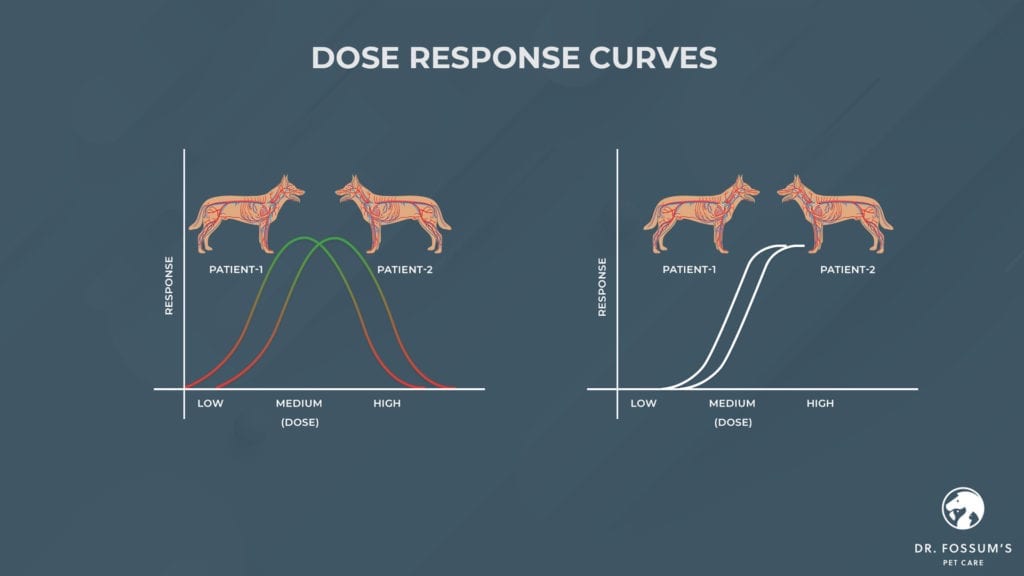
Dose-response research on CBD comes from laboratory and human studies. Gallily, Yekhtin and Hanuš (Pharmacology & Pharmacy, 2015) reported different dose-response shapes for pure CBD isolate and a whole-plant extract in mice. Because each animal absorbs and processes cannabinoids differently, we formulate with a broad-spectrum extract and dose by body weight, then adjust with your veterinarian. None of this is evidence that CBD treats any condition in pets; it is a formulation choice.
What are phytocannabinoids?
THC (alpha 9-tetrahydrocannabinol) is the phytocannabinoid that produces the “high” or the psychoactive effect of marijuana. It is found in high concentrations in the marijuana plant but by law the hemp cultivar of Cannabis sativa L has less than 0.3% THC.
CBD is the abbreviation for cannabidiol which is a naturally occurring chemical compound found in the Cannabis sativa L plant. CBD is one of over 80 known cannabinoids in the hemp plant and it is non-psychoactive, so it won’t get your pet high. Other cannabinoids, such as cannabigerol or CBG, are found in lesser amounts in the hemp plant; however, there is some evidence that CBD and CBG act synergistically. Cannabinoids interact with your pet’s innate endocannabinoid system receptors (CB2 and TRPV1) to support normal function.
Is there any THC in your products?
Our products are THC-free broad spectrum extracts with CBD, CBG, terpenes, and flavonoids. THC is the psychoactive component in cannabis products.
Are CBD products legal?
Hemp (cannabis with less than 0.3% THC) was removed from the Controlled Substances Act by the 2018 Farm Bill. That does not make every CBD product lawful everywhere: the FDA has not approved CBD for use in animals, and state rules vary and change. Some states restrict or prohibit CBD products for pets, so check your state’s current rules.
Will my pet get high from your products?
No, there is no detectable THC in our products. THC is the psychoactive cannabinoid that causes humans and animals to feel “high”.
What are terpenes?
Terpenes and terpenoids are aromatic hydrocarbons, which are the building blocks for plants’ essential oils and resins. They produce cannabis plants of unique color, smell, and flavor. There are ~120 terpenes in the cannabis plant. Terpenes are also studied for their own activity at the endocannabinoid system (ECS).
Terpenes contribute to the aroma and flavor of the extract and are part of the entourage effect described above.
What are flavonoids?
Flavonoids are the compounds that give plants their color. They are plant antioxidants and part of the whole-plant profile of a broad-spectrum hemp extract.
What is hemp seed oil and why do you add it to your product?
Hemp oil, or hemp seed oil, is made from hemp seeds, while CBD oil is made primarily from the flowers and leaves of the hemp plant. We add hemp oil to our CBD/CBG to dilute it so that our product is less concentrated and can be easily administered at the proper amount. Hemp seed oil is a food-grade carrier oil that also contains flavonoids.
What is a tincture?
A tincture is an extract that is initially dissolved in ethanol, but during processing, the ethanol is removed. A tincture is more consistently and rapidly absorbed by the oral mucous membranes than other forms of hemp, such as chews or biscuits. Importantly, liquid formulations can be more accurately measured so that a consistent and appropriate amount is given to the pet. We provide oral syringes to assist you in accurately measuring the amount that you are giving, but also so that you can more easily administer it into your pet’s buccal pouch (the area between the teeth and the lip).
What is an emulsion?
An emulsion is a mixture of two or more liquids that are not soluble. For instance, hemp extract, which is oil, mixes poorly with water. There are three types of oil and water mixtures that can create a homogenous mixture. Macro, Micro, and Nano are the three sizes based on the size of the oil droplets. Macro-emulsions readily separate from an oil layer, micro-emulsions have added surfactants to disperse the oil and can taste like soap, while nano-emulsions (which is the preferred choice) create a translucent, low viscosity mixture with a large interfacial surface area and long term stability. Nano-emulsions can be water-compatible and can be readily mixed into beverages. Production of a nano-emulsion is typically mechanical (ultrasonic cavitation) and thus less dependent on chemical surfactants. Importantly, nano-emulsions are more completely absorbed from the gastrointestinal tract. As Dr. Fossum’s Pet Care continues to add products, we will be using nano-emulsions in some of our topical products and in our chews.
What is an bioavailability?
This is the portion of a substance (drug or compound), which is absorbed from the body and that enters the circulation and has the ability to produce an effect. A compound given intravenously can have 100% bioavailability, whereas one absorbed from the intestinal tract may have only 5%. The greater the bioavailability of a drug, the less concentrated the product needs to be. If it is not absorbed, it is typically wasted. Broad-spectrum hemp extracts absorption from the intestinal tract ranges from 5-30% but can vary dramatically depending on how it is administered. Some authors have suggested that absorption may be better when a tincture is given with a fatty meal; however, like in humans, if the tincture is given into the mouth (between the teeth and lip in dogs and sublingual in people) it is absorbed directly from the mucous membranes and thus is likely absorbed in higher concentrations and bypasses the first pass effect. The first pass effect means that less drug is active than you actually took because some is lost as it passes through the gastrointestinal system and the liver before reaching the blood stream.
Do your products expire?
- Our products have an expected shelf life of 24 months.
- For best quality keep products in a cool dry place away from direct sunlight.
- Our 5 oil tincture products are currently being analyzed for stability and shelf life at UL Laboratories.
Do hemp extracts require a prescription?
Hemp extract with naturally occurring CBD/CBG is sold as an animal supplement and does not require a prescription from a veterinarian. Keep in mind that this is an unregulated market with little oversight. Therefore, it is extremely important that you purchase hemp products from a reputable company.
Is your product "human grade"?
Yes, our product is made from the same raw materials as premium-grade human CBD products. Our goal is to make our product as good as, or better, than products being sold for human use; however, we recommend that our products be used only in the species specifically recommended on the label.