

Old Dog Slowing Down: Normal Aging or Something Else?

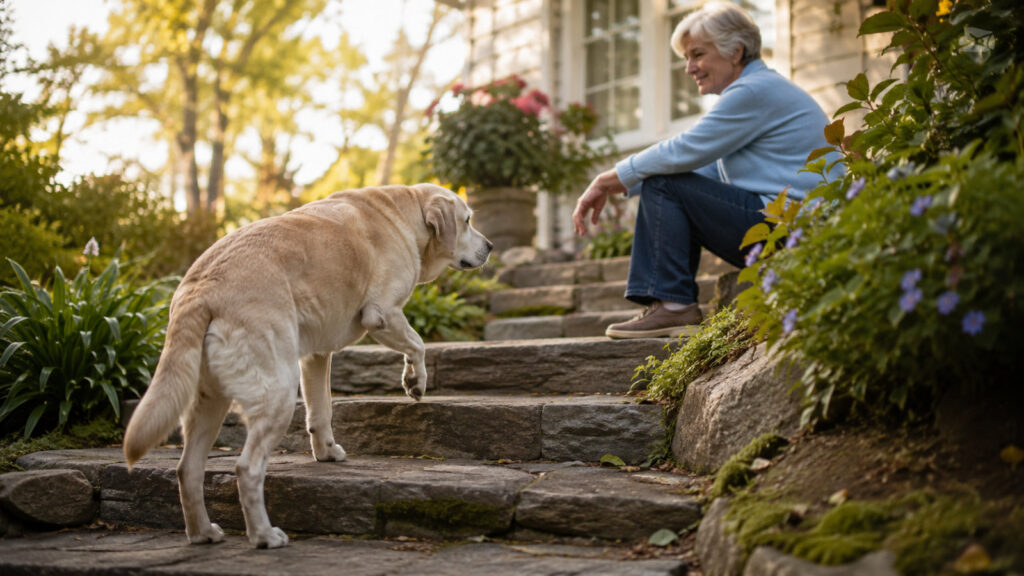
“He is just slowing down” may be the most dangerous sentence in senior dog care – not because it is never true, but because of what hides behind it. Some slowing is honest aging. But much of what owners file under “old” is a specific, findable, often treatable condition: arthritis pain, heart disease, low thyroid, or discomfort a dog has no other way to show. The difference matters, because a dog slowed by pain can very often be helped.
Quick answer
Gradual, mild slowing over years can be normal aging. Slowing that deserves a vet visit looks different: stiffness after rest that eases with movement (arthritis), tiring quickly or coughing on walks (heart), slowing plus weight gain and coat changes (thyroid), or any sudden drop in energy. Arthritis is one of the most common and manageable culprits – and dogs hide pain, so “not limping” does not mean “not hurting.”
What each kind of slowing looks like
| The pattern | What it suggests | Where to go next |
|---|---|---|
| Stiff getting up, eases once moving; hesitates at stairs, car, couch; slower after hard play | Osteoarthritis – the most common cause of “slowing down” and the most treatable | This page, below |
| Tires mid-walk, breathes fast at rest, coughs at night or with excitement | Heart disease until checked | The heart health guide |
| Slower everywhere, plus weight gain, thinning coat, seeking warmth | Low thyroid – a blood test away from an answer, and very treatable | Your veterinarian |
| Less interest in walks, staring, night restlessness, “lost” in rooms | Cognitive change more than physical | The dog dementia guide |
| Sudden slowing over days, or with appetite loss | Not an aging pattern – a medical one | Prompt vet visit |
Arthritis: the great impersonator of old age
Osteoarthritis is one of the most common conditions of senior dogs, and it almost never announces itself with a yelp. Dogs simply do less: shorter walks, a pause before stairs, no more couch, a preference for lying down at the park. The stiffness is worst after rest and eases as they warm up – the pattern owners describe as “he takes a while to get going.” Because the change is gradual, families adjust around it without noticing how much the dog has given up. The test worth doing at home: think back one year. What could your dog do then that they quietly no longer do? That gap is usually not age. It is usually pain, and pain has treatments.
What Dr. Fossum did for Dan
In her book, Dr. Fossum walks through what she did for her own senior Labrador, Dan, when he stiffened up – in this order:
- Weight first: she put Dan on a diet to reach and hold his target weight, on a balanced diet.
- Movement second: short daily walks, added slowly and kept consistent.
- Comfort support third: after Dan did not tolerate a prescription option, she worked with natural comfort-support choices, including omega-3s, and discusses joint-support supplements as the next step.
- Prescription options stayed in reserve with her veterinarian in case the gentler steps were not enough.
– adapted from Senior Dogs: The Essential Guide, Chapter 2
Notice the order: weight first, movement second, then comfort support, with prescription options in reserve. That order is the plan for most stiff seniors – and every piece of it is something to build with your vet, who can also rule out the conditions that mimic arthritis. For the comfort-support piece, the senior supplements guide covers the shelf.
What you can start this week
Whatever the cause turns out to be, three things help almost every slowing senior: get the weight honest (every extra pound loads sore joints and a working heart), trade one long weekend walk for short daily ones (consistency beats intensity – see senior exercise), and make the house old-dog-friendly – rugs on slick floors, a ramp for the car, a warm bed away from drafts. Then book the checkup, because the fourth thing – a diagnosis – is the one that changes the trajectory.
When slowing down needs your veterinarian
Book a visit for stiffness that is part of most days, hesitation at stairs or jumps, tiring on walks that used to be easy, or any coughing or fast breathing at rest. Go promptly for sudden weakness, collapse, or slowing that arrives over days rather than months – that pace is never “just age.”
References and further reading
- Fossum TW, Ford S. Senior Dogs: The Essential Guide (2024), Chapter 2: Osteoarthritis.
- AAHA. 2023 Senior Care Guidelines for Dogs and Cats.
- Merck Veterinary Manual (dog owner editions): osteoarthritis in dogs.
Frequently asked questions
Is it normal for old dogs to slow down?
Some gradual easing over years is normal. Stiffness after rest, hesitating at stairs, tiring quickly, or sudden change are not “normal aging” – they are signs with causes, and most of the causes have treatments.
How do I know if my dog is slowing down from pain?
Look for the arthritis pattern: worst after rest, better once moving, and a shrinking list of things they used to do – stairs, couches, long walks. Dogs rarely vocalize joint pain; they subtract activities instead.
What can I give my senior dog for stiffness?
Start with what is safe and certain: weight management and short daily walks. For supplements and comfort support, see our senior supplements and CBD arthritis guides – and loop in your vet, who can also offer prescription options if they are needed.
When is slowing down an emergency?
Sudden weakness or collapse, refusal to rise, slowing accompanied by labored breathing, or a dog who stops eating – same-day veterinary attention for any of those.
Educational content, not a substitute for veterinary advice. If your dog seems unwell, contact your veterinarian.
This guide is educational and is not a substitute for veterinary diagnosis or care. If you are worried about your dog, talk to your veterinarian.