

Exercise for Senior Dogs: Keep Them Moving, Gently

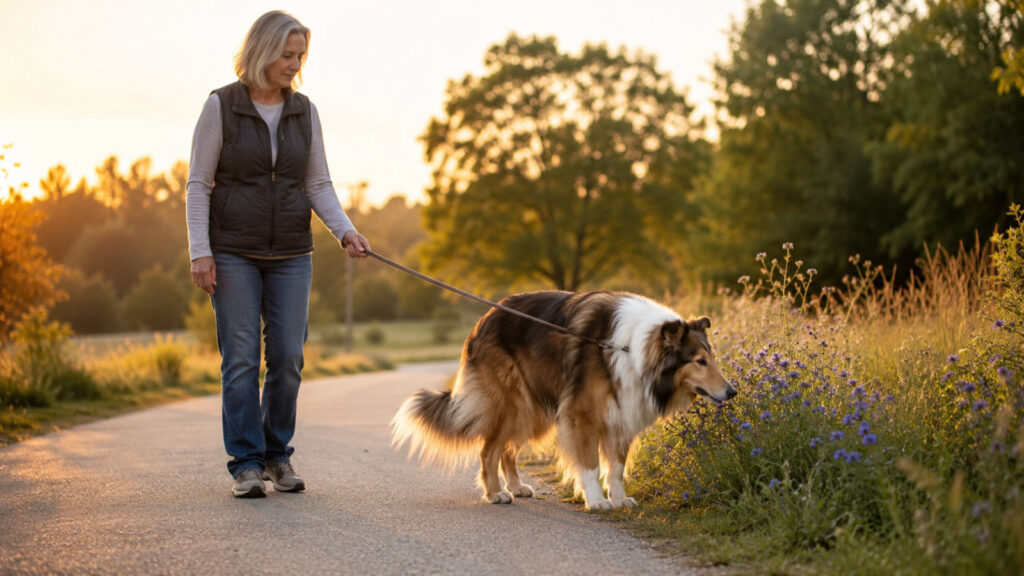
The instinct with an aging dog is to let them rest – they seem tired, the walks have shortened themselves, and rest feels like kindness. But the couch is not neutral. Muscle that is not used is muscle being lost, and in a senior dog, muscle is mobility, balance, and independence. The kindest thing an owner can do for an old dog’s body is to keep it gently, consistently moving – and gently and consistently are the operative words.
Quick answer
Many senior dogs do best with two or three short walks daily – often 15 to 30 minutes total, adjusted to the dog and any medical limits – plus gentle play and sniffing time, rather than one long weekend outing. Consistency preserves muscle; intensity injures it. Warm up slowly, favor soft and flat surfaces, let the dog set the pace, and watch the day after – soreness tomorrow means yesterday was too much. A dog slowed by pain needs the pain addressed, not retirement.
What senior exercise is for
Exercise in the senior years has a different job than it did at two years old. It is not about burning energy; it is about keeping the machinery: muscle mass to stand and climb, joint motion kept smooth by use, weight kept honest (the joints’ best friend), circulation, digestion, and – underrated – the brain. A sniffing walk is problem-solving work for a dog, and the same enrichment that helps dogs with cognitive decline keeps every senior brighter. Movement is also mood: dogs who go places stay interested in the world.
The senior exercise menu
| Activity | Why it suits seniors | Watch for |
|---|---|---|
| Short, frequent leash walks | The backbone: low impact, scalable, easy to keep consistent | Let them sniff – it is the point, not a delay |
| Sniff walks (“smell strolls”) | Big mental payoff per step; ideal for dogs whose legs tire before their curiosity | Low risk – but still watch heat, footing, fatigue, and soreness the next day |
| Swimming or wading (where safe) | Muscle work with the weight off the joints – superb for arthritic dogs | Warm water, easy exits, dry thoroughly after |
| Gentle play and short fetch on grass | Joyful, muscle-preserving in small doses | Skip leaping catches and skidding stops; throw low and short |
| Simple strength work | Slow leash figure-eights, sit-to-stand repetitions, walking a gentle slope – physio in disguise | A few minutes counts; ask your vet or a rehab professional for a plan |
The two traps
The first trap is the weekend warrior: a quiet week, then a two-hour Saturday adventure – followed by a Sunday of stiffness and a Monday of limping. Senior bodies handle regular moderate work far better than occasional heroics; the same total minutes spread across the week builds instead of breaks. The second trap is quiet retirement: the dog slows, so the walks stop, so the muscle fades, so the dog slows further. If your senior is opting out of walks they used to love, do not accept retirement at face value – very often the reason is joint pain, and pain has treatments. That investigation is the whole point of the slowing down guide, and preserving what muscle remains is covered in weight and muscle loss.
Reading your dog’s dashboard
The right amount of exercise is written on the dog, a day later. Good signs: settling comfortably after walks, keenness when the leash appears, steady weight and muscle. Too-much signs: stiffness or heavy sleeping the next day, lagging in the last third of the walk, lying down mid-route, or paw-dragging when tired. Adjust in small steps – shorten before you cancel, slow before you shorten – and in hot weather, walk early and late; senior dogs handle heat poorly, and panting hard at rest afterward is a stop sign worth mentioning to your vet.
When to involve your veterinarian
Before starting a new routine in a dog with known heart, joint, or breathing issues; when a dog opts out of exercise they used to love; for limping, next-day stiffness that keeps recurring, or collapse or extreme fatigue during activity – the last one promptly. Ask about pain management and rehab options: a comfortable dog will do the exercise that keeps them mobile.
References and further reading
- Fossum TW, Ford S. Senior Dogs: The Essential Guide (2024), Chapters 2 and 7.
- AAHA. 2023 Senior Care Guidelines for Dogs and Cats.
Frequently asked questions
How much exercise does a senior dog need?
Most do well with 15 to 30 total minutes of walking daily, split into two or three short outings, plus gentle play and sniffing time – adjusted to the individual dog and checked against how they feel the next day.
Should I still walk my old dog every day?
Yes, in almost every case – shorter and slower beats stopping. Daily movement preserves the muscle and joint function that keep a senior independent. If they resist walks they once loved, look for pain before accepting retirement.
What is the best exercise for a dog with arthritis?
Short frequent walks on soft flat ground, swimming where available, and slow strength work like sit-to-stand repetitions – paired with a real pain-management plan from your vet. Comfort first; the exercise follows.
My senior dog is exhausted after walks – too much?
Pleasant tiredness that settles within the hour is fine; next-day stiffness, heavy sleeping, or reluctance at the next walk means scale back. Collapse, wobbliness, or laboring to breathe during exercise is a vet conversation now.
Educational content, not a substitute for veterinary advice. If your dog seems unwell, contact your veterinarian.
This guide is educational and is not a substitute for veterinary diagnosis or care. If you are worried about your dog, talk to your veterinarian.