

Weight and Muscle Loss in Older Dogs

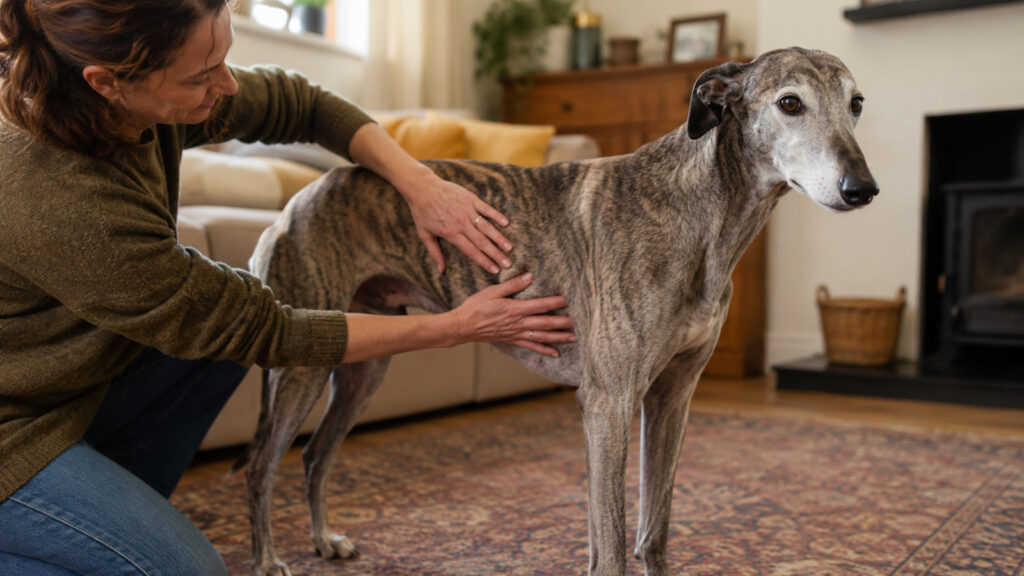
Owners usually notice it with their hands before their eyes: a spine that feels bonier during petting, hips with less around them, back legs that look thinner than the front. Weight loss in an old dog gets explained away easily – eating a bit less, moving a bit less – but it deserves the opposite reflex. In senior medicine, unplanned weight loss is a finding, and finding its cause early is one of the most valuable things an owner can do.
Quick answer
Some gradual muscle loss comes with age, but real weight loss – a lighter dog, visible ribs and spine, or clear wasting over the hips and back legs – is a medical sign first: kidney disease, dental pain, heart disease, digestive problems, and cancer are the common causes. The distinction that helps your vet: is the dog eating normally and still losing, or losing because eating has dropped? Weigh monthly, act on a 5-10 percent drop, and do not write thin legs off as age.
Fat loss versus muscle loss: read the body
Two different things hide inside “losing weight,” and they point different directions. Overall weight loss – ribs, spine, and hip bones all more prominent, the whole dog lighter – usually means calories are not keeping up: eating less (see not eating), or a disease burning or losing them. Muscle loss with stable fat – the classic thinning over the skull, shoulders, and especially the hindquarters while the belly stays soft – is the aging-and-disuse pattern, accelerated by arthritis that quietly retires the back legs. And the combination, a dog eating normally yet visibly wasting, belongs at the vet without delay: kidneys, heart, digestion, and cancer all live on that list.
| Pattern | Common causes | First moves |
|---|---|---|
| Losing weight, eating less | Dental pain, nausea (kidneys, liver), any illness suppressing appetite | The appetite workup; mouth exam; bloodwork |
| Losing weight, eating normally or MORE | Kidney disease, diabetes, digestive malabsorption, cancer | Prompt vet visit; bloodwork and urinalysis are usually the starting point |
| Muscle thinning, weight roughly stable | Age-related muscle loss accelerated by inactivity and arthritis pain | Treat the pain, feed enough protein, rebuild gentle activity – see below |
| Back legs weakening specifically | Arthritis, spinal issues, or neurologic change – not simply “old” | The back-legs guide + a vet exam |
Why muscle is worth fighting for
Muscle is a senior dog’s independence. It is what stands them up from the floor, carries them up the porch steps, and catches them on slick tile – and once lost, it rebuilds slowly in an old body. The preservation plan has three legs, and they only work together: treat the pain (a dog whose joints hurt will not use the muscles that need using – the slowing down guide covers this), feed enough quality protein (seniors often need more, not less – and “senior” diets vary widely, so match the diet to your dog’s kidneys and needs with your vet), and keep the body working with short, consistent, low-impact activity – the senior exercise guide is the how.
The monthly weigh-in habit
The single best early-warning tool costs nothing: weigh your dog monthly and write it down. Home method for the liftable: weigh yourself, weigh yourself holding the dog, subtract. For big dogs, most clinics are happy to let you use the lobby scale between visits. The number to act on is a 5 percent drop confirmed on a second weighing – and 10 percent is overdue. A weight log turns “I think he feels thinner” into data your vet can act on immediately, and it is exactly the kind of record that makes six-month senior checkups powerful.
When weight change needs your veterinarian
Book a visit for any confirmed unplanned weight loss, visible wasting over the spine or hindquarters, or a dog eating well yet losing. Make it prompt when weight loss travels with other signs – increased thirst, appetite changes, vomiting, coughing, or weakness. The workup usually starts with bloodwork and urinalysis, and early answers usually give you more options.
References and further reading
- PetMD. Appetite and weight changes in dogs.
- Fossum TW, Ford S. Senior Dogs: The Essential Guide (2024), Chapter 5.
- AAHA. 2023 Senior Care Guidelines for Dogs and Cats.
Frequently asked questions
Why is my old dog losing weight but eating normally?
Eating well while losing weight points at disease using or losing the calories – kidney disease, diabetes, digestive malabsorption, and cancer are the common answers. That combination earns a prompt vet visit with bloodwork and urinalysis.
Why are my old dog’s back legs getting so thin?
Hindquarter muscle loss is the classic senior pattern – age plus disuse, usually accelerated by arthritis pain retiring the legs. Treating the pain and rebuilding gentle activity preserves what remains; a vet exam rules out spinal and neurologic causes.
How much weight loss is concerning in a senior dog?
Act on a confirmed 5 percent drop from normal body weight; 10 percent is overdue. Monthly weigh-ins make the math possible – the trend is the tool.
Should I feed my old dog more protein?
Many seniors need more quality protein, not less – but kidney status changes the answer, which is why the diet decision belongs in a vet conversation informed by bloodwork rather than a bag label.
Educational content, not a substitute for veterinary advice. If your dog seems unwell, contact your veterinarian.
This guide is educational and is not a substitute for veterinary diagnosis or care. If you are worried about your dog, talk to your veterinarian.