

Giardia in Dogs: The Parasite That Is Not a Worm, and Why It Keeps Coming Back

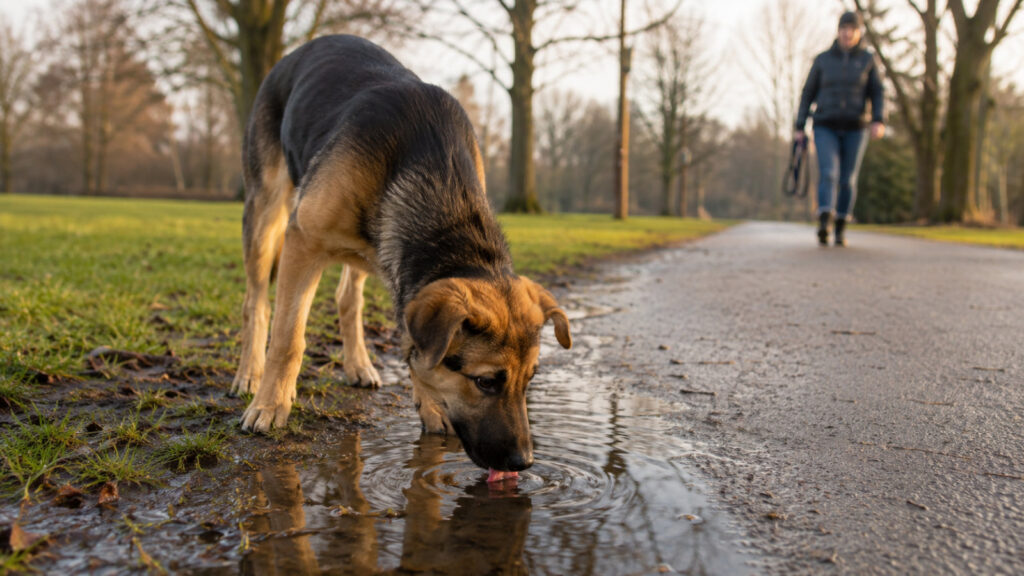
Giardia is the diagnosis that makes sensible owners feel like they are failing. The dog gets treated, gets better, and three weeks later the same soft, awful-smelling stool is back in the same corner of the yard, so people start blaming the medicine, the vet, or themselves. Almost always, none of those is the problem. Giardia comes back because of something most owners are never told: it is not a worm, it does not behave like one, and much of the work that ends it happens outside the dog.
Quick answer
Giardia is a microscopic single-celled parasite (a protozoan, not a worm) that lives in the small intestine and is passed in stool as a tough little cyst. Those cysts are infectious the moment they land, survive weeks to months in cool damp places, and are swallowed again from contaminated water, ground, bowls, or the dog’s own coat during grooming. The classic sign is soft, pale, greasy, foul-smelling stool, often with mucus and often coming and going. Watery diarrhea and blood are not the usual picture.
Two things surprise people. Many infected dogs look completely healthy. And a single negative stool test does not clear it, the parasite sheds in bursts, and in one large study the standard flotation method detected fewer than half the dogs it was estimated to be present in, which is why vets often run a combination or repeat the sample. Treatment works, but treating the dog without cleaning up the environment is how families end up doing this three times.
What giardia actually is (and why the worm logic fails)
Giardia is a protozoan: one single cell, invisible without a microscope, nothing like the worms our identification guide covers. That distinction is not trivia. It explains why you will never see it in the stool, why a general dewormer is not automatically the answer, and why the prevention that keeps worms away does not keep this away.
It lives two lives. Inside the gut it is a fragile feeding form that attaches to the intestinal wall and interferes with absorption, which is precisely why the stool comes out pale, greasy, and voluminous: fat that should have been absorbed goes out the back door instead. Outside the dog it travels as a cyst with a hard shell, and the cyst is the whole problem.
Three facts about that cyst decide everything else on this page. It is infectious immediately; there is no waiting period the way there is for some worm eggs, so stool left in the yard is a hazard the same day. It survives for weeks and often months where things are cool and damp. And the cheapest weapon you own genuinely works on it: cysts do not survive drying out, which is why steam, a suitable disinfectant, and then thorough drying are the standard advice for hard surfaces.
What it looks like in a dog
- The signature stool: soft and poorly formed, pale, greasy-looking, strikingly foul-smelling, often coated in mucus.
- It comes and goes. Days of trouble, days of normal, then trouble again. Owners often describe a dog who “never quite firms up.”
- What it usually is NOT: profuse watery diarrhea, and blood is not typical. If you are seeing either, or any black tarry stool, that is a different conversation, and our blood-in-stool guide sorts it. Call rather than assume giardia.
- Weight loss can ride along in a longer-running case, especially in a young dog who is eating well and still not thriving.
- Most infected dogs show nothing at all. This is agreed across the major veterinary references, and it reframes the whole diagnosis: a positive test in a dog with normal stools is common, not alarming.
Puppies and dogs with weakened immune systems are the likeliest to become genuinely ill, and the ones where a wait-and-see approach is wrong, though an otherwise healthy adult dog can certainly show signs too. Group settings stack the odds too: in one study of nearly 600 dogs, household pets tested positive around eight percent of the time while dogs in a hunting kennel ran near sixty-five percent. Daycare, boarding, shelters, and breeding facilities all move this parasite efficiently.
Why the stool test is trickier than it sounds
This is the part worth understanding before you are told a result, because it prevents two different mistakes.
The routine stool float that finds worm eggs is genuinely poor at finding giardia. In a study of 573 dogs comparing four tests (using a statistical method to estimate infection, since no test is perfect enough to be the yardstick) a single centrifugal flotation was estimated to catch fewer than half the infected dogs. Two reasons: the parasite sheds in bursts, so a sample from a quiet day looks clean; and the sugar-based solutions many clinics use for routine worm screening can collapse the cysts, which is why a zinc sulfate solution is preferred when giardia is the question.
So vets combine tools, a fresh direct smear, a proper centrifugal flotation, and an antigen test or a DNA-based test that detects the parasite’s proteins or genetic material rather than requiring a cyst to drift into view. The DNA test was the most sensitive by a wide margin in that study and also the least specific, meaning some of its positives will not turn out to represent real infection, so a positive there is read alongside the dog’s signs, exposure, and other testing rather than on its own.
The takeaway that saves families money and worry: one negative test does not rule giardia out in a dog with the classic stool, and one positive test does not automatically mean your dog is sick from it.
Treatment, honestly
Two medicines do most of the work: fenbendazole, from the same drug family used against several intestinal worms, and metronidazole, an antimicrobial – sometimes used together. Your vet chooses and times them; there are no doses on this page by design, and this is not a place to improvise with anything left over in a cupboard. One product worth naming only to warn about it: albendazole is effective against giardia and is not safe for dogs.
Expect the honest version of success. In one small study that followed two dozen naturally infected dogs in real homes, a substantial share were still positive after the first course and needed a repeat before clearing, and a couple were shedding again seven weeks later. The study could not say how much of that was reinfection, incomplete clearance, or simply the on-off shedding pattern. Either way, needing a second round is a common experience rather than a sign something went wrong, and it is the reason experienced vets aim treatment at getting the dog well rather than at chasing a perfectly negative lab result.
The step almost everyone skips: bathe the dog on the last day of treatment. Cysts cling to the coat around the rear, and a dog who grooms himself re-swallows them the same evening. A proper bath at the end of the course is part of the protocol, not a nicety.
On re-testing, practice genuinely differs and both approaches are defensible: some vets re-test only if signs persist, using flotation soon after the course; others re-check every treated dog a few weeks later. What all of them agree on is worth holding onto; antigen and DNA tests can stay positive for a while after successful treatment, so a positive result on those alone is not proof the medicine failed.
The reinfection problem, which is the real problem
If this page changes one thing, let it be this: treating the dog while leaving the environment loaded is how giardia becomes a subscription. Reinfection from the surroundings is one of the common reasons treatment appears not to have worked, alongside incomplete clearance, an underlying health problem, and the parasite’s on-off shedding, which your vet can help sort out.
- Pick up stool the same day, every day. Cysts are infectious on arrival, so speed is the single highest-yield thing you can do.
- Bathe at the end of treatment, and keep the rear coat clean in long-haired dogs during it.
- Hard surfaces: steam cleaning or a suitable disinfectant, then, the part that matters most, let everything dry completely. Drying is what actually kills cysts, and it costs nothing.
- Soft goods: wash and thoroughly dry bedding, blankets, and toys; wash food and water bowls daily.
- The yard is the honest disappointment. You cannot disinfect grass or soil. Treat a contaminated yard as risky for at least a month after an infected dog last used it (longer where ground stays cool and damp, since there is no reliable all-clear date outdoors) and lean on same-day pickup, sunlight, and dry weather. Standing water and permanently damp corners are where cysts last longest.
- Tell your vet about every pet in the house. A quiet carrier under the same roof can keep re-seeding the others, so your vet may want to test or treat some of them. That call depends on signs, exposure, and who else lives there.
Can I catch it from my dog?
Very probably not, and the reason is genuinely interesting rather than a brush-off. Giardia comes in several genetic types. The ones that circulate in dogs are largely dog-specific, and the ones that make people ill are largely human types. North American parasite guidance states that human infection from a dog source has not been conclusively demonstrated, and that canine strains are not known to infect people with healthy immune systems. When outbreaks in people are traced, they lead overwhelmingly to contaminated water and person-to-person spread, with the family dog rarely implicated, though nobody claims the risk is precisely zero.
Two honest footnotes. Human-type strains do turn up in a minority of dogs, though researchers suspect much of that travels from people to dogs or from a shared contaminated source rather than the other way. And risk is not zero for everyone: households with an infant, someone pregnant, or anyone immunocompromised should raise it with both their own doctor and the vet, because that is exactly the situation where the calculus changes.
For everyone else the answer is ordinary hygiene, not fear: wash your hands after handling stool, keep children washing after yard time, and let the dog be a dog.
My dog tested positive but seems perfectly fine
This happens constantly, and a positive result is not automatically a prescription. The prevailing guidance is that dogs without signs may not need treating, with the decision turning on the household rather than the lab slip: who else lives there, whether anyone is immunocompromised, whether other pets are affected, whether your dog boards or goes to daycare, and what has already been tried.
The reasoning behind that restraint is sound. No drug clears it perfectly every time, low-level shedding can continue after successful treatment anyway, and repeat courses have their own costs. If your vet suggests watching a well dog rather than medicating, that is a defensible plan, not a shrug.
When to see your veterinarian
Book a visit for soft, pale, greasy, or foul-smelling stool that keeps returning, for any diarrhea that outlasts 48 hours, for a young dog who is eating well but not gaining, or for a new puppy or rescue before problems start. Bring a fresh sample, and mention daycare, boarding, kennels, ponds, or puddles, because that history changes which tests your vet reaches for.
Sooner, same day: a puppy with diarrhea (this is parvovirus territory until proven otherwise), a dog who stops eating or goes flat, repeated vomiting, any black tarry stool, or more than a faint streak of blood. Puppies, seniors, and tiny breeds dehydrate fast. Call rather than wait.
References and further reading
- Companion Animal Parasite Council. Giardia guideline.
- Merck Veterinary Manual. Giardiasis in animals.
- Cornell Riney Canine Health Center. Giardia: infection, treatment, and prevention.
- Centers for Disease Control and Prevention. About giardia and pets.
- Uiterwijk M, et al. Comparing four diagnostic tests for Giardia duodenalis in dogs. Parasites and Vectors. 2018;11:439.
Frequently asked questions
Is giardia a worm?
No; it is a single-celled parasite called a protozoan, which is why you will never spot it in the stool and why worm-prevention habits do not stop it. The confusion is fair, since one of the medicines used against it is also a deworming drug. Different organism, different cleanup, same vet visit.
How did my dog get giardia?
By swallowing cysts: puddles, ponds, streams, contaminated ground, shared bowls, or licking a coat that carries them. Daycare, boarding, kennels, shelters, and dog parks concentrate the risk, and puppies pick it up most easily. It is not a sign of a dirty home; it is a sign your dog drinks and sniffs like a dog.
How long does giardia last in dogs?
Signs usually settle within days of starting treatment, though a meaningful share of dogs need a second course before clearing, and cysts can keep appearing in the stool for a while after your dog feels well. Untreated, the pattern tends to come and go for weeks. When it seems to last forever, reinfection from the yard and coat is the usual reason, but ask your vet to look at the whole picture rather than simply repeating courses.
Can I get giardia from my dog?
It is very unlikely, though not something anyone calls impossible. The strains that infect dogs are largely dog-specific, and infection traced to a pet dog has not been clearly demonstrated in North America. Most human cases come from contaminated water or from other people. Wash your hands after handling stool, and if anyone in the household is pregnant, an infant, or immunocompromised, mention the diagnosis to your own doctor as well.
Why does my dog keep getting giardia after treatment?
Reinfection is the usual suspect rather than drug failure (from the yard, the bedding, the bowls, or the dog’s own coat) though incomplete clearance, on-off shedding, and an underlying health problem can all look the same from the kitchen. Start by adding the environmental half of the job: same-day stool pickup, a bath on the last day of treatment, washed bedding, and letting surfaces dry completely. Also worth knowing: antigen and DNA tests can read positive for a while after successful treatment, so a positive alone does not mean the medicine failed.
Does my dog need treating if he has no symptoms?
Not necessarily. Guidance says dogs without signs may not require treatment, and the decision depends on your household, other pets, anyone immunocompromised, daycare or boarding, and what has been tried before. Ask your vet to walk you through their reasoning; watchful waiting is a legitimate answer for a healthy dog.
Educational content, not a substitute for veterinary advice. If your dog seems unwell, contact your veterinarian.
This guide is educational and is not a substitute for veterinary diagnosis or care. If your dog is unwell, or you are unsure, talk to your veterinarian.