

Stress Colitis in Dogs: The Boarding-Week Diarrhea, Explained

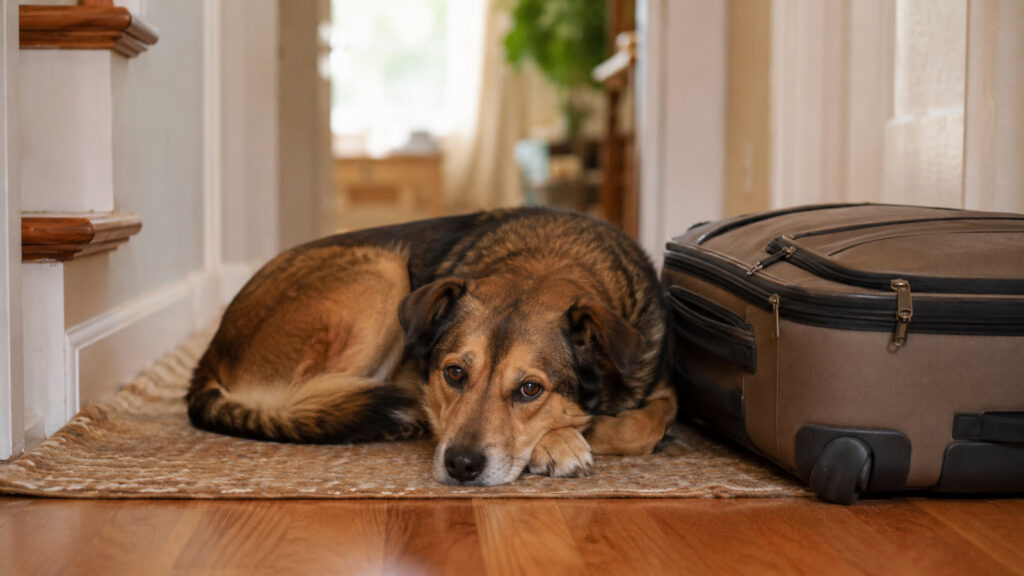
It is almost a ritual: the dog comes home from boarding (or the movers leave, or the fireworks end) and within a day or two the yard fills with urgent, mucus-coated, miserable-looking diarrhea from a dog who otherwise seems delighted with life. This is the classic look of stress colitis, one of the most common and most alarming-looking minor conditions in dog medicine, though a first episode still earns a vet’s confirmation, because impostors exist.
Alarming because there can be streaks of blood; minor because in most dogs it resolves in days. Here is the whole picture; including what to do about the dog for whom every kennel stay ends this way.
Quick answer
Stress colitis is inflammation of the large intestine triggered by physical or emotional stress, boarding, travel, moving, a new pet or baby, fireworks, even intense exercise. Its signature: sudden loose stool with mucus, urgency, straining, small frequent amounts, and sometimes thin streaks of bright red blood, in a dog who is otherwise bright. Most confirmed cases improve within a day or two and settle fully inside about five, with a bland diet, water, and calm; your vet may add fiber or other support once the cause is confirmed.
See a vet if it is not clearly improving within 48 hours, the blood is more than streaks, or the dog stops acting fine. A first episode earns a call to confirm the diagnosis, and once your vet has ruled out the impostors, the recurring version’s real fix is the stress, not the stool.
Why stress reaches the colon
The gut and the nervous system are in constant conversation, and the colon is where a dog’s hard week gets published. Stress shifts gut motility and blood flow and disturbs the resident bacteria; the colon responds by rushing its contents and coating them in mucus. That is why the pattern looks the way it does; the large intestine’s job is the final assembly of stool, so when it is inflamed you get urgency, frequency, straining, and mucus rather than the big watery volumes of small-intestine trouble.
It is also why the trigger list is so ordinary: kennels, moves, guests, storms, new babies, marathon fetch weekends. Sensitive dogs publish more often.
The signature, and the blood question
- Timing: within about a day or two of a stressful event.
- Mucus (glistening, jelly-like coating) the large-intestine tell.
- Urgency and straining: asking out constantly, producing small amounts, straining after finishing (which owners often misread as constipation). One check while you watch: confirm urine is flowing normally; a straining dog who is not peeing is a different, hours-matter emergency, as the constipation guide explains.
- Small, frequent, sometimes soft-serve to liquid: not usually huge volumes.
- The dog is otherwise fine: eating, wagging, energetic. That combination is the reassuring shape of it.
- About the blood: thin streaks of bright red on the surface are common in colitis, an inflamed colon bleeds a little, and in this classic pattern it is usually minor. Both truths at once, though: more than streaks, blood mixed through the stool, black tarry stool, or a dog who stops being fine moves this out of the wait-at-home category immediately.
The recovery arc, and how to help it
Typical course: dramatic first day, visibly better by day two or three, normal by day five. Help it along exactly as in our diarrhea home-care guide: bland small meals, constant water, a spoonful of plain canned pumpkin, and (the part specific to this condition) actual calm: home routine restored, sleep, no big outings while the colon settles.
Your vet may add fiber or other support once the diagnosis is confirmed, and a case that is not clearly improving within 48 hours earns the visit, both to help and to confirm nothing else (parasites are the classic impersonator) is wearing the same costume. First episodes are worth a vet call anyway, the diagnosis deserves to be made once, properly, before it becomes the family explanation for every flare.
The recurring case: fix the stress, not just the stool
Some dogs produce this episode after every boarding stay, every houseguest week, every July. At that point, once your vet has confirmed the pattern and ruled out the medical impostors, the colon is the messenger, and the message is about stress tolerance, which is trainable. The playbook lives in our anxiety guide: gradual positive exposure to the specific trigger, routine anchors during upheaval, and honest exercise and enrichment. For the predictable events, prepare like it is a loud night. And ask your vet whether any pre-event feeding plan makes sense for your dog, rather than starting one on your own.
When to see your veterinarian
Book a visit if this is the first episode (confirm the diagnosis once), if it is not clearly improving within 48 hours or not fully settled by day five, if blood is more than surface streaks, if vomiting joins in, or if the dog stops eating or goes flat. Black tarry stool is same-day urgent, always, and unproductive retching with a swelling belly is never colitis: that is the bloat emergency, drive now. Puppies, seniors, and tiny breeds: call earlier. Their margins are thinner.
References and further reading
Frequently asked questions
How long does stress colitis last in dogs?
Most cases improve visibly within a day or two and resolve within about five, with bland food, water, and genuine calm. Not clearly improving within 48 hours, or not fully settled by day five, is the signal to see your vet.
Is blood in stress colitis normal?
Thin streaks of bright red blood on mucus-coated stool are common in colitis and usually minor, the inflamed colon surface bleeds a little. Blood beyond streaks, blood mixed through the stool, black tarry stool, or a dog acting sick are different stories and warrant a prompt visit.
What can I give my dog for stress colitis?
Bland small meals, water, plain canned pumpkin, and rest, and ask your veterinarian whether any additional supportive care fits your dog. Skip human anti-diarrheals entirely. If it feels like it needs medicine, it needs a vet first.
How do I stop my dog getting diarrhea every time we board him?
Treat it as an anxiety project, not a food project: kennel day-visits and overnight trials before long stays, familiar bedding and routine anchors, real exercise beforehand, and the calm-preparation playbook from our anxiety cluster. Ask your vet whether starting bland-diet support the day before the stay makes sense for your dog.
Educational content, not a substitute for veterinary advice. If your dog seems unwell, contact your veterinarian.
This guide is educational and is not a substitute for veterinary diagnosis or care. If your dog is unwell, or you are unsure, talk to your veterinarian.