

Dog Not Drinking Water: The Causes by Urgency, and the Tricks That Restart Thirst

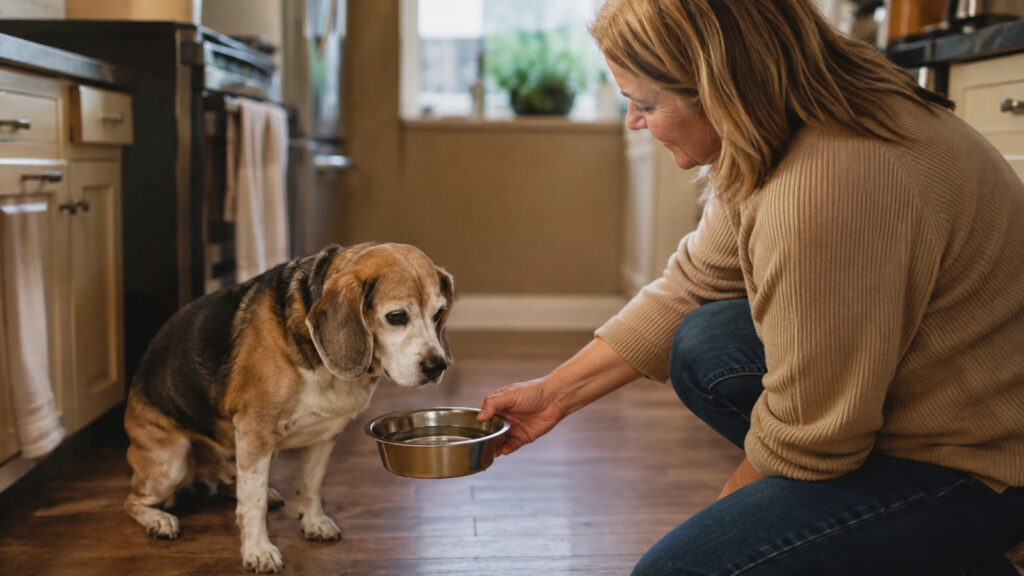
Dog owners usually track the opposite worry, too MUCH drinking gets whole pages in our senior guides, but the bowl that stays full has its own message, and unlike cats (desert-built low drinkers with wet-food loopholes), a dog who genuinely stops drinking runs out of slack fast. Here is the sorting: the benign explanations worth checking first, the medical causes by urgency, the dehydration checks your hands can run, and the tricks that restart a reluctant drinker.
Quick answer
First, confirm it is real: wet-food dogs drink visibly less (the food carries much of their water), cool weather and less exercise cut thirst honestly, and multi-pet bowls hide who drank what. Genuinely reduced drinking has a cause list by urgency: nausea (the lip-licking set (dogs skip water when queasy), mouth pain (dental disease can make drinking uncomfortable) a commonly missed cause), stress and changes (new home, new bowl, water that tastes different), and illness making everything unappealing.
The checks: gums (moist = okay; tacky = deficit) and skin-tent. The rule: call promptly for a dog drinking nothing or dramatically less than his own normal, do not wait out a full dry day to prove it, and treat refusal WITH vomiting, diarrhea, lethargy, or not eating as same-day-to-urgent. Dehydration compounds fast, especially in small dogs, seniors, and hot weather.
Is it real? The audit before the worry
Three honest false alarms: the wet-food ledger (a dog on wet or fresh food takes half his water at meals and sips modestly, normal), the weather-and-workload ledger (thirst tracks exertion and heat; a rainy sofa week cuts intake legitimately), and the multi-pet mystery (who actually drank from the shared bowl? a day of separate bowls answers it).
The audit that converts impression to data: fill from a measuring cup for a day and subtract, the same method our senior guides teach for too-much, and only for a dog who is still drinking and otherwise well (a dog drinking nothing skips the audit and gets the call). And the change rule outranks any absolute number: a dog drinking clearly less than HIS OWN normal, on the same food and weather, has a real signal worth the sorting below.
The causes, by urgency
- Nausea, one of the most common medical causes: queasy dogs skip water (then sometimes gulp and vomit it). The company tells you: lip licking, drooling, grass urgency. The signal set, and vomiting-plus-not-drinking is a same-day pairing (dehydration on a timer).
- Mouth pain, the underdiagnosed one: dental disease, a fractured tooth, or an oral injury turns cold water into a wince – classically a dog who approaches the bowl, hesitates, maybe paws at his face. Ties every dental page truth: the mouth-sore dog quietly reduces everything hard, cold, or effortful. Room-temperature water is worth offering, though comfort with it does not rule mouth pain out; the exam does.
- Stress and novelty: travel, boarding, a new home, even a new bowl or moved station (some dogs boycott change (and some dogs plainly dislike certain bowl materials, reflections, or spots) preference, not pathology).
- Illness generally: fever, kidney trouble in its nauseated stages, and most systemic sickness flatten thirst along with appetite – not-drinking rarely travels alone here, and the whole-dog picture (energy, appetite, the honesty checks) steers urgency.
- Age and access: the arthritic senior may drink less because the bowl is DOWNSTAIRS. The mobility-tax answer is a bowl per floor at comfortable height, per the setup guide.
The checks, and the restart tricks
Hands-on dehydration checks (repeat every few hours while monitoring): gums (slide a finger: slick and moist is hydrated, tacky-dry is deficit; skin-tent) lift the scruff gently: instant spring-back is fine, a slow melt is a deficit sign. The checks are screening clues, not verdicts. Seniors and thin dogs can tent slowly while hydrated, and a normal check never overrules a dog who is not drinking. Add sunken eyes and lethargy and you are past monitoring into visiting.
The restart tricks: fresh cold water in a CLEAN bowl (biofilm slime offends more dogs than owners know, wash daily), a second bowl in a new calm spot, room-temperature water for the possible sore mouth, flavor bribery (a splash of plain low-sodium broth (onion-, garlic-, and xylitol-free, check the label) or the water from plain canned chicken; skip this for dogs on restricted diets without asking your vet), ice cubes as a game for the playful, a pet fountain for movement-drinkers, and water-loading the food (a splash over kibble, or wet food meals while solving the mystery).
What NOT to do: force-syringe water into a resisting dog (aspiration risk, misery, and it hides the cause). A dog who needs water put INTO him needs a clinic doing it properly with the diagnosis running alongside.
Same-day – or emergency – if
Nothing drunk for a day (and call well before that in heat, illness, puppies, tiny breeds, or seniors) refusal WITH vomiting, diarrhea, lethargy, or not eating (that combination is urgent, not tomorrow), tacky gums or slow skin-tent, or not-drinking after a known illness, medication change, or heat exposure. Dehydration is quiet, fast, and very treatable when caught early. Clinic rehydration is routine; the waited-too-long version is not.
References and further reading
Frequently asked questions
How long can a dog safely go without drinking water?
Call before a full dry day is over, and much sooner in heat, illness, puppies, small breeds, and seniors. Dogs run out of hydration slack far faster than the three-day internet folklore suggests, and the vet-visit version of catch-up (fluids) is routine while the waited version is not.
Why does my dog approach the water bowl but not drink?
That specific hesitation often means mouth pain (a bad tooth can make drinking uncomfortable (try room temperature and book the dental look) or nausea (approaches from thirst, declines from queasiness)) though other causes are possible, from neck pain to fear. The bowl choreography is the clue worth reporting either way.
How can I get my sick dog to drink more water?
Flavor and format: plain onion- and garlic-free broth splashes, water from plain canned chicken, ice cubes, a fountain, water-loaded meals – offered fresh in clean bowls, never forced by syringe. And honestly: a sick dog refusing water belongs at the clinic for proper fluids while the sickness gets named.
Is my dog dehydrated? How do I check?
Gums (moist = okay, tacky = deficit), skin-tent (instant spring = okay, slow melt = deficit), plus energy and eyes. Any failed check with reduced drinking is a same-day visit, and normal-looking checks do not overrule a dog who is not drinking (seniors and thin dogs can fool the skin test). The checks are triage, not treatment.
Educational content, not a substitute for veterinary advice. If your dog seems unwell, contact your veterinarian.
This guide is educational and is not a substitute for veterinary diagnosis or care. If your dog is unwell, or you are unsure, talk to your veterinarian.