

Pancreatitis in Dogs: The Signs, the Honest Odds, and What Recovery Looks Like

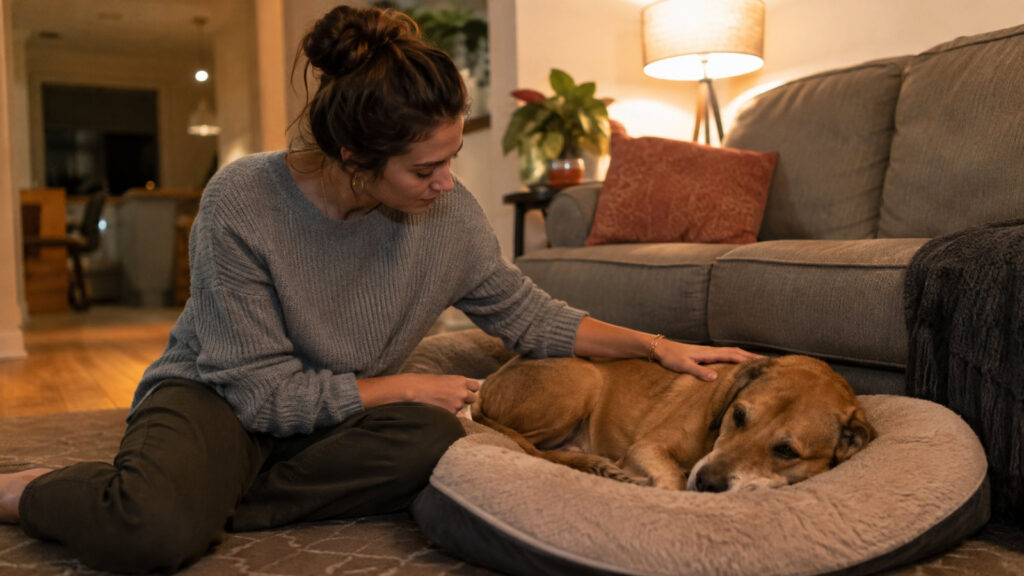
Most people reading this page are reading it at a bad moment: the dog is hunched in a corner, will not eat, and someone at the clinic has just used a word that sounds serious. So the most useful sentence first. In a recent study of more than five hundred dogs treated for acute pancreatitis at university and referral hospitals, over nine in ten came through the hospital stay.
Pancreatitis is a real illness that deserves real urgency, and it is also one that most dogs come through. Here is what it actually is, what it looks like, why it is harder to diagnose than you would expect, and what you can genuinely do.
Quick answer
The pancreas makes digestive enzymes and normally keeps them switched off until they reach the intestine. In pancreatitis those enzymes activate early, inside the organ, and the gland inflames and begins to injure itself. Severity runs from a dog who is quietly off his food to a critically ill patient in intensive care.
What owners see is less specific than most articles suggest: appetite loss is the most common sign, diarrhea and vomiting are each reported in about half of cases, and pain may be underdetected because dogs often show it through subtle posture and behavior changes. A hunched or praying posture, restlessness, and refusal to settle are pain signals.
None of this can be told apart from an ordinary stomach upset at home, which is exactly why a dog who is genuinely painful, persistently sick, or fading gets seen the same day rather than watched. Treatment is fluids, pain relief, anti-nausea medication, and, this part has changed, feeding early rather than starving the pancreas.
What pancreatitis actually is
The pancreas sits behind the stomach and does two unrelated jobs: it makes the enzymes that digest food, and it makes insulin. Pancreatitis is a disease of the first job. The enzymes are supposed to travel out inactive and switch on only once they arrive in the small intestine. When they activate too early, the pancreas starts digesting itself.
That picture is true but incomplete, and the incomplete part matters for treatment. Modern research shows much of the damage comes from the inflammation that follows rather than from the enzymes alone, which is why the newest medicine developed for this disease targets inflammatory cells rather than enzymes.
Vets separate acute from chronic pancreatitis, but the honest caveat is that the distinction is defined by changes in the tissue itself, which almost never gets sampled in a sick dog. So a dog is usually managed for an acute-onset episode, and whether it is a genuine first event or a flare of long-standing low-grade disease often cannot be known at the time.
What owners actually see
Here is where most articles mislead people. They lead with vomiting, which sends owners whose dog is not vomiting away reassured.
In a study of dogs whose bloodwork showed raised pancreatic enzyme levels (suspected cases rather than confirmed ones, which is the honest caveat) the signs their vets reported ran in this order: loss of appetite in roughly six of ten dogs, diarrhea in about half, vomiting in about half, and detectable abdominal pain in only a third. Appetite loss outranked vomiting. Diarrhea outranked vomiting. A dog under investigation for pancreatitis who has not vomited once is not unusual at all.
- Not eating: the single most common sign, and the easiest to dismiss as fussiness.
- Vomiting, diarrhea, or both: each in about half of cases, so their absence proves nothing.
- Lethargy and weakness: the dog who has gone quiet and flat.
- Belly pain. See below; this is the sign most often missed.
- Fever, dehydration, and a hunched posture.
- In severe cases, yellowing of the gums or eyes can appear days into the illness as the swollen pancreas presses on the bile duct.
The pain part, which is the part people miss
Abdominal pain was documented in only about a third of those cases, and specialists read that number as poor detection rather than absent pain. In humans with the same disease, the overwhelming majority report pain. Dogs show it in posture and behavior rather than in a way that announces itself. The veterinary manuals take the honest position: in pancreatitis, pain should be assumed present and treated.
What pain looks like in a dog, since it rarely looks like crying: the praying position, front end down and rear end up, held for stretches. Restlessness and an inability to settle anywhere. A hunched back or a tucked belly. Reluctance to move or be touched around the middle. Refusing food. And a change of temperament; a patient dog who becomes snappy, or a busy dog who withdraws.
If your dog is home on treatment and still showing those, that is a reason to call your vet back about better pain control. It is not something to wait out.
When to go in, and the one thing that must not be mistaken for it
There is no honest checklist that separates pancreatitis from an ordinary stomach upset at home. No single sign is unique to it, which is the reason vets run tests rather than eyeball it. What you can judge is whether this has left the ordinary category.
Same-day, do not wait: repeated vomiting (a second vomit in one day counts), refusing food along with obvious discomfort, genuine belly pain or the praying posture, marked lethargy or weakness, dehydration, or any dog who simply seems to be getting worse rather than better. Puppies, seniors, tiny breeds, and dogs with diabetes or other chronic disease get called in sooner.
And the mistake that costs lives: a dog retching without producing anything, with a swelling or tight belly, restless and drooling, is showing the picture of bloat, not pancreatitis. A condition where the clock runs in hours and the answer is to drive now. An owner searching pancreatitis symptoms at eleven at night may be looking at a bloating dog. Read the emergency list once so you know the difference cold.
Why diagnosis is genuinely hard
Owners are often surprised that a blood test does not simply settle it. It does not, and knowing why makes the vet’s caution easier to trust.
- The old blood tests are weak. Amylase and general lipase come from several tissues, so they rise in dogs without pancreatitis and stay normal in dogs who have it.
- The specific test is better but not decisive. The pancreas-specific lipase test is the most useful blood test available, yet levels rise in plenty of dogs who are not clinically ill with pancreatitis, including many dogs in a diabetic crisis and a substantial share of dogs with Cushing’s disease. There is also a deliberate grey zone between normal and convincing, where the sensible move is to repeat it.
- Ultrasound depends on how strictly you read it. In one study, accepting a single suspicious finding caught most of the dogs diagnosed clinically but also flagged many who were not; requiring all the classic findings together reversed it, agreeing closely with the diagnosis but missing more than half the cases. It is also very operator-dependent, and the changes can lag behind the illness, so a clean early scan does not clear a dog.
- Even a biopsy can miss it, because the inflammation is patchy and a sample can land in an unaffected part of the gland.
Which is why the diagnosis is assembled from a picture rather than a single result: the dog in front of the vet, the bloodwork, and the imaging together. If your vet says “this is most likely pancreatitis” rather than “this is pancreatitis,” that is careful medicine, not evasion.
What treatment involves
There is no drug that reverses the damage. The care that works is supportive, and it is genuinely effective.
- Intravenous fluids: the mainstay. They restore circulation and correct dehydration, and blood flow through an inflamed pancreas matters a great deal to how it recovers.
- Pain relief, usually opioid-based. Note what is deliberately avoided: anti-inflammatory painkillers of the kind people take, which are dangerous in a dehydrated dog. That is also the clearest possible reason never to give your dog anything from your own medicine cabinet.
- Anti-nausea medication: both to stop fluid losses and, just as importantly, to make eating possible again.
- Feeding early. This is the biggest change in modern practice, and the internet has not caught up. The old advice was to starve the pancreas for days to rest it. That premise has not held up: early nutrition is now considered a key part of successful management, and vets generally feed as soon as a dog is stable enough to tolerate it rather than fasting him for days. Uncontrolled vomiting is the usual reason to wait, though gut function, aspiration risk, and overall stability all factor in. Dogs who will not eat may be fed through a soft nasal tube, a kinder intervention than it sounds.
- What is not routine: antibiotics (this is an inflammatory process, not an infection, unless something specific suggests otherwise) and routine stomach-protectant drugs. Steroids remain genuinely debated among specialists.
- The newer option: an injectable medicine given in hospital, which works by reducing the movement of inflammatory cells into injured and inflamed tissue. It holds a conditional approval from the FDA specifically for managing the clinical signs of acute-onset pancreatitis, meaning the agency found it safe as labelled and saw a reasonable expectation that it works, while the full effectiveness evidence is still being gathered. It supports the pillars above rather than replacing them, and it is not a cure.
Mild cases are sometimes managed at home with anti-nausea medication, fluids under the skin, and a prescribed diet. Moderate and severe cases are hospitalised, commonly for several days.
Recovery, and the honest odds
Prognosis is good for mild disease and guarded for severe disease, and severe means a dog in shock, with organ complications, not simply a dog who feels dreadful. In the large modern study mentioned at the top, more than nine in ten dogs came through the hospital stay. That is a population figure from referral and teaching hospitals rather than a forecast for any individual dog, and it describes the episode itself rather than the years after it.
One finding from that work deserves to be said plainly to anyone facing a hard decision under pressure. The researchers tested the scoring systems used to predict death and found them poor at it (good at identifying dogs likely to live, weak at identifying dogs likely to die) and they explicitly discouraged using those scores to make life-altering decisions about an individual dog. If you are being handed numbers in a difficult conversation, you are entitled to ask what they can and cannot tell you.
Many dogs who come through a single mild episode go on to do well, though long-term outcome varies, particularly where episodes repeat or chronic disease is already present. The risks worth knowing about, mainly after repeated or long-running disease, are diabetes and a shortfall of digestive enzymes: both manageable, and both reasons to keep follow-up appointments even after your dog looks well.
On diet afterwards: follow whatever your vet prescribes during recovery. Then know that many dogs can move back to a normal maintenance food once they are well, and long-term fat restriction is aimed particularly at dogs with recurring episodes or documented high blood fats. It is worth being straight about the limits: fat restriction has not been shown to reliably prevent this disease, dogs do relapse on strict diets, and it is not something every dog needs for life.
What causes it – and the fat myth, handled honestly
Start with the least satisfying fact: in most dogs, no cause is ever identified. Specialists increasingly say that is partly because the hunt stops once the dog is better.
- Raiding the trash and table scraps. This one has genuine data behind it, in a case-control study, getting into the garbage carried dramatically higher odds, with unusual food items and table scraps also raising them. This is the real basis of the holiday-and-Thanksgiving warning.
- But “a fatty meal causes pancreatitis” is shakier than you have been told. A 2026 review of the evidence found that the older studies had real design limits and that modern work has not confirmed a consistent, straightforward link between the fat content of a dog’s food and getting this disease. Keep your dog out of the bin; do not conclude that a fatty treat is a diagnosis waiting to happen.
- High blood triglycerides, especially in miniature schnauzers, where the association is strong enough to be worth testing for.
- Breed. Miniature schnauzers are dramatically overrepresented; yorkshire terriers, cocker spaniels, dachshunds, and poodles also appear more often. The chronic form skews to cavalier king charles spaniels, collies, and boxers.
- Being overweight, a modest but real increase in risk.
- Hormone diseases: Cushing’s disease and diabetes both travel with it, though for diabetes the traffic seems to run mostly the other way, with pancreatitis damaging the insulin-producing cells.
- Some medications: long-term seizure medications carry the clearest signal, along with certain chemotherapy and immune-suppressing drugs. Steroids are genuinely contested: some sources list them as a trigger, while several specialists say the evidence does not support it. Never stop a prescribed medication on your own, especially a seizure medication. Tell your vet what your dog takes and let them weigh it.
How to help a dog with pancreatitis at home
All of this sits alongside your vet’s plan, never instead of it.
- Treat the pain seriously. The most comforting thing available is adequate pain relief, and if your dog is still hunched, restless, or unable to settle, that is a phone call, not a wait.
- Give the anti-nausea medication exactly as prescribed; it is what makes eating possible again, and eating is part of the treatment.
- Do not impose a fast at home. Withholding food is a decision for uncontrolled vomiting, made by your vet. Starving a recovering dog on your own initiative works against him.
- Offer small amounts of the prescribed food often rather than large meals. Do not force-feed with a syringe unless your vet has shown you how and asked you to.
- Nothing from the human medicine cabinet, ever, and no supplements or stomach remedies that were not prescribed for this illness.
- Make rest easy: a quiet warm spot, water within reach, no stairs or excitement, and let him choose his own position – dogs pick postures that ease their pain.
- Know the call-back triggers: vomiting returns, he stops eating again, he gets weaker or more painful, or any yellowing of gums or eyes appears in the days after diagnosis.
Get seen the same day if
Your dog will not eat and seems uncomfortable, vomits a second time in one day, has diarrhea alongside lethargy or weakness, holds a hunched or praying posture, has a painful belly, or is clearly getting worse rather than better. Sooner still for puppies, seniors, tiny breeds, and dogs with diabetes or other chronic illness.
Go now, do not wait for an appointment: retching that produces nothing with a swelling belly (bloat; minutes matter), collapse, pale gums, marked weakness, repeated vomiting that will not stop, or any black tarry stool. New yellowing of the gums or eyes needs urgent same-day assessment, and emergency care if your dog is also weak, painful, vomiting, or sliding downhill.
References and further reading
- Merck Veterinary Manual. Pancreatitis in dogs and cats.
- Cridge H, Lim SY, Algul H, Steiner JM. New insights into the etiology, risk factors, and pathogenesis of pancreatitis in dogs. Journal of Veterinary Internal Medicine. 2022.
- Cridge H, et al. Advances in the diagnosis of acute pancreatitis in dogs. Journal of Veterinary Internal Medicine. 2021.
- Outcomes and prognostic scoring in 504 dogs with acute pancreatitis. Journal of Veterinary Internal Medicine. 2025.
- VCA Animal Hospitals. Pancreatitis in dogs.
Frequently asked questions
What are the first signs of pancreatitis in a dog?
Most often refusing food, then lethargy, diarrhea, or vomiting, and discomfort that shows as a hunched or praying posture, restlessness, or reluctance to be touched around the middle. Note what is missing from that list: any sign unique to pancreatitis. That is why a dog who is painful, persistently unwell, or fading needs seeing rather than watching.
Can a dog recover from pancreatitis?
Yes; most do. In a recent multi-hospital study of more than five hundred dogs treated for acute pancreatitis, over nine in ten came through the hospital stay, a population figure rather than a prediction for one dog, and many who come through a single mild bout go on to do well. Severe disease, especially with shock or organ complications, carries a guarded outlook, which is exactly why early treatment matters.
Did a fatty meal cause my dog’s pancreatitis?
Possibly, but the honest answer is that most cases never get a confirmed cause, and the evidence linking ordinary dietary fat to this disease is weaker than its reputation. What does carry real data is dietary indiscretion, raiding the trash, unusual foods, table scraps. Keeping your dog out of the bin is sound prevention. Blaming yourself for one rich treat is not warranted.
How long does pancreatitis last in dogs?
Mild cases often improve within a few days on treatment; hospitalised dogs commonly stay several days, and appetite is usually the last thing to come back properly. Recovery is judged by eating well and staying stable, not by the calendar, and a dog who stops eating again after going home needs another call.
What can I give my dog with pancreatitis at home?
Only what your vet prescribed: the pain medication, the anti-nausea medication, and the recommended food in small frequent amounts. Nothing from the human medicine cabinet; the anti-inflammatory painkillers people take are specifically avoided in these dogs. And do not fast your dog at home to rest the pancreas; modern practice feeds early, and starving him works against recovery.
Does my dog need a low-fat diet forever?
Not necessarily. Follow the prescribed diet during recovery; afterwards, many dogs move back to a normal maintenance food once they are well. Long-term fat restriction is aimed mainly at dogs with repeated episodes or high blood fats. Your vet sets the target, and it is worth knowing that fat control lowers risk rather than removing it.
Educational content, not a substitute for veterinary advice. If your dog seems unwell, contact your veterinarian.
This guide is educational and is not a substitute for veterinary diagnosis or care. If your dog is unwell, or you are unsure, talk to your veterinarian.