

Dog Licking Lips and Swallowing a Lot: The Nausea Signals, Decoded

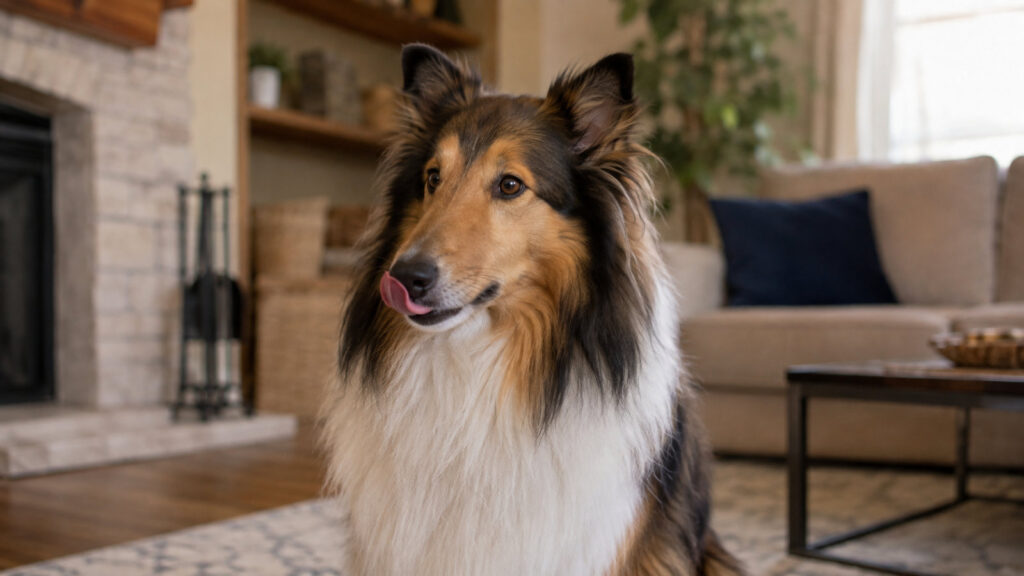
Dogs cannot say “I feel sick,” so they say it the available ways: licking their lips over and over with no food in sight, swallowing hard and often, smacking, licking at the air, and in the fully developed scene, bolting for the grass to gulp it frantically at 3 a.m. Owners read these as quirks for months before someone names them: they are, most often, the canine nausea vocabulary. This page decodes the set, including the two look-alikes (stress and dental pain) that use the same words.
Quick answer
Repeated lip licking, hard swallowing, air licking, smacking, drooling, and urgent grass gulping – especially together, and especially at night or before vomiting – are nausea signals: saliva surges before vomiting, and the licking-swallowing manages it. One-off episodes that end in a vomit or pass quietly can be monitored like any single vomit (adult dog, otherwise bright, nothing on the emergency list).
Patterns matter more: daily episodes, night gulping, or signals plus appetite changes point at reflux, bilious vomiting, dietary trouble, or other causes (GI, oral, and beyond) worth a workup. The look-alikes: stress uses lip licking too (context separates them, triggers versus mealtimes), and dental or mouth pain causes licking-swallowing with no nausea at all.
Why nausea looks like this
Nausea floods the mouth with saliva, the body’s pre-vomit protocol, and everything on the signal list is a dog managing that flood or the queasy feeling behind it: lips get licked, saliva gets swallowed hard, the air-licking and smacking work the same overflow. Add the classics that complete the scene: drooling on an otherwise dry day, the hollow gulping sound, refusing food while seeming interested (the sniff-and-retreat our nausea pages describe), eating grass with urgency rather than leisure (the style difference is the tell), and restlessness. A nauseated dog cannot get comfortable.
The single most useful diagnostic you own: film an episode. Thirty seconds of the licking-gulping sequence tells a vet more than any description, and it usually settles the look-alike question below, though an exam may still be needed to finish the job.
The pattern sort: one-off, nightly, or daily
- The one-off episode – licking builds, maybe a grass raid, maybe a vomit, then normal: treat like a single vomit (that guide’s rules – monitor, water, small bland meal later). Dietary indiscretion writes many of these, though a single episode rarely proves its own cause.
- The night-and-early-morning pattern: gulping episodes at 2-to-6 a.m., often ending in yellow foam. The usual story is the empty-stomach bile pattern (bilious vomiting syndrome, a diagnosis your vet reaches after other causes are considered), acid and bile irritating a stomach that ran dry. A later dinner or bedtime snack helps many dogs; recurring episodes deserve the vet conversation before the label sticks.
- The after-meals pattern – licking-swallowing following food points at reflux, too-fast eating, or a diet mismatch: slow-feeder experiments and a diet conversation, with the vet involved if it is routine.
- The daily-regardless pattern – signals most days, with or without vomiting, or with appetite drift, weight loss, or stool changes: this is the workup tier. Chronic nausea has real causes (GI inflammation, food intolerance, pancreatitis, kidney and liver contributions in seniors; the bloodwork earns its keep here).
- The escalation scene – frantic gulping, drooling, retching with NOTHING coming up, restlessness, a swelling belly: that specific combination is the bloat presentation. The minutes-matter emergency. Frantic-plus-unproductive is never a wait-and-see.
The two look-alikes
Stress uses the same word: lip licking is also a top-tier anxiety signal, the whisper our body-language guide teaches. Context separates the dialects: stress-licking fires at triggers (the vacuum, the tense voices, the vet lobby) and stops when the trigger passes; nausea-licking clusters around meals, nights, and GI events, and travels with drooling and grass. Overlap is real, though (stress upsets stomachs, and nausea arrives at stressful times) so persistent ambiguity goes to the vet. When the video shows licking with no trigger and no GI story, read the anxiety guide next.
Mouth pain speaks it too: dental disease, a fractured tooth, something wedged across the palate, or mouth ulcers produce licking, smacking, and hard swallowing with zero nausea – usually with one-sided chewing, food dropping, or breath changes (that decoder). A mouth check, or the vet’s, belongs early in any persistent case.
When to see your veterinarian
Drive now for the escalation scene (frantic gulping + unproductive retching + swelling belly: the bloat emergency). Same-day for signals with repeated vomiting, blood or black tarry stool, or a dog who cannot settle. Promptly for: daily or nightly patterns, signals plus appetite or weight drift, suspected mouth pain, or episodes recurring despite the schedule fixes. Same-day if the dog is not eating, not drinking, or seems painful. Bring the video; it is worth three appointments of description.
References and further reading
- Merck Veterinary Manual. Digestive disorders of dogs.
- Veterinary Partner (VIN). Client education library.
Frequently asked questions
Why does my dog keep licking his lips and swallowing?
Together and repeatedly, that pair is most often nausea, saliva surging and being managed. Around triggers instead of meals, it can be stress language; with chewing changes or bad breath, mouth pain. The pattern and a thirty-second video sort the three.
Why does my dog lick the air?
Occasional air-licking rides with the nausea set; compulsive or trance-like air-licking episodes are a different conversation (possible focal seizure activity or compulsive behavior) that deserves a video and a vet visit of its own. Frequency and context decide which page you are on.
Why does my dog gulp and eat grass frantically at night?
That scene classically fits empty-stomach nausea, bile irritating a stomach that ran dry overnight. A later dinner or bedtime snack helps many dogs; episodes that persist anyway, or that end in unproductive retching with a swelling belly, are vet territory. The second one immediately.
Should I feed my dog when he is licking his lips and gulping?
For the confirmed empty-stomach pattern, ask your vet about a bedtime snack, and do not use appetite as a nausea test, because plenty of nauseated dogs still eat. Never force-feed, and skip food entirely if there is any retching-without-producing, belly swelling, or a possible swallowed object: those want a clinic, not a snack.
Educational content, not a substitute for veterinary advice. If your dog seems unwell, contact your veterinarian.
This guide is educational and is not a substitute for veterinary diagnosis or care. If your dog is unwell, or you are unsure, talk to your veterinarian.