

My Dog Has Diarrhea But Is Acting Fine: The 48-Hour Rule

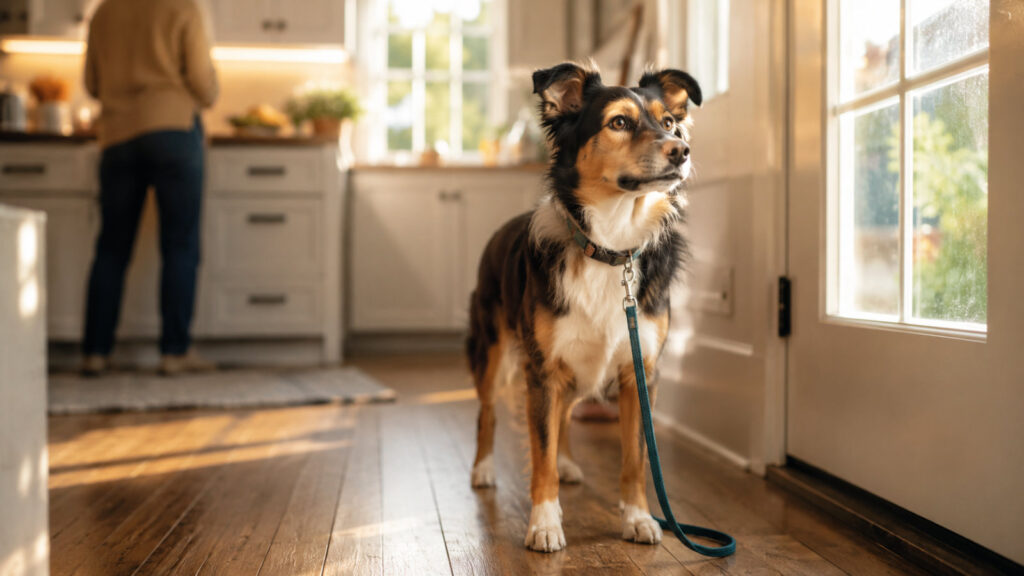
It is one of dog ownership’s strangest combinations: the yard says something is clearly wrong, and the dog says absolutely nothing is, tail up, appetite intact, ball delivered to your feet. Good news first: a dog who feels fine usually is mostly fine, and most simple diarrhea passes at home within two days. The job of this page is the second half of that sentence, doing home care properly, and knowing the exact signs that end the waiting.
Quick answer
An adult dog with diarrhea who is otherwise acting normal – eating, drinking, playful – can usually be monitored at home for 24 to 48 hours: a bland diet in small portions, constant fresh water, and watching. Go to the vet without waiting for more than a faint surface streak of blood, any black tarry stool, repeated vomiting, lethargy, refusal to drink, a bloated or painful belly, or diarrhea that simply outlasts 48 hours. Puppies, seniors, and very small dogs get a shorter leash: they dehydrate fast, so call sooner.
Why a happy dog with loose stool is usually a small problem
The common causes are genuinely common: the mystery snack from the yard or trash (vets call it dietary indiscretion, owners call it Tuesday), a too-fast food switch, a rich treat, stress from boarding or fireworks (that one has its own pattern – see below), or a mild bug passing through. In all of these, the gut is doing its job loudly, flushing, and the dog behind the gut feels fine.
That behavior is your most reliable signal: a bright, hungry, mischievous dog is telling you the system is annoyed, not failing. Reliable, not almighty: brightness does not override blood, repeated vomiting, a swelling belly, or a known bad swallow – the red flags below outrank even a wagging tail.
Home care that actually helps (the 48-hour protocol)
- Water is the whole ballgame. Diarrhea drains fluids; keep fresh water always available and notice whether it is being drunk. A dog who stops drinking has left the acting-fine category.
- Feed bland, small, and often: plain cooked chicken (no skin, no seasoning) with plain white rice, in several small meals. Skip rich food, treats, and chews until stools reform.
- Plain canned pumpkin (pure pumpkin, never pie filling), a spoonful with meals adds fiber that helps many dogs firm up.
- Do not reach for human anti-diarrhea medicine. Some are outright dangerous for dogs, certain breeds carry a gene that turns common ones toxic, and masking the symptom can hide the story your vet needs. If you feel medicine is required, that is by definition a vet call.
- Transition back slowly: once stools are normal for a day, mix regular food back in over two to three days. Racing back to kibble is the classic relapse.
- Take notes: frequency, color, consistency, anything odd in it. If you do end up at the clinic, that log (and honestly, a photo) is worth more than a week of memory.
The red flags that end the waiting – immediately
- Blood: more than a faint surface streak, or any amount mixed through, or black, tarry stool (digested blood; same-day urgent, bright dog or not).
- Repeated vomiting alongside: vomiting plus diarrhea dehydrates a dog quickly and points at a more serious cause. A second vomit in the same day counts as repeated.
- The behavior change: lethargy, hiding, refusing food AND water, or your gut saying this is not my dog anymore.
- A bloated, tight, or painful belly – especially with unproductive retching: that combination is an emergency, minutes-matter category (bloat), not a stomach bug.
- Pale gums, weakness, collapse.
- A known bad swallow: toxin, medication, toy parts, corn cob, bones. Call now, do not wait for the stool to decide.
- The clock: past 48 hours, even in a cheerful dog, the freebie window closes. Persistent diarrhea has causes worth finding (parasites are high on that list, and not alone on it).
The stress pattern: mucus, urgency, and a perfectly happy dog
If the diarrhea arrived within a day or two of boarding, a move, fireworks, a new pet, or any upheaval (and features mucus, urgency, straining, and small frequent amounts, sometimes with a thin streak of red) the pattern fits stress colitis, the gut’s response to a hard week; though parasites and other causes can wear the same costume, which is why a first episode earns a vet call to make the diagnosis once, properly.
It has its own guide, it usually settles quickly with bland food and calm, and if it happens at every kennel stay, the longer-term fix lives in our anxiety guide, not the pharmacy.
Call the vet now – not in 48 hours – if
There is more than a faint streak of blood, any black tarry stool, repeated vomiting, lethargy or refusal to drink, a bloated or painful belly (with retching = emergency now), pale gums, weakness or collapse, a known toxin or object swallowed, or the patient is a puppy, a senior, or a toy breed, where “wait and see” costs more than a phone call.
References and further reading
Frequently asked questions
How long should I wait if my dog has diarrhea but seems fine?
Up to 48 hours for a healthy adult who is eating, drinking, and behaving normally: with bland food and water in the meantime. Any red flag (blood, vomiting, lethargy, bloated belly) ends the wait immediately, and puppies, seniors, and tiny dogs should be called in sooner.
My dog has had diarrhea for 3 days – is that too long?
Yes; three days is past the 48-hour line even in a cheerful dog. Persistent diarrhea has findable causes (parasites are high on the list), dehydration compounds quietly, and the visit is routine: bring a fresh sample and the week’s story. Call today rather than waiting for day four.
What can I give my dog to stop diarrhea?
Bland food (plain chicken and rice), a spoonful of plain canned pumpkin, and water. Not human anti-diarrheal medicine, which can be dangerous for dogs and hides information your vet may need. If it feels like the situation needs actual medication, it needs a veterinarian.
Why does my dog have diarrhea with mucus but acts normal?
Mucus with urgency and small frequent amounts is the large-intestine pattern, classically stress colitis if a stressful event just happened. It usually settles in days with bland food and calm; our stress colitis guide covers when it needs more.
Should I feed my dog during diarrhea or fast them?
Current thinking favors feeding through it, small bland meals support the gut lining better than a long fast for most adult dogs. Never fast a puppy, a diabetic, or a tiny breed without veterinary guidance.
Educational content, not a substitute for veterinary advice. If your dog seems unwell, contact your veterinarian.
This guide is educational and is not a substitute for veterinary diagnosis or care. If your dog is unwell, or you are unsure, talk to your veterinarian.