

Why Do Dogs Eat Grass? The Real Answers (Mostly Not What You Heard)

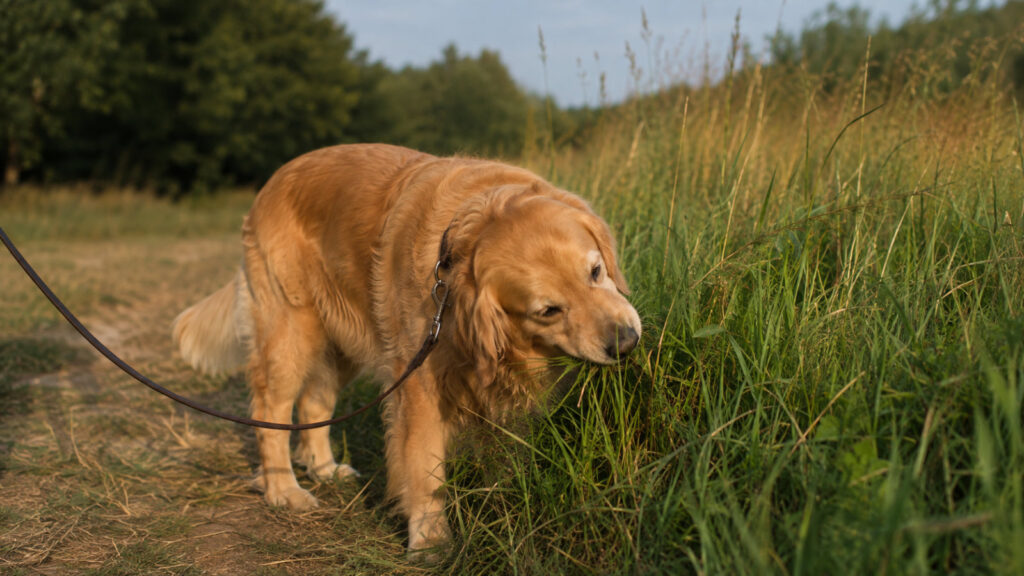
Watch a dog graze the lawn like a tiny cow and the explanation everyone reaches for arrives instantly: he must feel sick. Dogs eat grass to make themselves vomit. It is one of the most repeated facts in dog ownership, and the research says it is mostly wrong: in the studies that actually asked, fewer than one in ten grass-eating dogs seemed unwell beforehand, and fewer than one in four vomited afterward. So why do they do it? Here are the real answers, and the short, honest list of when grazing deserves attention.
Quick answer
Grass eating is normal dog behavior, not usually a sickness signal: surveys of healthy dogs found the large majority graze at least sometimes, with fewer than 10 percent appearing ill first and under 25 percent vomiting after. The best-supported explanations: dogs are natural scavenger-omnivores (wild canids eat plant matter routinely), grass adds fiber and texture many seem to enjoy, and habit and boredom play their part. No single reason is proven.
It earns attention when it changes: frantic, compulsive gulping (often WITH nausea, lip licking, drooling), a sudden increase, grazing plus GI signs, or any chemically treated lawn. Otherwise: a grazing dog with a wagging tail is being a dog.
The myth, measured
The self-medication theory, dogs eat grass to induce vomiting, got tested the sensible way: researchers surveyed owners of ordinary, healthy dogs about grazing. The findings that reframe the lawn: the large majority of dogs eat grass at least occasionally (it is among the most commonly reported “odd” behaviors precisely because it is not odd), fewer than one in ten seemed ill beforehand, and fewer than one in four vomited afterward – meaning that for most dogs most of the time, grass goes down and stays down without drama in either direction.
Vomiting after enthusiastic grass-gulping does happen. The likeliest explanation is simple mechanical irritation from long unchewed blades, though nobody has proven the mechanism, and that is probably how the myth earned its persistence: the occasional graze-then-vomit is memorable; the thousand uneventful grazes are not.
Why they actually do it
- Because they are scavenger-omnivores, not wolves in sweaters: canids have always eaten plant matter, studies of wild wolf and coyote diets find grass routinely, and stomach-content surveys say it is ordinary canine cuisine, not aberration.
- Fiber and texture: grass adds roughage, and some dogs visibly prefer certain grasses (the careful selection of one tall sweet blade is a familiar ritual). Palatability is allowed to be the whole answer.
- Boredom, habit, and spring: many owners report grazing spikes with under-stimulation (a job for the enrichment guide) and with fresh spring growth – patterns worth knowing even though the studies have not settled them.
- Occasionally, genuinely, the stomach: a minority of dogs DO graze more when nauseated. The tell is the style (frantic, indiscriminate gulping) plus nausea signs (lip licking, drooling, restlessness). Style is a clue, not a diagnosis, but frantic gulping with those signs is the version worth a call.
When grass-eating earns attention
The behavior is benign; the changes are informative. A sudden increase or frantic style – especially with lip licking, drooling, repeated swallowing, or vomiting beyond the occasional – can signal nausea or another medical problem and deserves a vet call (our vomiting guide holds the home sorting). Grazing plus poor appetite, weight loss, or stool changes joins the same queue.
Compulsive-scale grazing (a dog who grazes constantly, dirt-eating (pica) alongside) deserves both a medical look (anemia and GI disease can drive pica) and an enrichment audit.
And the biggest practical risk was never the grass: chemically treated lawns (herbicides, pesticides, fresh fertilizer) turn a harmless habit hazardous – know your own lawn’s schedule, and steer grazing away from the manicured mystery lawns on walks. Toxic plants mixed into grazing territory carry their own list; when in doubt about a plant, the safety index and a poison-line number beat guessing.
When to see your veterinarian
For grass-eating that changed, suddenly frantic, dramatically increased, or newly paired with vomiting, appetite loss, weight loss, or stool changes. Urgently for collapse, repeated vomiting, pale gums, or a distending belly with unproductive retching. Drive now (the emergency list applies). If the grass was recently treated or an unknown product may be involved, call your vet or a pet poison line immediately with the product name. Urgency depends on the chemical, and they will run it with you while you watch for symptoms. The dog who has grazed calmly for years and is otherwise himself needs no appointment for it.
References and further reading
- Sueda, Hart, Cliff (2008). Characterisation of plant eating in dogs. Applied Animal Behavior Science.
- VCA Animal Hospitals. Why do dogs eat grass?
Frequently asked questions
Do dogs eat grass to settle their stomach?
Mostly no, research found fewer than one in ten grass-eaters seemed ill first, and fewer than one in four vomited after. A minority genuinely do graze when nauseated; the frantic-gulping style plus lip licking and drooling is that minority’s signature.
Should I stop my dog from eating grass?
On your own untreated lawn, generally no. It is normal behavior. Steer away from chemically treated grass, roadside verges, and unknown plants, redirect the compulsive-scale grazer into real enrichment, and mention style changes to your vet.
Why does my dog eat grass and then throw up?
Long unchewed blades likely irritate the stomach into a return trip, mechanical, not illness, when occasional. The pattern to report is the reverse order: nausea signs first (drooling, lip licking, restlessness), then urgent grazing, then vomiting, repeatedly.
Is eating grass a sign my dog’s diet is missing something?
Usually not on a complete diet; the fiber theory has some plausibility but healthy, well-fed dogs graze anyway. Ravenous grass-and-dirt eating (pica) is different and worth a workup; casual lawn sampling is just a dog being a dog.
Educational content, not a substitute for veterinary advice. If your dog seems unwell, contact your veterinarian.
This guide is educational and is not a substitute for veterinary diagnosis or care. If your dog is unwell, or you are unsure, talk to your veterinarian.