

Dog Throwing Up But Acting Normal: One-Off, Pattern, or Problem?

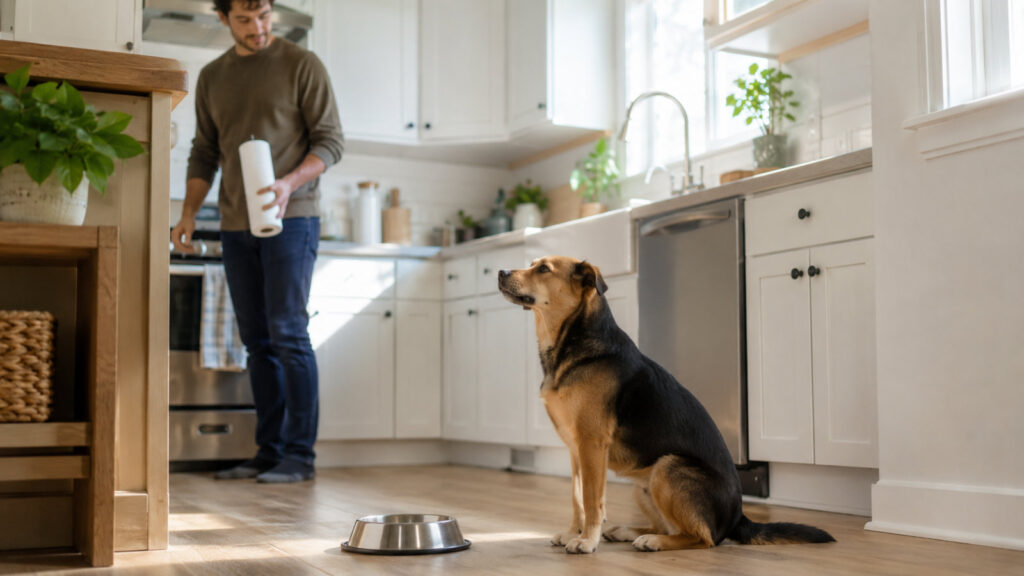
Dogs vomit more casually than almost any animal we live with (a grass snack, a too-fast dinner, an empty-stomach morning) and then trot off as if nothing happened, leaving you holding the paper towels and the question. The sorting that matters is not the single event; it is the pattern around it. Here is how to read one vomit versus a rhythm versus a warning.
Quick answer
A single vomit from an adult dog who then eats, drinks, and behaves normally is usually safe to monitor at home: rest the stomach briefly, offer water, then small bland meals, and watch for a repeat – puppies, seniors, tiny breeds, and dogs with chronic disease earn a call sooner.
Patterns have meanings, yellow foam in the early morning often fits an empty stomach (a later evening meal helps many dogs), throwing up right after eating points to speed-eating or, if there is no heaving at all, regurgitation, a different problem. Vet time: a second vomit in the same day, blood, unproductive retching with a bloated belly (emergency), lethargy, or a known bad swallow.
First, one question: did the food come up with effort, or just fall out?
Real vomiting is active, drooling and lip licking first, then visible belly heaves. If what you saw was passive (food sliding back out, no warning, no effort, often in a tube shape moments after eating) that was regurgitation, and it has its own guide and its own causes. The distinction changes everything downstream, so settle it first; a phone video settles it best.
The patterns and what they mean
- Yellow foam, early morning, otherwise fine: often the empty-stomach pattern – bile irritating a stomach that went too long between meals. The classic fix is rearranging the schedule: a later evening meal or small bedtime snack. If it keeps recurring despite that, the pattern earns a vet conversation.
- White foam or clear liquid, otherwise fine: froth is usually saliva and stomach fluid from an empty or irritated stomach, a one-off in a bright adult dog reads like any single vomit. Repeated foam, foam alongside retching that produces NOTHING (check the belly; swelling means drive now), or foam with a dulling dog = call.
- Right after eating, food barely changed: speed-eating is the usual suspect (a slow-feeder bowl is the cheapest fix in this article); sudden food changes and post-meal zoomies contribute. If it happens with no heaving, reread the paragraph above. That is regurgitation territory.
- Grass, gone, done: the occasional graze-and-vomit with a normal dog afterward is common and mostly mundane. Frequent deliberate grass-vomiting cycles, though, suggest ongoing nausea worth investigating.
- The one-off mystery: ate something rich, drank too fast, car ride – a single episode with a normal dog behind it is monitor-at-home material: water available, stomach rest, small bland meal a few hours later, eyes open for a repeat.
- The repeat performance: a second vomit in the same day counts as repeated vomiting. Call. Same for a one-off that becomes weekly: the freebie explanations thin out fast. Repeated vomiting dehydrates, and chronic intermittent vomiting has a real differential list (diet intolerance, parasites, organ and hormonal causes) your vet can actually work through.
Home care after a one-off
Let the stomach settle briefly, keep water available (small amounts often beat one huge gulp that bounces right back), then offer a small bland meal, plain chicken and rice, a few hours later. If all stays quiet, mix the regular food and meal size back in over two to three days. The same two rules as the diarrhea guide apply: no human medications without a vet’s say-so, and take notes, time, contents (undigested? bile? anything foreign?), and what the day looked like. A photo feels ridiculous and is genuinely useful.
Skip the monitoring and call now if
Your dog retches without producing anything, especially with a swelling or tight belly (possible bloat: an emergency where minutes matter); there is blood or what looks like coffee grounds in vomit, or black tarry stool; a second vomit lands the same day or vomiting pairs with diarrhea; your dog goes lethargic or weak, refuses water, or shows pale gums or collapse; something dangerous may have been swallowed (toy parts, corn cobs, bones, medications, toxins); or the patient is a puppy, senior, tiny breed, or has diabetes or kidney disease.
References and further reading
- Washington State University Veterinary Teaching Hospital. Vomiting pets.
- American Kennel Club. Vomiting versus regurgitation in dogs.
Frequently asked questions
Should I worry if my dog threw up once but is acting normal?
Usually no, rest the stomach, offer water, feed small and bland a few hours later, and watch. The worry starts with repeats, blood, retching-without-producing, lethargy, or a suspicious missing object.
Why does my dog throw up yellow foam in the morning?
That often fits the empty-stomach pattern, bile with nowhere to go. A later dinner or a small bedtime snack helps many dogs. If it persists anyway, bring the pattern (times, frequency) to your vet. Other causes can look identical, and the diagnosis deserves to be made properly.
Why is my dog throwing up white foam?
Foamy white or clear vomit usually means an empty or irritated stomach. The froth is saliva and stomach fluid. One episode in a bright adult dog: watch, water, small bland meal later. Repeated foam, foam with unproductive retching and a swelling belly (drive; that is the bloat check), or foam with low energy earns the call.
Why does my dog throw up right after eating but acts fine?
Speed-eating is the usual culprit, a slow-feeder bowl or spreading kibble on a tray slows the gulp. But if the food comes back with no heaving at all, that is regurgitation, not vomiting, and deserves its own look: our undigested-food guide explains the difference.
When is dog vomiting an emergency?
Unproductive retching with a bloating belly (now; this is the minutes-matter one), blood or coffee-ground material, repeated vomiting with weakness, or any vomiting after a known toxin or object. When in doubt, the phone call is free.
Educational content, not a substitute for veterinary advice. If your dog seems unwell, contact your veterinarian.
This guide is educational and is not a substitute for veterinary diagnosis or care. If your dog is unwell, or you are unsure, talk to your veterinarian.