

Old Dogs Losing Teeth: Why It Is Not Normal Aging, and What to Do

A tooth on the kitchen floor, breath that clears the room, a senior who suddenly chews on one side or drops kibble – owners often file all of it under old age. Here is the correction that matters: dogs are not supposed to lose teeth with age, at any age. A loose or lost tooth in an old dog means advanced dental disease – and dental disease is one of the most treatable, most quality-of-life-changing problems in all of senior care.
Quick answer
Old dogs losing teeth is a sign of advanced periodontal disease – infection and inflammation of the gums and the bone around the teeth – not normal aging. The other signs: serious bad breath, red or bleeding gums, drooling, chewing on one side, dropping food, pawing at the mouth, or going quiet at the bowl. It is treatable at any age, senior anesthesia is far safer than its reputation with proper pre-anesthetic screening, and a treated mouth routinely gives back energy and appetite owners assumed age had taken.
Why teeth fall out – and why “old age” is the wrong answer
Periodontal disease is a slow siege: plaque hardens to tartar, bacteria work under the gumline, the gums recede and the bone that anchors each tooth erodes until teeth loosen and fall out. It is the most common disease in adult dogs, and by senior years most dogs have some degree of it – but the disease, not the birthday, is what takes teeth. That distinction matters because a siege can be stopped: a professional cleaning removes the attack, extractions remove the lost causes, and home care holds the line afterward.
The stakes are bigger than the mouth. Chronic oral infection means a constant bacterial load and inflammation the whole body carries – it is linked with strain on the heart and kidneys, exactly the organs a senior can least afford to tax. And chronic mouth pain is a personality thief: many “grumpy old dogs” are dogs with a toothache that nobody could see.
The signs seniors show
- Breath that got genuinely bad – not ordinary dog breath, but the smell of infection. The single most-ignored sign.
- Eating changes: chewing on one side, dropping kibble, swallowing food whole, preferring soft food, walking away from the bowl hungry.
- Mouth signals: drooling (sometimes blood-tinged), pawing at the face, a new head-shyness when touched near the muzzle.
- Visible changes: red gum lines, heavy brown tartar, receding gums, any loose or missing tooth.
- Mood: quieter, less playful, “slowing down” – pain wears a lot of disguises in stoic old dogs.
The anesthesia question – the fear that keeps seniors untreated
The most common reason old dogs live with rotten mouths is not money – it is the sentence “I do not want to put him under at his age.” The honest answer: age alone is not the deciding risk; what matters is the disease your vet finds or rules out before anesthesia. Modern senior dentistry starts with exactly that diagnosis – pre-anesthetic bloodwork, a heart check (if your dog has a murmur, our guide covers anesthesia with a heart murmur – it is usually manageable, not prohibitive), and an anesthetic plan built for an older body, with monitoring throughout. Vets do senior dentals every week precisely because the math favors it: a planned, monitored anesthetic against months or years of chronic pain and infection. Ask your vet to walk you through their senior protocol – a good practice will be glad you asked.
Home care that actually holds the line
- Brushing remains king – even a few times a week changes outcomes. Dog toothpaste only (human paste is not safe to swallow), a soft brush or finger brush, and a slow ramp-up: paste as a treat first, then gums, then teeth.
- Use the shortcut list: the Veterinary Oral Health Council (VOHC) seal marks chews, diets, and water additives with real evidence behind them – look for it instead of marketing claims.
- Soft food is comfort, not treatment – it helps a sore mouth eat but does not stop the disease underneath.
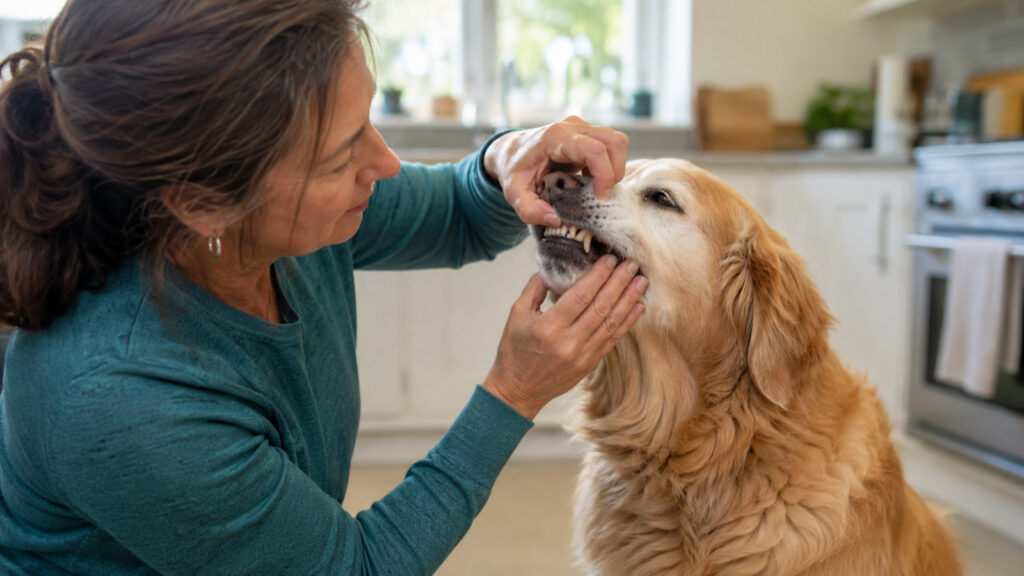
- Lift the lip monthly. Thirty seconds: gum color at the tooth line, tartar, anything loose, any smell change. You will catch problems months before the bowl does.
When to see your veterinarian
Book a dental exam for bad breath plus any eating change, visible tartar with red gums, or any loose or lost tooth. Go promptly for a swollen face or muzzle (tooth-root abscess), refusal to eat, or bleeding from the mouth – and treat a suddenly swollen eye-area with urgency, as upper tooth roots sit just beneath it.
References and further reading
- VCA Animal Hospitals. Dental disease in dogs.
- Merck Veterinary Manual. Dental disorders of dogs.
- Veterinary Oral Health Council. Accepted products list.
Frequently asked questions
Is it normal for old dogs to lose teeth?
No – healthy teeth do not fall out with age. A loose or lost tooth means advanced periodontal disease, which is treatable. The birthday is a coincidence; the disease is the cause.
Is my dog too old for a dental cleaning?
Almost never on age alone. With pre-anesthetic bloodwork, a heart check, and a senior anesthetic protocol, dental procedures are performed safely on very old dogs every day – and the quality-of-life payoff is often dramatic. The riskier choice is usually the untreated mouth.
Why does my old dog’s breath smell so bad?
Genuinely foul breath in a senior is the smell of oral infection – bacteria under the gumline – not something age explains away. It is usually the first and most ignored sign of dental disease that needs treatment.
Can a dog eat normally with missing teeth?
Yes – dogs adapt remarkably well after extractions, and most eat better within days of a treated mouth than they did with the painful teeth in place. Many go straight back to kibble; softening food eases the transition.
Educational content, not a substitute for veterinary advice. If your dog seems unwell, contact your veterinarian.
This guide is educational and is not a substitute for veterinary diagnosis or care. If you are worried about your dog, talk to your veterinarian.