

Supplements for Senior Dogs: What the Evidence Says

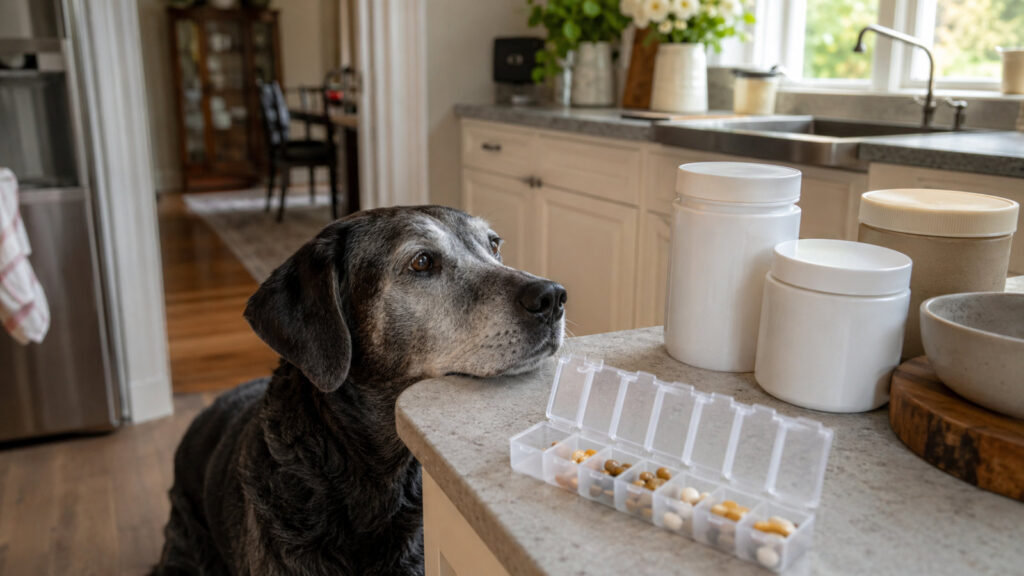
Somewhere between 10 and 33 percent of American dogs are given a supplement, and the market selling them is regulated far more loosely than human supplements, a point Dr. Fossum makes bluntly in her book. That combination (enormous use, thin oversight) is why this page exists. Some senior-dog supplements have genuine support and a sensible place; others are hope in a jar. Here is the honest sort, from a veterinarian who both formulates supplements and tells you to check the paperwork on hers.
Quick answer
The senior supplements with the most sensible case: omega-3 fatty acids (joints, skin, heart support), joint support (glucosamine/chondroitin and related chondroprotectives), targeted cognitive-support formulas for aging dogs, and condition-matched support your vet endorses. Buy like a skeptic: a current certificate of analysis, the NASC quality seal, honest structure-function claims only, and match the supplement to YOUR dog’s actual needs, ideally in a conversation with your vet.
First, the market warning from the book
Chapter 7 of the book cites a 2020 review by Dr. Carrie Finco with two facts every buyer should hold at once: pet supplements are a massive business, and “oversight and regulation remain limited as compared to human dietary supplement regulations.” There is no FDA regulatory definition for nutraceuticals; accountability for what is actually in the jar falls, in practice, to the manufacturer’s own standards. The book’s advice, our advice, follows directly: buy only from companies that publish a certificate of analysis for the batch, and look for the National Animal Supplement Council (NASC) quality seal, awarded to manufacturers who meet the council’s standards. “Look for this logo when purchasing pet supplements such as CBD,” the book says, and that sentence applies to every jar on this page, including ours.
The senior shelf, sorted honestly
| Supplement | The honest case | Best fit |
|---|---|---|
| Omega-3 fatty acids (fish oil, GLM) | The workhorse: support for joints, skin, and heart with a long track record; effects build over weeks | Many seniors, chosen with your vet |
| Joint support (glucosamine, chondroitin, chondroprotectives) | Evidence is mixed but the safety margin is wide; many stiff dogs seem helped as part of a plan | Stiff seniors, alongside weight control and exercise, never instead of them |
| Cognitive support formulas | Targeted nutrient blends that support normal cognitive function in aging dogs; CogniCaps was formulated for senior cognitive support and studied in senior dogs | Senior dogs whose owners want cognitive support; see the cognitive-support evidence guide for the full picture |
| Heart support blends | Nutrients commonly used to support cardiac wellness (the book discusses these in its heart chapter) | Dogs whose veterinarians recommend cardiac wellness support, alongside, never instead of, veterinary care; see heart supplements |
| CBD (broad-spectrum hemp extract) | May support comfort and calm; the strongest research is in joint comfort and mobility, covered honestly in CBD for senior dogs | Comfort-and-calm support, using the brand’s weight-based calculator and cleared with your vet if your dog takes medications |
| Multivitamins and “longevity” blends | A balanced diet already does this job; broad blends mostly add cost, and excess vitamin D3 can harm kidneys | Only where a vet identifies an actual gap |
What Dr. Fossum gives her own senior dog
What Dr. Fossum does for Dan
In the book’s heart chapter, Dr. Fossum describes her routine for her own senior Labrador, Dan: he takes a cardiac wellness supplement she selected for its ingredient profile; and, just as deliberately, he gets structured veterinary monitoring: twice a year, or before any anesthesia, Dan has a chest radiograph, routine blood work, and a hands-on heart exam. Her point is the pairing: wellness support never replaces the monitoring.
– adapted from Senior Dogs: The Essential Guide, Chapter 6
Note what sits beside the supplement in that box: twice-yearly imaging and bloodwork. That is the pattern for every row of the table above: supplements support a plan built on veterinary care, weight management, and exercise; they do not replace one. And per the book’s own buying rules, every product of ours mentioned here (CogniCaps, CardioChew, and the Rejuvenator hemp extracts) publishes its certificate of analysis, and we would tell you to walk away from any brand, ours included, that did not.
How to add a supplement without fooling yourself
One change at a time, or you will never know what helped. Give it a fair window: most of the table above is judged over four to eight weeks, not days. Define the win before you start (rises easier? brighter in the evening? keeps up on the walk?) and note it weekly. Tell your vet everything your dog takes; supplements interact with medications, CBD included. And set a review date: a supplement that earned nothing in eight weeks does not deserve month nine.
Before you add anything
Run the shelf past your veterinarian, especially for a dog on any medication, with kidney or liver disease (some supplements and excess vitamin D3 are hard on kidneys), or headed for anesthesia. Bring the actual labels; “a joint supplement” is not enough information for an interaction check.
References and further reading
- Fossum TW, Ford S. Senior Dogs: The Essential Guide (2024), Chapters 6-7.
- National Animal Supplement Council (NASC) Quality Seal Program.
- Finco CJ. Veterinary Pet Supplements and Nutraceuticals. Nutrition Today (2020), as reviewed in the book, Chapter 7.
Frequently asked questions
What supplements should I give my senior dog?
Start from your dog’s needs, not the shelf: omega-3s have the broadest case; joint support fits stiff dogs; cognitive and cardiac formulas fit dogs with those specific concerns. One change at a time, vet in the loop.
How do I know if a dog supplement is good quality?
A current certificate of analysis for the batch and the NASC quality seal, the two checks the book itself teaches. No COA, no purchase, whoever the brand is.
Do senior dogs need a multivitamin?
Rarely: a complete diet already covers it, and more is not better (excess vitamin D3 can harm kidneys). Spend the supplement budget on something matched to an actual need instead.
Can supplements replace my senior dog’s medication?
No. Supplements support normal function alongside veterinary care; the dogs who do best get both, in the right order: diagnosis and treatment first, support second.
These statements have not been evaluated by the Food and Drug Administration. These products are not intended to diagnose, treat, cure, or prevent any disease. Educational content, not a substitute for veterinary advice.
This guide is educational and is not a substitute for veterinary diagnosis or care. If you are worried about your dog, talk to your veterinarian.