

Old Dog Not Eating: What to Try and When to Worry

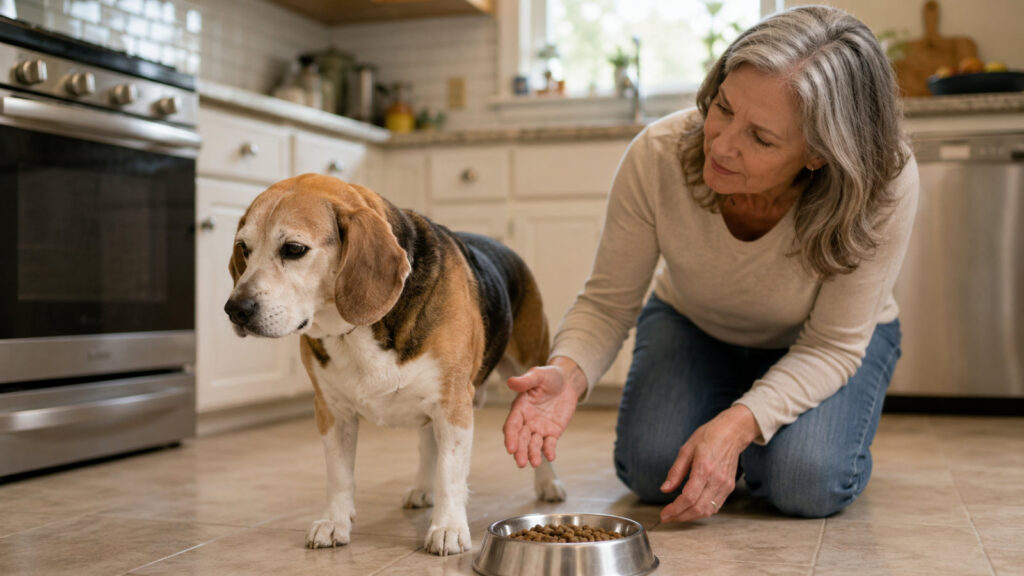
Few things unsettle an owner faster than a senior dog who walks away from the bowl. Before the worry spiral starts, hold onto the useful version of that feeling: in an older dog, appetite is information. Dogs do not skip meals to make a point – a senior who stops eating is telling you something hurts, something nauseates, or something is wrong. The job is to read the message early, and this page is the field guide.
Quick answer
The common causes of appetite loss in senior dogs are dental pain (badly underdiagnosed – by the time eating stops, dental disease is often severe), nausea from kidney or other organ disease, heart disease, pain, and medication side effects. Try warmed, strong-smelling food and a quiet mealtime tonight – but a senior who eats almost nothing for 24 hours needs a vet visit, and sooner if they are also weak, vomiting, or clearly unwell.
The usual suspects, in rough order
| Cause | The clues alongside it |
|---|---|
| Dental pain | Approaches the bowl then backs off; prefers soft food; chews on one side; drops kibble; bad breath written off for years. Dogs hide mouth pain until it is severe |
| Nausea (kidneys, liver, gut) | Eats grass, lip-licks, drools, turns away at the SMELL of food; drinking more water alongside eating less points at the kidneys – see kidney disease |
| Pain elsewhere | A dog whose neck, back, or joints hurt may find bending to a floor bowl the problem – watch HOW they eat, not just whether |
| Heart disease | Appetite fades alongside tiring on walks or coughing; see the heart guide |
| Medication side effects | Appetite dropped within days of a new prescription – call the vet BEFORE stopping anything |
| Cognitive change | Forgets mid-meal, walks away, seems confused about the bowl – see the dementia guide |
What to try at home tonight
While you watch the clock on the 24-hour rule, a few honest tricks separate “off food” from “cannot or will not eat”: warm the food slightly (warmth releases smell, and smell drives dog appetite), add a spoon of plain wet food or a small amount of water from tuna packed in water (skip salty or seasoned options), hand-feed a few pieces in a calm room away from other pets, and raise the bowl a few inches if bending looks uncomfortable. If your dog devours the upgraded offer, you have learned something useful – appetite is still present. But in a senior, new pickiness that persists still deserves a checkup. If they refuse even the good stuff, stop coaxing and call your veterinarian.
What not to do
Do not switch foods repeatedly in a panic – three new bags in a week teaches you nothing and upsets an old stomach. Do not force-feed by syringe on your own initiative; a dog who needs feeding support needs a diagnosis first. Do not reach for human appetite fixes or leftovers rich enough to trigger pancreatitis. And do not wait out a multi-day fast “to see if it passes” – in an aging body, days without food do real harm, and whatever caused the fast is still there.
The pattern that matters most: eating less over weeks
The dramatic version of this problem – the total food strike – sends owners to the vet fast, which is good. The dangerous version is quieter: a senior who eats a little less each week, loses weight slowly, and is “just getting picky.” That slope is how kidney disease, dental disease, and worse stay hidden for months. If the bag is lasting longer than it used to, or ribs are easier to feel – weigh the dog, weigh the food, and make the appointment. Our weight loss guide covers that slope in detail.
The red lines
See a vet within 24 hours for a senior eating almost nothing – and treat it as urgent the same day if there is also vomiting, weakness or wobbliness, labored breathing, a painful or bloated belly, or a dog who also stops drinking. A senior dog’s reserves are smaller than they look; err early.
References and further reading
- PetMD. Why is my dog not eating?
- Dr. Buzby. Why is my old dog not eating? Vet causes and tips.
- Fossum TW, Ford S. Senior Dogs: The Essential Guide (2024), Chapters 4-5.
Frequently asked questions
When should I worry about my old dog not eating?
At 24 hours of eating almost nothing, book the vet. Sooner – same day – if there is vomiting, weakness, labored breathing, or your dog also stops drinking. Seniors do not get the two-day grace period a healthy young dog might.
Why does my old dog sniff the food and walk away?
Turning away at the smell suggests nausea; approaching and then backing off suggests mouth pain. Both are findable, treatable problems – and both are worth describing to your vet exactly that way.
My old dog is not eating but drinks water – what does that mean?
Drinking while refusing food keeps the possibilities open – nausea, dental pain, and organ disease all fit – and drinking MORE than usual while eating less points toward the kidneys. Either way, the 24-hour rule applies.
How can I get my senior dog to eat?
Warm the food, add a strong-smelling topper, hand-feed in a quiet spot, raise the bowl. If the tricks work, mention the episode at the next checkup; if they do not, the appointment is now.
Educational content, not a substitute for veterinary advice. If your dog seems unwell, contact your veterinarian.
This guide is educational and is not a substitute for veterinary diagnosis or care. If you are worried about your dog, talk to your veterinarian.