

Dog Dementia and House-Soiling: Is It Dementia or a Medical Problem?


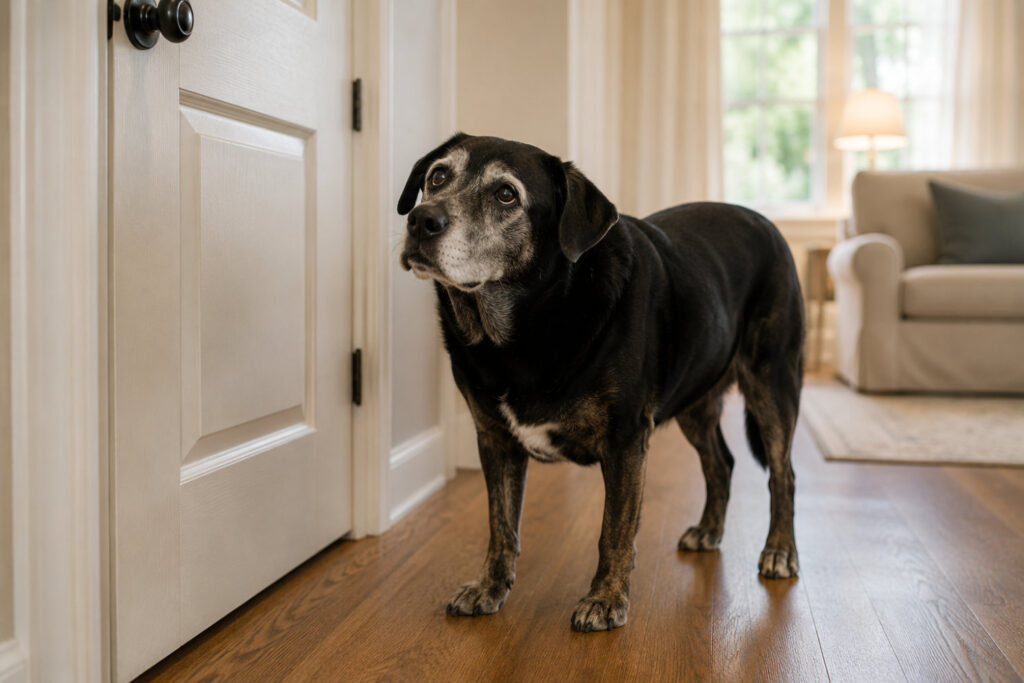
When a dog who has been house-trained for years starts having accidents indoors, it is upsetting and confusing. In a senior dog it can be part of dog dementia, where the learned routine of “I need to go, so I go to the door” slowly breaks down. But house-soiling is just as often a sign of a treatable medical problem, and that is the part you do not want to miss. Here is how to tell them apart, what to do at home, and the one situation that is a true emergency.
The single most important step: do not assume it is “just old age.” Have your vet rule out the medical causes first.
Quick answer
A house-trained senior dog having accidents can be dog dementia, where the learned potty routine breaks down, or a treatable medical problem such as a urinary tract infection, kidney disease, diabetes, or urinary incontinence. Because a dog can have both, the first step is a vet visit with a urine sample to rule out the medical causes, not an assumption that it is just old age. It is never on purpose, so never punish it.
Emergency: a blocked bladder
Call a vet now if your dog is straining to urinate but passing little or nothing, cries out, has a hard or painful belly, or has blood in the urine along with pain, straining, weakness, or looking clearly unwell. A urinary blockage, more common in male dogs, is life-threatening and needs immediate care. Blood in the urine without those other signs still deserves a prompt vet call, and so do accidents that start suddenly or come with vomiting, lethargy, or a dog who is clearly unwell.
Is it dementia, or a medical problem?
| Why a house-trained dog has accidents | Clues that point to it | What to do |
|---|---|---|
| Dementia (canine cognitive dysfunction) | The learned “go to the door” link breaks down; may go right after coming inside; builds gradually over months alongside confusion, night pacing, and disorientation | Your vet confirms it; manage with the dementia plan plus the home steps below |
| Urinary tract infection (UTI) | Straining, frequent small amounts, urgency, blood, or licking at the area; often comes on over days | Vet visit and a urine test; usually very treatable |
| Increased thirst (kidney disease, diabetes, Cushing’s) | Drinking and urinating a lot more; bigger puddles; changes in weight or appetite | Vet bloodwork and urine test to find the cause |
| Urinary incontinence (leaking) | Wet bedding where your dog slept; dribbling without consciously “going”; classically an older spayed female | Vet exam; leaking is often very responsive to medication |
| Pain or mobility trouble | Cannot get up or get outside in time; stiffness, slowness, or reluctance on stairs | Vet pain and mobility plan, plus easier access to outside |
More than one can be true at once, and a senior dog can have both dementia and a UTI. That is exactly why the first stop is your vet with a urine sample, not a guess. Dementia house-soiling is usually a diagnosis of exclusion: it fits when the medical tests are clear and the accidents come with the other signs of cognitive decline. Run through the full list here: dog dementia symptoms.
Why it is not your dog’s fault
This matters, so it gets its own line: your dog is not doing this on purpose, and it is not spite or stubbornness. With dementia, the wiring that connected the urge to the door is failing. With a medical problem, the body simply cannot hold it. Punishing accidents does nothing but add fear and anxiety to a dog who is already struggling, and anxiety makes dementia worse. Clean it up calmly and move on.
Managing accidents at home
Once your vet has ruled out or started treating the medical causes, these steps make daily life easier for both of you:
- More frequent, scheduled potty trips. Take your dog out on a timer rather than waiting for him to ask, including first thing, after meals and naps, and a late trip right before bed.
- Make getting outside easy. A ramp for stiff legs, good footing, a door left open, or a dog door. Many “accidents” are really a dog who could not get there in time.
- Protect the home and the dog. Washable pee pads, waterproof bedding, and, for leaking, belly bands or dog diapers. Change them often and keep the skin clean and dry, since sitting in urine causes painful scald and sores.
- Mind water timing, not water access. Keep fresh water available (do not restrict it without your vet’s okay, see dementia and drinking water), but you can offer the last big drink a little earlier in the evening.
- Clean with an enzymatic cleaner. Ordinary cleaners leave a scent only your dog can smell, which invites a repeat in the same spot. Enzyme cleaners remove it.
- Never punish. It is not defiance, and punishment only makes an anxious, confused dog worse.
House-soiling is one piece of the bigger picture. Treating the dementia itself, and any pain or medical cause, is what helps most; the full plan is here: dog dementia treatment and management.
What to tell your vet
- When the accidents started, and whether they came on gradually or suddenly.
- The pattern: leaking while asleep, straining, large puddles, or going right after coming inside.
- Any change in thirst, appetite, weight, energy, or mobility.
- Every medication and supplement your dog takes.
- A fresh urine sample if you can collect one, and a short video if there is straining.
References and further reading
- Cornell University Riney Canine Health Center. Cognitive dysfunction in senior dogs. (House-soiling by a previously house-trained dog as a sign of canine cognitive dysfunction.)
- Merck Veterinary Manual. Noninfectious Diseases of the Urinary System in Dogs. (Urinary incontinence, including urethral sphincter mechanism incompetence in older spayed females, and other non-infectious causes of leaking.)
- Merck Veterinary Manual. Infectious Diseases of the Urinary System in Dogs. (Urinary tract infection as a common, treatable cause of new indoor accidents.)
- 2023 AAHA Senior Care Guidelines for Dogs and Cats. American Animal Hospital Association. (Why new house-soiling in a senior dog warrants a medical workup, not an assumption of age.)
Frequently asked questions
Is my dog’s house-soiling dementia or a UTI?
It could be either, and the only way to know is a vet visit with a urine test. A UTI often brings straining, frequent small amounts, urgency, or blood and can come on quickly; dementia house-soiling builds gradually over months alongside confusion, night pacing, and disorientation. Because a dog can have both, rule out the infection (and kidney disease, diabetes, and Cushing’s) before settling on dementia.
Why does my dog pee right after coming in from outside?
In dementia, the learned routine breaks down: your dog may forget he just had the chance to go, or lose the connection between the feeling of needing to go and the door. It is a wiring failure, not bad behavior. It is still worth ruling out a urinary tract infection or other medical cause, which can produce the same pattern.
Is my dog soiling the house on purpose?
No. House-soiling from dementia or a medical problem is never spite or defiance. With dementia the brain’s control of the routine is failing; with a medical issue the body cannot hold it. Punishment only adds fear and anxiety, which makes a struggling dog worse. Clean up calmly and focus on the vet workup and the home routine.
How do I manage dog dementia incontinence at home?
After your vet rules out or treats medical causes: take your dog out on a frequent schedule (including a late-night trip), make getting outside easy, use washable pads, waterproof bedding, and belly bands or diapers for leaking (kept clean to protect the skin), clean accidents with an enzymatic cleaner, and never punish. Treating the underlying dementia and any pain helps most.
When is house-soiling an emergency?
Treat it as an emergency if your dog is straining to urinate but passing little or nothing, cries in pain, has a hard or painful belly, or has blood in the urine along with pain, straining, weakness, or clear distress. A urinary blockage, more common in male dogs, is life-threatening and needs immediate care. Blood in the urine on its own still deserves a prompt vet visit, as does any new house-soiling, even though it is usually not an emergency.
This guide is educational and is not a substitute for veterinary diagnosis or care. If you are worried about your dog, talk to your veterinarian.