

Blind Dogs Who Circle, Stare, or Get Stuck: Vision Loss, Dementia, or Both?


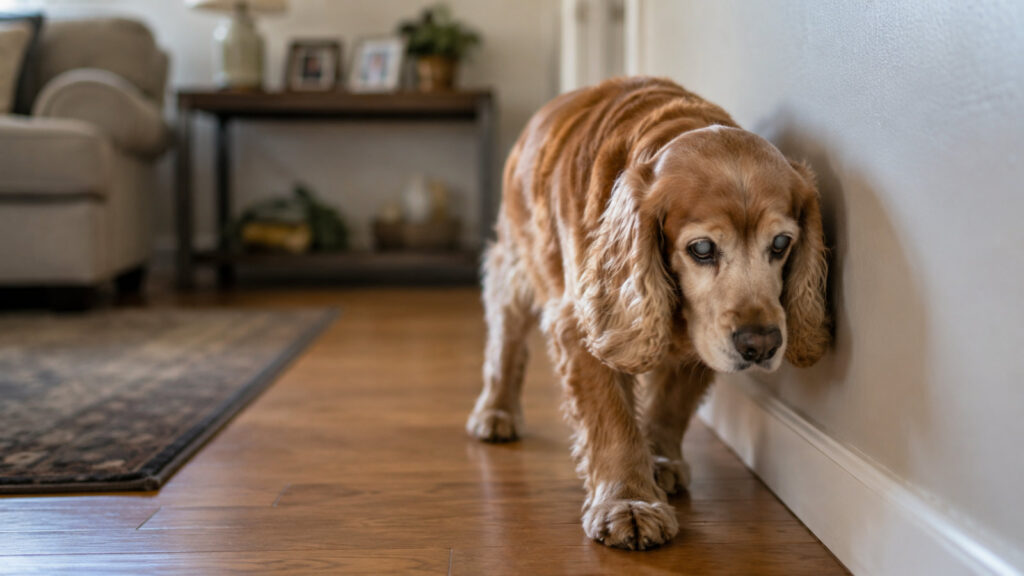
When an old dog starts bumping furniture, standing in corners, or circling the room, two very different stories can be unfolding – the eyes failing, or the mind. It matters enormously which one it is, because a blind dog with a sharp mind adapts astonishingly well, while a sighted dog with cognitive decline needs a completely different kind of help. And some seniors are living both at once.
Quick answer
Blind or nearly blind dogs circle, hesitate, and get stuck because they are navigating by memory – and when the mental map fails them, they stall. The behavior overlaps heavily with dog dementia, which causes the same circling and corner-standing for a different reason. The pattern to watch: a blind dog with a healthy mind stays engaged – responds to your voice, navigates confidently at home, learns routes; a dog with cognitive decline seems mentally absent even in familiar places. Vision loss in seniors is common, findable on a vet exam, and very livable.
Why blind dogs circle and get stuck
A dog losing vision does not see the way out of a corner – so they stand there, or turn in place looking for a remembered exit. They hug walls because walls are reliable. They circle in open space because straight lines require a visible target. New environments undo them while home feels fine, because home is stored in memory and scent. None of that is confusion in the dementia sense: the navigation system is working with missing data, and doing it rather cleverly.
Vision loss or dementia? How to tell the difference at home
| Watch for | Points to vision loss | Points to cognitive decline |
|---|---|---|
| Response to you | Perks to your voice, follows sounds, engaged | May not respond to name; seems absent even face-to-face |
| Where trouble happens | New places, rearranged furniture, dim light | Familiar rooms too – lost at home |
| The corner test | Backs out or turns around when stuck | Stands stuck, as if the concept of reversing is gone |
| Day and night | Worse in the dark (many eye diseases dim night vision first) | Worse in the evening and overnight regardless of light – the sundowning pattern |
| Learning | Learns sound and scent routes, improves over weeks | Gets gradually worse; routines stop helping |
Your vet can settle the vision question quickly – watching the eyes track a dropped cotton ball, testing the blink-to-gesture response, and examining the eyes for the common senior causes: cataracts, retinal disease, glaucoma (which can be painful and urgent), and sudden-onset retinal conditions. If vision checks out and the behavior fits the right-hand column, our guides to dementia symptoms and staring at walls pick up the thread. And plenty of seniors need both conversations – failing eyes and a fading mental map together, which makes the home setup below matter double.
Helping a blind or low-vision dog thrive
- Freeze the map. Stop rearranging furniture; a blind dog’s home lives in their memory. If you must move something, walk them through the new layout on leash a few times.
- Add non-visual signposts. A textured mat at the top of stairs, a rug at the water bowl, a plug-in scent near their bed – landmarks for the senses that still work.
- Guard the hazards. Gates at stairs, padding on sharp corner-height edges, pool and deck barriers. Most blind-dog injuries are falls and collisions in the first months.
- Talk on approach. Startling a blind dog – especially one also losing hearing – invites a defensive snap. Voice first, then touch, and teach guests the same.
- Keep the world interesting. Scent games, food puzzles, longer sniffing walks – blindness removes one channel; enrichment keeps the others bright, which also protects the aging brain.
- Light the night anyway. Many “blind” seniors retain partial vision; nightlights and lamps before dusk reduce disorientation for eyes and mind alike.
When to see your veterinarian
Promptly for any vision change – some causes are treatable and a few, like glaucoma, are painful emergencies where hours matter. Red or cloudy eyes, squinting, pawing at the face, or overnight blindness = urgent. And book the cognitive conversation if the corner-standing and circling continue in a dog whose eyes check out fine.
References and further reading
Frequently asked questions
Why does my blind dog walk in circles?
Circling is how a dog without sight searches for a remembered path – especially in open space with no wall to follow. It is normal navigation for vision loss. Tight, constant, one-directional circling with mental absence points instead toward cognitive decline, and both can coexist in a senior.
Do blind dogs get dementia more often?
Vision loss and cognitive decline are both age-related, so they often arrive in the same years – and losing sensory input can make an aging brain’s confusion more visible. The distinguishing signs above, and a vet exam, sort out which is driving the behavior.
Why does my blind dog stare at the wall?
Often they are not staring – they are stopped, close to a surface they can sense, working out the next move. If your dog seems mentally absent during these episodes, or gets stuck without trying to leave, read our staring-at-the-wall guide – that pattern deserves the cognitive workup.
Can a blind dog live a happy life?
Genuinely yes – with a stable home layout, sound-and-scent landmarks, and hazard-proofing, most blind dogs adapt within months and live full, happy lives. Dogs lean on smell and hearing far more than we do; losing sight costs them less than it would cost us.
Educational content, not a substitute for veterinary advice. If your dog seems unwell, contact your veterinarian.
This guide is educational and is not a substitute for veterinary diagnosis or care. If you are worried about your dog, talk to your veterinarian.