

Caring for a Dog with Dementia: Burnout, Grief, and Getting Support


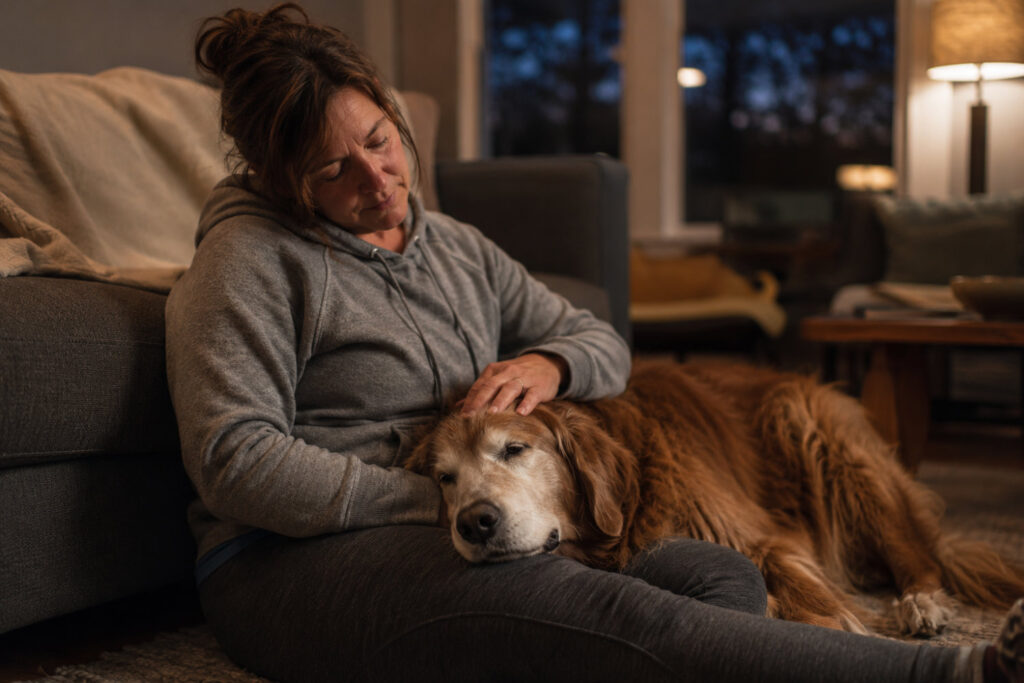
If you are caring for a dog with dementia, this page is for you, not just your dog. The broken sleep, the cleanup, the constant worry, the guilt, and the strange grief for a dog who is still here, all of it is real, and you are carrying a lot. Caregiver burnout and anticipatory grief are well-documented and normal, not a sign that you love your dog any less. Here is what you might be feeling, why it happens, what helps, and where to turn.
Quick answer
Caring for a dog with dementia can lead to real caregiver burnout, the exhaustion, broken sleep, guilt, resentment, and isolation, and to anticipatory grief, which is grieving a dog who is still alive. Research confirms that owners of seriously ill pets carry measurably higher stress, anxiety, and depression. These feelings are normal, you are not a bad owner for having them, and practical relief and real support exist. You do not have to do this alone.
What you are carrying is real
This is not in your head, and it is not weakness. In a study of owners caring for a chronically or terminally ill pet, those owners had higher stress, more symptoms of anxiety and depression, and a lower quality of life than owners of healthy pets. Veterinarians have a name for it: caregiver burden. Living with dog dementia brings a particular version of it, because the days are long, the nights are broken, and the dog you are caring for is slowly becoming less like the dog you knew.
| What you might be feeling | Why it happens |
|---|---|
| Exhaustion and broken sleep | Night pacing and sundowning can interrupt your sleep for weeks or months on end |
| Guilt | For losing patience, for wanting a break, or for wondering whether it might be time |
| Resentment, then guilt about the resentment | The cleanup, the cost, and the constant watching wear anyone down, and then you feel bad for feeling worn down |
| Grief for a dog who is still here | Anticipatory grief, sometimes called ambiguous loss: your dog is present but changing, so you grieve in pieces |
| Loneliness | People who have not been through it may not understand grieving a pet who is still alive |
Anticipatory grief: grieving a dog who is still here
One of the hardest parts of dementia is that the goodbye starts long before the end. You catch yourself missing your dog while he is asleep at your feet, because the dog in front of you is not quite the one who used to greet you at the door. That is anticipatory grief, and it is real grief, not you being dramatic or giving up early. It often comes in small waves, a kind of mourning in pieces, and it can sit right alongside love and good days. Letting yourself feel it does not mean you have stopped hoping. The grief is there because the bond is.
What helps
You cannot pour from an empty bowl. None of these fix dementia, but they protect you, and a steadier you is better for your dog too.
Small things that help
- Share the load. Give family members set jobs, or use a trusted sitter or daycare so you get a real break, even a few hours.
- Protect your sleep. Trade night shifts with someone, or set up a safe, contained sleeping space, and use the night-care steps in our sundowning guide.
- Lower the bar. Good-enough care is enough. You do not have to do everything, or do it perfectly.
- Talk to your vet about your dog’s comfort and about your options, so you are not carrying the hard questions alone.
- Find people who understand, through a pet-loss support line or an online community for dementia-dog caregivers.
- Notice and keep the good moments: a calm evening, a tail wag, a good meal. They still count.
You are not alone
If the exhaustion, sadness, or hopelessness is wearing you down, reaching out is a strength, not a failure. These resources are free places to start. Some are written guides, and some are helplines staffed by trained volunteers or veterinary-school teams who understand pet loss, including grief that begins before the loss:
- ASPCA end-of-life care and grief support.
- Cornell University pet-loss support resources.
- Tufts University Pet Loss Support Helpline.
And if you are struggling with your own mental health, you deserve support too. In the US, the 988 Suicide and Crisis Lifeline is available 24 hours a day, free and confidential, by call, text, or chat to 988.
When you start wondering if it is time
If you have started to ask whether it is time, that does not make you a bad owner. In the research, caregiver burden is linked to thinking about euthanasia, and that link usually comes from love and exhaustion together, not from giving up. The question deserves a calm, honest conversation with your vet, not a pile of guilt. A simple quality-of-life check can help you think it through, and our gentle guide on when it is time walks you through it without rushing you.
References and further reading
- Spitznagel MB, Jacobson DM, Cox MD, Carlson MD. Caregiver burden in owners of a sick companion animal: a cross-sectional observational study. Veterinary Record, 2017. (Owners of chronically or terminally ill pets had higher stress, anxiety, and depression and lower quality of life than owners of healthy pets, and greater burden was linked to considering euthanasia.)
- ASPCA. End of Life Care. (Quality-of-life, grief, and end-of-life guidance for pet owners.)
- Tufts University Cummings School of Veterinary Medicine. Pet Loss Support Helpline. (A free helpline staffed by trained volunteers for owners grieving or anticipating the loss of a pet.)
- Cornell University College of Veterinary Medicine. Pet Loss Resources and Support. (Pet-loss support resources, including grief that begins while a pet is still living.)
Frequently asked questions
Is it normal to feel burned out or resentful caring for a dog with dementia?
Yes. Caregiver burden is well-documented in owners of seriously ill pets, who show higher stress, anxiety, and depression than owners of healthy pets. Broken sleep, constant cleanup, and worry wear anyone down, and feeling frayed or resentful does not mean you love your dog less. It means you are carrying a lot and need support and rest yourself.
What is anticipatory grief?
Anticipatory grief is the grief that starts before the loss, while your dog is still alive but declining. With dementia it is common, because the dog slowly becomes less like himself, so you mourn in pieces over months. It is real grief, not overreacting, and it can sit right alongside love and good days.
Is it wrong to think about euthanasia while my dog is still alive?
No. Thinking about it does not make you a bad owner. In the research, caregiver burden is linked to considering euthanasia, and that usually comes from a mix of love and exhaustion, not from giving up. It is a question to talk through calmly with your vet, often with the help of a quality-of-life assessment, rather than something to feel guilty about.
How do I cope with the broken sleep?
Protect your sleep the way you would any other health need. Trade night shifts with another person if you can, set up a safe and contained sleeping space for your dog, and work through the night-care steps for sundowning, since easing your dog’s night-time restlessness is what helps your sleep most. If the nights are not improving, ask your vet, because treatable pain or medical problems often hide behind night-time waking.
Where can I find support?
Free pet-loss support resources include veterinary-school helplines such as Cornell and Tufts, plus end-of-life and grief resources from organizations like the ASPCA. Online communities for dementia-dog caregivers help with the isolation. And if your own mood or hopelessness is becoming hard to manage, please reach out for human support too; in the US, the 988 Suicide and Crisis Lifeline is available any time by call, text, or chat.
This guide is educational and is not a substitute for veterinary diagnosis or care. If you are worried about your dog, talk to your veterinarian.