

Old Dog Barking at Night: Why It Starts and How to Get Quiet Nights Back


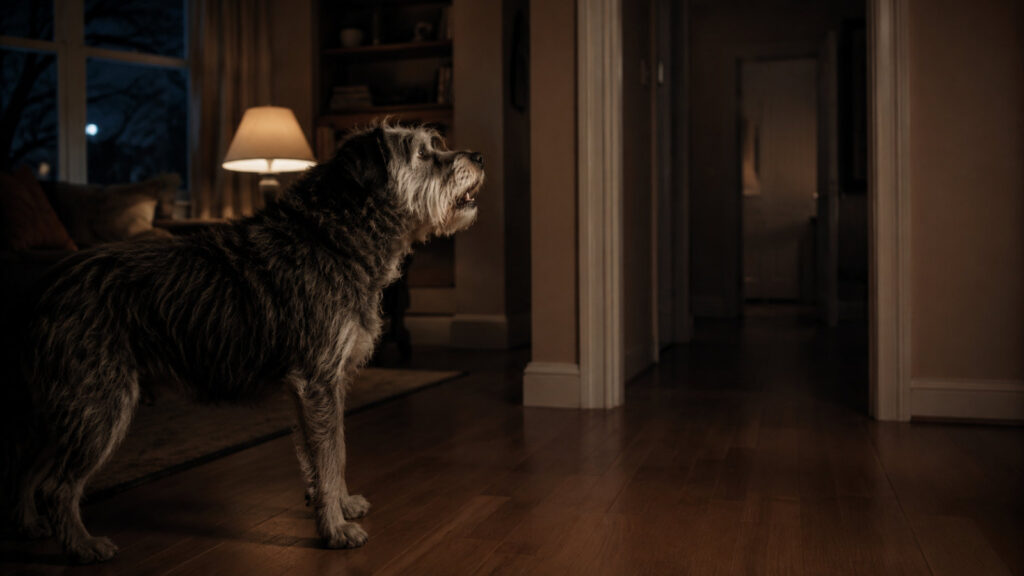
The barking usually starts the same way: out of nowhere, at two in the morning, from a dog who slept through the night for a decade. Sometimes it is a single confused woof; sometimes it is steady, directionless barking at nothing you can see. You are exhausted, your dog seems lost, and the neighbors are starting to mention it. Here is the reassuring truth: an old dog barking at night is almost never “no reason” – and most of the reasons have answers.
Quick answer
When an older dog starts barking at night, the usual causes are cognitive decline (sundowning – confusion and anxiety that worsen after dark), pain that surfaces when the house goes still, hearing loss (which makes dogs vocalize more and at odd times), or a genuine need – a full bladder, hunger, thirst. New night barking deserves a vet check first, because pain and medical causes are the fixable ones. The night-care plan that calms sundowning – light, routine, a safe sleeping space – usually helps whichever cause is in play.
Free 2-minute check
Not sure how far along your dog is?
Take the free DISHAA check veterinarians use - 13 quick questions, an instant area-by-area result you can bring to your vet.
Start the free checkTakes about 2 minutesWhy old dogs bark at night: the four usual causes
- Sundowning (cognitive decline). In canine cognitive dysfunction, confusion and anxiety climb after dark. The barking is often directionless – at walls, at corners, at nothing – and comes with the rest of the pattern: pacing, restlessness, getting stuck in odd places, a flipped sleep schedule. Our full guide to sundowning in dogs covers it in depth.
- Pain. Aching joints surface at night: the house is quiet, the distractions are gone, and lying in one position starts to hurt. Night vocalizing plus stiffness, circling before lying down, or reluctance on stairs points here – and pain is treatable.
- Hearing loss. Dogs losing their hearing often bark more, louder, and at stranger times – they cannot hear themselves, and the ordinary night sounds that once oriented them are gone. A dog who no longer startles at the doorbell but barks at 3 a.m. fits this picture.
- A real need. Senior kidneys make more urine; senior bladders hold less. Sometimes 2 a.m. barking is exactly what it looks like – ask the question by offering a late last potty trip and see if the nights improve.
Sudden versus gradual: the detail that matters most
Barking that built up over weeks alongside other changes fits the cognitive-decline picture. Barking that appeared this week, out of nowhere, points to the body first – pain, a urinary tract infection, or another medical cause – and that is a vet visit, not a training problem. Either way, the first stop for genuinely new night vocalizing is your veterinarian: ruling out pain and infection is quick, and it is the difference between managing the right problem and soothing the wrong one.
The plan for quiet nights
The same night-care plan that works for sundowning works here, because it treats the conditions that make old-dog nights hard:
- Lamps on before dusk, nightlight after. Darkness plus fading senses is disorienting; steady light removes the trigger.
- A late, unhurried last potty trip. Empty bladder, one less reason to wake.
- A safe, enclosed sleeping space – many seniors settle better in a smaller, den-like spot near you than loose in a dark house.
- Real daytime engagement. Sunlight, gentle walks, sniffing time – a genuinely tired dog with a reset body clock sleeps at night. Discourage the long late-afternoon nap.
- Respond calm and boring. Reassure briefly, guide back to bed, keep lights low and voices flat. Big midnight productions teach the barking to repeat.
- Ask your vet about the toolbox when the plan is not enough – pain relief if arthritis is the driver, and for cognitive cases the options in our dementia medication guide.
Want the plan on paper? The printable Sundowning Night Plan covers the same checklist plus a three-night tracker for your vet.
When to see your veterinarian
Book a visit for any genuinely new night barking in a senior – pain and urinary infections are common, findable, and fixable. Go promptly if the barking comes with crying when moving, accidents in a house-trained dog, confusion that arrived suddenly, or any of the emergency signs in our night guide.
References and further reading
- Merck Veterinary Manual. Behavioral problems of dogs.
- VCA Animal Hospitals. Cognitive dysfunction syndrome in dogs.
Frequently asked questions
Why does my old dog bark at night for no reason?
There is nearly always a reason – the common four are sundowning confusion, pain that surfaces in the quiet, hearing loss changing how and when they vocalize, and a genuine need like a full bladder. New barking warrants a vet check to catch the fixable causes first.
Why does my senior dog bark at nothing?
Directionless barking – at walls, corners, or empty rooms – in an older dog fits the disorientation of cognitive decline, especially alongside pacing, staring, or getting stuck. Hearing loss can look similar. The pattern over a week tells your vet a lot; note when it happens and what your dog is facing.
Should I ignore my old dog barking at night?
Not entirely – first rule out pain, infection, and need with your vet. After that, respond calm and boring: brief reassurance, guide back to bed, no lights-on productions. Ignoring a confused senior completely can raise anxiety; rewarding the barking with excitement cements it.
Can medication stop night barking in old dogs?
When the cause is cognitive decline or anxiety, vets have real options – covered honestly in our dementia medication guide – and pain relief quiets pain-driven nights. Medication works best on top of the night-care plan, not instead of it.
Educational content, not a substitute for veterinary advice. If your dog seems unwell, contact your veterinarian.
This guide is educational and is not a substitute for veterinary diagnosis or care. If you are worried about your dog, talk to your veterinarian.