

Itchy Ears and Ear Infections: The Allergy Connection

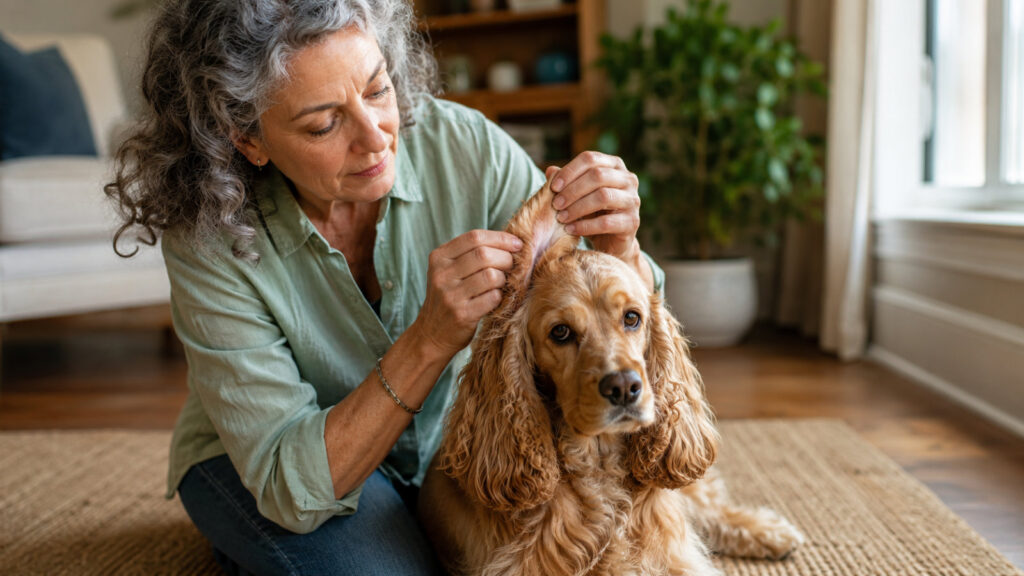
Every dog scratches an ear now and then. The dog this page is for is doing something else: shaking their head over and over, holding one ear low, rubbing it along the couch, flinching when it is touched – or back at the vet for the third ear infection since last summer. That last pattern carries the most important sentence on this page: recurrent ear infections in dogs are usually an allergy problem showing up in the ears.
Quick answer
Ear infections (otitis externa) show up as head shaking, scratching, odor, redness, discharge, and pain – and they need a vet, because treatment depends on what is growing in there and whether the eardrum is intact. The bigger truth: allergy is the most common underlying reason dogs get ear infections, especially repeatedly. Treat each infection alone and they often return; manage the allergy underneath and the ears often become much easier to control.
The signs, from subtle to unmistakable
| Stage | What you notice |
|---|---|
| Early | More ear scratching than usual, occasional head shakes, mild redness inside the flap |
| Established | Frequent shaking, a distinct smell (yeasty-musty or foul), visible discharge – brown, yellow, or waxy – and a dog who objects to ear handling |
| Advanced | A head tilt, crusting, real pain, sometimes a swollen ear flap from shake-trauma (an aural hematoma – its own vet visit) |
| The chronic pattern | Infections that clear with drops and return within weeks or months – the pattern that says look upstream |
Why ears, and why allergy
The ear canal is skin – warm, folded, poorly ventilated skin. Everything that allergy does to the skin of the paws and belly, it does inside the ear canal, where inflammation narrows the canal, moisture lingers, and the resident yeast and bacteria get the exact conditions they love. That is why allergy – environmental, food, or flea – is the most common primary cause of otitis externa in dogs, and why the floppy-eared and allergy-prone breeds collect ear trouble. Swimming and bath water play the accomplice, but the pattern-maker is usually the allergy. If your dog pairs recurring ears with paw licking or seasonal itching, you are looking at one disease with two addresses – the ground covered in our seasonal allergy and food allergy guides.
Why ear infections are a vet visit, not a pharmacy trip
Three practical reasons. First, what is growing matters: yeast, bacteria, or both take different treatments, and a quick microscope look (cytology) tells your vet which – the same reason random leftover drops so often fail. Second, the eardrum: your vet checks it with an otoscope because some medications must not go into an ear with a ruptured drum – a thing you cannot assess from outside, and the reason “just put something in it” is genuinely risky advice. Third, pain: established ear infections hurt, cleaning an angry canal properly sometimes takes sedation, and half-cleaned ears breed the relapse everyone then blames on the medication.
The home role: maintenance, not treatment
What home care does well is prevention and maintenance between vet visits: drying ears after swimming and baths, and – for dogs with a history – routine cleaning with a vet-recommended ear cleaner on the schedule your vet suggests – typically more frequent during recovery, tapering as things settle. The technique that matters: fill, massage the base, let the dog shake, wipe what reaches the outer canal with cotton or gauze – and never push a cotton swab down the canal, which packs debris deeper and risks the drum. What home care cannot do is treat an active infection; smell, discharge, and pain mean the microscope comes first.
Ending the cycle
If this is infection number three, the winning question at the vet is not “which drops this time” – it is “what is driving these?” That conversation runs through the allergy workup: flea control, the diagnostic ladder, sometimes a diet trial, and allergy management that may include the modern medical options. Owners are often startled by how much chronic ears can improve once the allergy underneath is managed – the ears were not the whole disease, just one of its loudest rooms.
When ears are urgent
See your vet promptly for any smelly, painful, or discharging ear; a suddenly swollen ear flap; a head tilt that persists; stumbling or circling alongside ear trouble; or a dog crying when the ear is touched. And skip home drops entirely until the eardrum has been checked – the wrong product in a ruptured ear can do lasting harm.
References and further reading
- Merck Veterinary Manual. Otitis externa in animals.
- Canine otitis externa – treatment and complications. PMC.
- Merck Veterinary Manual. Atopic dermatitis in dogs.
Frequently asked questions
Why does my dog keep getting ear infections?
Because something upstream keeps setting the stage – and allergy is the most common culprit in dogs. Treating each infection without managing the allergy is why they return. Recurring ears plus itchy paws is allergy until proven otherwise.
Can I treat my dog’s ear infection at home?
No – an active infection needs a vet to identify what is growing and confirm the eardrum is intact before anything goes in the canal. Home care’s job is prevention: drying after water and maintenance cleaning on your vet’s schedule.
What does a yeast ear infection smell like in dogs?
Musty and bread-like to sour – distinct enough that many owners diagnose the smell from the couch. Bacterial infections can smell fouler. Either way, the smell is the appointment trigger.
Is it safe to clean my dog’s ears with cotton swabs?
On the outer folds you can reach easily, with care. Never down into the canal – swabs pack debris against the drum and can injure it. Fill-massage-shake-wipe with a proper ear cleaner is the safe method.
Educational content, not a substitute for veterinary advice. If your dog seems unwell, contact your veterinarian.
This guide is educational and is not a substitute for veterinary diagnosis or care. If your dog's skin looks infected or painful, talk to your veterinarian.