

Why Is My Dog So Itchy? The Complete Guide

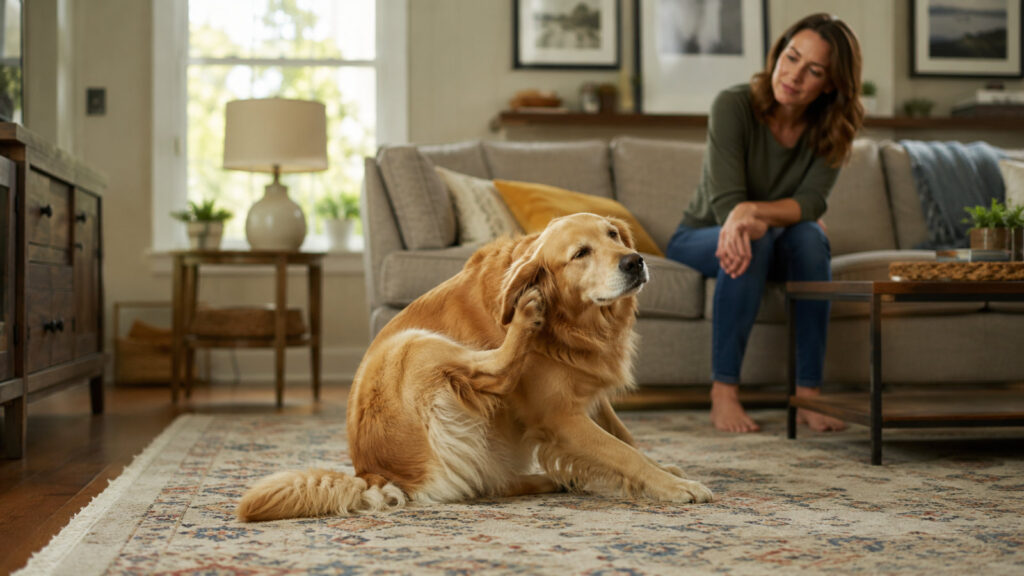
Skin allergies have been the top reason dogs are brought to the vet for over a decade, according to pet insurance claims data. If your dog is scratching, licking, chewing, or rubbing more than usual, you are in the most common problem in veterinary medicine – which is actually good news, because the causes are well understood, and almost every itchy dog fits one of five patterns. This guide walks you through them the way a vet would.
Quick answer
Nearly every itchy dog comes down to one of five causes: fleas (including flea allergy, which itches even when you cannot find a flea), environmental allergies, food allergy, skin infections (bacteria or yeast, usually secondary), or something mechanical like mites, dry skin, or a contact irritant. The pattern of where and when your dog itches is the biggest clue. Constant scratching, broken skin, or misery deserve a vet visit – itching this persistent almost never resolves on its own.
The five causes behind almost every itchy dog
Vets think about itch in buckets, then use the details – where, when, how bad – to narrow them down. Here is the same map:
| Cause | The telltale pattern | Where to go deeper |
|---|---|---|
| Fleas and flea allergy | Chewing at the tail base, rump, and back of the thighs; a flea-allergic dog can be very itchy from one or two bites you never see | Flea allergy dermatitis (wave 2) |
| Environmental allergies (atopy) | Paws, face, ears, armpits, and belly; often seasonal at first; affects up to about 1 in 10 dogs | Seasonal allergies (wave 2) |
| Food allergy | Looks like atopy but is not seasonal; sometimes with ear or tummy trouble; diagnosed with a proper elimination diet, not guesswork | Dog food for allergies |
| Skin infections (bacteria or yeast) | Odor, greasiness, redness, or a musty “corn chip” smell; usually a consequence of one of the causes above, and it adds its own itch | Skin infections (wave 2) |
| Everything mechanical | Mites, dry winter skin, contact irritants like lawn treatments or de-icers, or a single spot your dog cannot leave alone | Itching but no fleas |
Two of the most useful clues cost nothing to check. First, location: tail base says fleas, paws and face say allergy. Second, the calendar: itching that arrives with a season points to the environment; itching that never takes a day off points to food, fleas, or infection.
Why the itch keeps getting worse
Itch feeds itself. Scratching and licking damage the skin barrier, a damaged barrier lets bacteria and yeast overgrow, and the infection itches on top of the original cause. This is why a dog who “just seemed a bit itchy” three weeks ago can end up miserable, and why treating only the surface often fails – the infection clears, the underlying allergy remains, and the cycle restarts. It is also how a hot spot can appear in a single afternoon.
What actually helps at home
While you work out the cause – ideally with your vet – a few things genuinely help and nothing here makes the problem worse: keep flea prevention current for every pet in the house (non-negotiable, even if you never see fleas), rinse paws and belly after grass and pollen exposure on high-allergy days, bathe with a mild dog-formulated shampoo rather than human products, and keep nails short so scratching does less damage. What does not help: guessing at food changes one bag at a time, human creams, and waiting for month three. If your dog is licking one area raw, cover it or use a cone until you can be seen – broken skin turns a mild problem into an infected one.
How vets narrow it down
There is a standard order, and knowing it saves you money and frustration: parasites first (a flea comb, a proper flea-treatment trial, sometimes a skin scrape for mites), then a look under the microscope for bacteria and yeast, then – if the itch survives all of that – an 8 to 12-week elimination diet for food allergy. Environmental allergy is what remains when everything else is ruled out. If your dog has been itchy for weeks and no one has walked this ladder, it is reasonable to ask your vet to start it. The full version lives in dog itching but no fleas.
The paw question
Paw licking is its own world – it is the most common way environmental allergy shows up, but one paw versus four paws changes the answer entirely, and the rusty stain on light fur tells its own story. We cover it separately in why does my dog keep licking their paws.
When itching needs your veterinarian
Book a visit when itching lasts more than a week or two, disturbs sleep, or comes with hair loss, odor, greasy or flaky skin, scabs, or any broken skin. Go promptly if your dog is scratching or licking one spot raw – self-trauma invites infection and hot spots can grow in hours. Persistent itch is a medical sign, not a personality trait.
References and further reading
- Merck Veterinary Manual. Flea allergy dermatitis in dogs and cats.
- Merck Veterinary Manual. Atopic dermatitis in dogs.
- American Kennel Club. Why is my dog so itchy?
- Nationwide pet insurance claims analysis. Skin allergies: the most common condition prompting veterinary visits, 13 consecutive years.
- VCA Animal Hospitals. Hot spots in dogs.
Frequently asked questions
Why is my dog so itchy but has no fleas?
The usual suspects are environmental allergy, food allergy, skin infection, or mites – and flea allergy itself, which can itch hard from a single bite you never find. The pattern of where your dog itches is the biggest clue; see our no-fleas guide for the step-by-step.
What is the most common cause of itching in dogs?
Flea allergy dermatitis is the most common allergic cause, with environmental allergy (atopy) second, affecting up to about 10 percent of dogs. Infections add itch on top of either.
Can I give my dog something for the itch at home?
Keep flea prevention current, rinse off allergens, and use a mild dog shampoo. Do not start human medications on your own – dosing and safety differ – and see your vet if the itch is constant or the skin is broken.
When should I take my itchy dog to the vet?
After a week or two of persistent itching, or immediately if there is broken skin, a spreading sore, odor, or your dog cannot settle. Early visits are cheaper than late ones – itch problems compound.
Educational content, not a substitute for veterinary advice. If your dog seems unwell, contact your veterinarian.
This guide is educational and is not a substitute for veterinary diagnosis or care. If your dog's skin looks infected or painful, talk to your veterinarian.