

Dog Itching But No Fleas: What It Actually Is

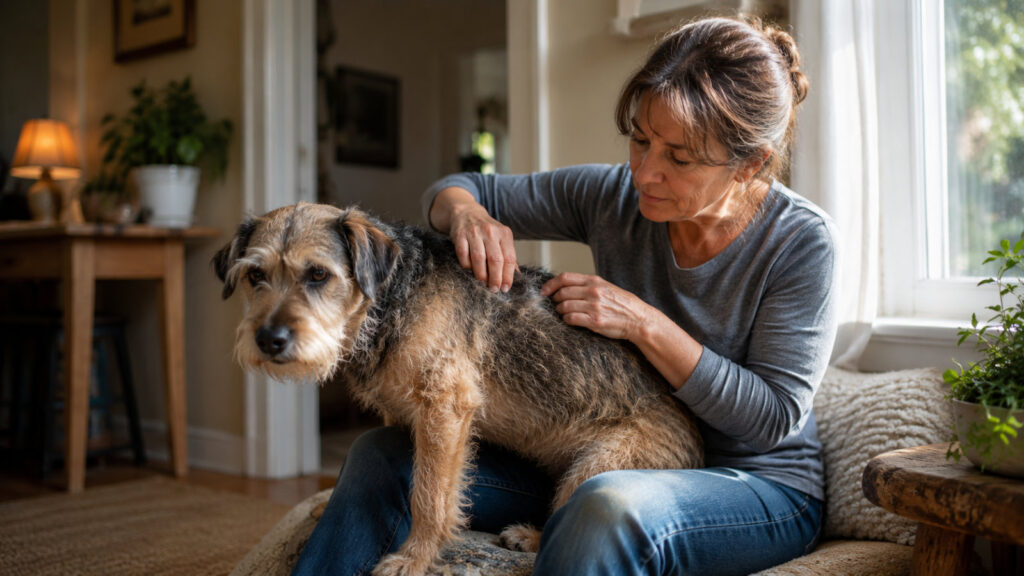
You have combed through the coat, checked the usual spots, maybe even bathed your dog – no fleas. And the scratching keeps going. This exact situation is one of the most common frustrations in dog ownership, and it has a structured answer. Here is what “itchy but no fleas” actually turns out to be, in the order a veterinary workup checks for it.
Quick answer
An itchy dog with no visible fleas usually has one of these, roughly in this order of likelihood: flea allergy anyway (a single unseen bite is enough, and dogs groom away the evidence), environmental allergy, a skin infection adding itch on top, food allergy, or mites. There is a standard order of tests that sorts them – parasites, then microscope, then diet trial – and asking your vet to walk that ladder beats guessing every time.
First, the twist: “no fleas” does not rule out fleas
This surprises almost everyone. Flea allergy dermatitis – the most common allergic skin disease in dogs – does not require an infestation. A flea-allergic dog reacts hard to the saliva in one or two bites, and then grooms so intensively that the evidence disappears before you look. The giveaway is location: chewing and hair loss over the tail base, rump, and back of the thighs is flea allergy until proven otherwise. This is why every itch workup starts with genuinely current flea prevention for every pet in the household for at least a couple of months – not because your vet did not hear you say there are no fleas, but because it is the only way to truly cross the most common cause off the list.
The diagnostic ladder: what vets check, in order
If the itch survives real flea control, the workup climbs a well-established ladder. Knowing it turns a frustrating string of vet visits into a plan you can see progress on:
| Step | What is checked | How |
|---|---|---|
| 1. Parasites | Fleas (a treatment trial, not just a look), and mites – sarcoptic mange is intensely itchy and easy to miss | Flea comb, prevention trial for all pets, skin scrape |
| 2. Infections | Bacteria and yeast, which are usually secondary but add serious itch of their own | Cytology – a piece of tape or a slide under the microscope, in-clinic |
| 3. Food allergy | A true elimination diet – a novel or hydrolyzed protein, and nothing else | Eight to twelve strict weeks; treats, table food, and flavored medications all count |
| 4. Environmental allergy | Atopy is what remains when 1-3 are ruled out; it affects up to about 1 in 10 dogs | Diagnosis by exclusion; allergy testing is used to design treatment, not to diagnose |
Two things about this ladder are worth underlining. Steps happen in order because each one is cheaper and faster than the one after it. And step 3 is where most home attempts fail: switching kibble brands is not an elimination diet – most brands share protein sources, and one flavored chew during the trial resets the clock.
The clues that speed everything up
Your observations shorten the ladder. Before the visit, note: where the itching concentrates (tail base = fleas; paws, face, ears, armpits, belly = allergy), whether it is seasonal or constant, whether any housemate pets or people are itchy too (mites), any smell or greasiness (infection), and what changed in the weeks before it started – foods, treats, a new bed, lawn treatments, a new detergent. A short video of the behavior helps more than a description, and a two-week note of bad days versus okay days is the kind of concrete evidence that gets answers.
What you can do while you work the plan
Keep every pet on real flea prevention, rinse paws and belly after outdoor time in pollen season, use only dog-formulated shampoo, and stop any broken-skin licking with a cone before it becomes a hot spot.
When to see your veterinarian
If the itch is constant, disturbs sleep, or has lasted more than a couple of weeks, book the visit and ask about the ladder above. Go promptly for broken skin, spreading redness, sores, odor, or a dog who cannot leave one spot alone – and mention if any people in the house have itchy bites, since some mites spread.
References and further reading
- Merck Veterinary Manual. Flea allergy dermatitis in dogs and cats.
- Merck Veterinary Manual. Atopic dermatitis in dogs.
- American Kennel Club. Why is my dog so itchy?
Frequently asked questions
Why is my dog so itchy if there are no fleas?
Most often: flea allergy from unseen bites, environmental allergy, a secondary skin infection, food allergy, or mites. A structured workup – parasites, microscope, diet trial – separates them reliably.
Can a dog have a flea allergy without any fleas being found?
Yes, and it is common. One or two bites can trigger days of itching in an allergic dog, and grooming removes the evidence. Tail-base and rump itching is the classic pattern.
What mites make dogs itch?
Sarcoptic mange mites cause intense itching and can be missed on a single skin scrape, which is why vets sometimes treat for them on suspicion. Some mites can also bite people in the house.
How long does a food elimination trial take?
About eight strict weeks on a novel or hydrolyzed diet, with nothing else – no treats, table food, or flavored chews. One slip restarts the clock, which is why so many home attempts produce false answers.
Educational content, not a substitute for veterinary advice. If your dog seems unwell, contact your veterinarian.
This guide is educational and is not a substitute for veterinary diagnosis or care. If your dog's skin looks infected or painful, talk to your veterinarian.