

Hot Spots on Dogs: Stop the Cycle Tonight

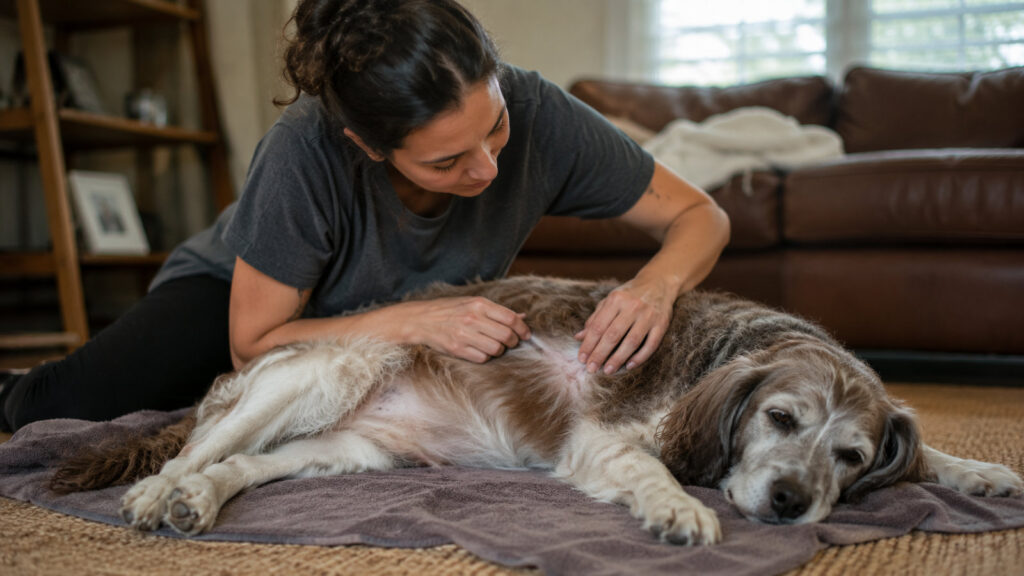
A hot spot is the fastest-moving skin problem most dog owners will ever see. In the morning there is a dog scratching an ear or chewing at a hip; by evening there is a red, wet, painful sore the size of your palm, and the dog will not leave it alone. The speed is frightening, but it also makes sense once you know what a hot spot is – and the playbook for stopping one is well established.
Quick answer
A hot spot (acute moist dermatitis) is a raw, rapidly growing sore a dog creates by licking, chewing, or scratching one spot – the trauma breaks the skin, bacteria multiply in the moisture, and the infection itches harder than whatever started it. They can appear within hours. The fix has three parts: stop the self-trauma now (a cone works), get the sore clipped, cleaned, and treated – usually a vet job, since these are painful – and address the trigger underneath, or it will come back.
What a hot spot actually is
The veterinary name says it all: pyotraumatic dermatitis – “pyo” for pus, “traumatic” because the dog’s own mouth and claws create it. Something starts an itch in one spot: a flea bite, an ear infection draining below the ear, an allergy flare, a mat holding moisture against the skin, even a swim that never fully dried. The dog works at that spot, the skin surface breaks, and the normal skin bacteria suddenly have everything they love – warmth, moisture, damaged skin. The infection they create itches and hurts more than the original trigger, so the dog works harder, and the sore expands. That loop is why hot spots can grow visibly within a single day, and why “wait and see” is the one strategy guaranteed to fail.
What to do right now – and what not to do
| Do this | Not this |
|---|---|
| Stop the licking physically – a cone (or a t-shirt for a body spot) the moment you find it | Trusting your dog to leave it alone; no dog leaves a hot spot alone |
| Trim or clip the hair around the sore if your dog tolerates it – air is the enemy of the moisture the infection needs | Scissors deep in a painful sore on a squirming dog; if they will not tolerate it, that is the vet’s clippers, often with sedation |
| Clean gently with a dilute dog-safe antiseptic (chlorhexidine solution) and pat dry | Hydrogen peroxide or alcohol (damage tissue, hurt badly), and any thick ointment that seals moisture in |
| Call your vet, especially if it is bigger than a coin, spreading, or painful | Human creams – some, like zinc oxide, are toxic if licked off |
What the vet adds is what actually turns most hot spots around: proper clipping to the edge of healthy skin (they are always bigger under the fur than they look), thorough cleaning, and prescription help for the itch and infection – typically a short course of an anti-itch medication and, when needed, antibiotics. These sores are genuinely painful; a struggling dog and a kitchen-table cleanup usually ends with a half-treated sore and a lost afternoon.
Find the trigger, or meet the next one
A hot spot is a symptom with an address. Ear infections cause the classic below-the-ear hot spot; fleas cause the rump and tail-base ones; allergies cause repeat offenders anywhere; mats and wet undercoat cause them in thick-coated breeds after swimming or rain. If your dog has had more than one, the question is not how to treat hot spots faster – it is which trigger keeps lighting the fuse. That is the ground our itchy-skin guide and the diagnostic ladder cover, and for ear-adjacent spots, the ear itself needs looking at, not just the skin below it.
Healing and prevention
With the licking stopped and treatment started, most hot spots dry, shrink, and regrow fur over one to two weeks. Keep the area dry, keep the cone on as long as your vet says (taking it off early is the classic relapse), and finish medications even when it looks better. Prevention is trigger management: year-round flea prevention, drying thick coats properly after water, keeping mats brushed out, and treating ears and allergies early.
When a hot spot is a same-day call
See your vet promptly for any hot spot larger than a coin, any that is spreading while you watch, sores that are deep, bleeding, or smell bad, more than one spot at once, a dog in real pain, or any hot spot on the face or near an eye. Fever, lethargy, or a dog who will not eat alongside a skin sore is an urgent visit. Hot spots move in hours – treat the timeline that way.
References and further reading
- VCA Animal Hospitals. Hot spots in dogs.
- Veterinary Partner (VIN). Hot spots (pyotraumatic dermatitis) in dogs and cats.
- Holm BR, et al. A prospective study of clinical findings, treatment and histopathology of 44 cases of pyotraumatic dermatitis. Vet Dermatol.
- Merck Veterinary Manual. Flea allergy dermatitis in dogs and cats.
Frequently asked questions
Can I treat a hot spot at home?
A tiny, just-started spot can sometimes be managed with clipping, gentle antiseptic cleaning, drying, and a cone – but most hot spots are bigger under the fur than they appear and genuinely painful, and they respond far faster with prescription treatment. When in doubt, this is a same-week vet problem, and often a same-day one.
How fast do hot spots grow?
Fast. Severe sores can develop within hours, and most owners notice them within about 72 hours of the trigger. The speed comes from the lick-infect-itch loop, which is also why physically stopping the licking is step one.
Why does my dog keep getting hot spots?
Repeat hot spots mean an untreated trigger: usually allergies, fleas, ear infections, or a thick coat that stays damp. Treating each sore without chasing the trigger is how dogs end up with a hot spot every summer.
What can I put on a dog’s hot spot?
Only what your vet recommends. Dilute chlorhexidine for cleaning is the usual safe answer; avoid peroxide, alcohol, thick ointments, and human creams (some are toxic when licked). Keeping it dry and unlicked matters more than what you dab on it.
Educational content, not a substitute for veterinary advice. If your dog seems unwell, contact your veterinarian.
This guide is educational and is not a substitute for veterinary diagnosis or care. If your dog's skin looks infected or painful, talk to your veterinarian.