

Bathing an Itchy Dog: Shampoos, Frequency, Technique

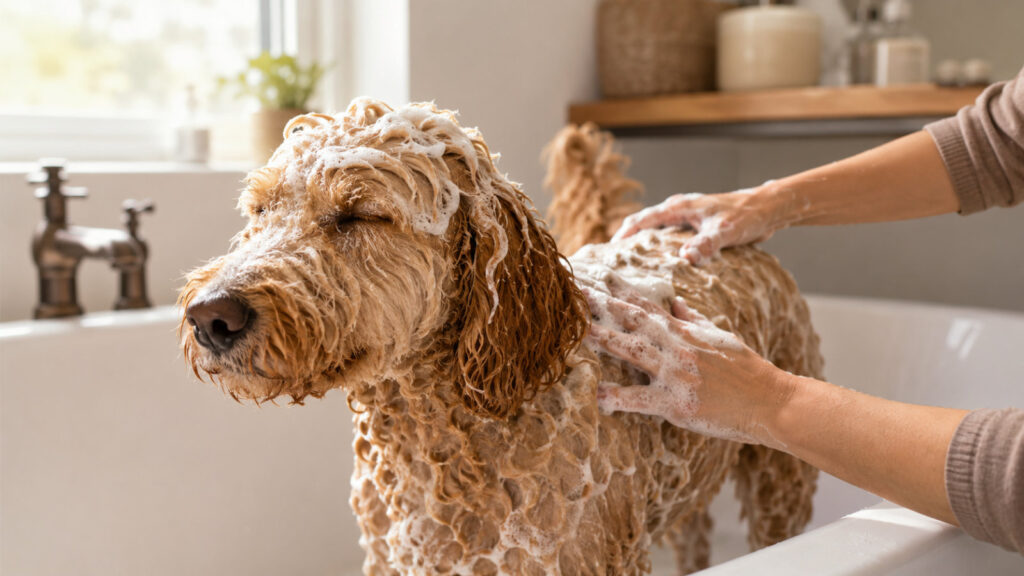
Somewhere, years ago, dog owners were taught that bathing dries out the coat and should be rationed like dessert. For a normal dog there is a grain of truth in it. For an itchy, allergic dog, it is exactly backwards – and it keeps thousands of dogs itchier than they need to be. For allergic skin, bathing is not grooming. It is treatment.
Quick answer
Itchy, allergic dogs generally do best bathed weekly to every other week during flare season – it physically removes the pollens and dust the skin is reacting to and calms the skin directly. Use lukewarm (not hot) water, a dog-formulated shampoo matched to the problem (soothing for allergy, medicated for infections – the latter chosen by your vet), give the lather real contact time, rinse longer than feels necessary, and dry thoroughly. Human shampoo is never the answer; dog skin runs a different pH.
Why frequent bathing helps allergic dogs
An allergic dog wears the problem home: pollen on the paws, grass proteins on the belly, dust on the coat. Every hour those allergens sit on the skin, they feed the reaction. A proper bath is the most direct form of allergen avoidance there is – which is why modern veterinary dermatology recommends weekly to biweekly bathing for atopic dogs in season, a complete reversal of the old “as rarely as possible” advice. The dogs this does not apply to are the ones who do not have a skin problem; a healthy-skinned dog can go long stretches between baths without anyone suffering.
Match the shampoo to the job
| Situation | Shampoo type | Notes |
|---|---|---|
| Allergic, itchy, skin intact | Soothing dog shampoo – colloidal oatmeal or similar gentle formulas | The weekly workhorse; cool-to-lukewarm water adds its own relief |
| Diagnosed bacterial or yeast infection | Medicated shampoo (commonly chlorhexidine-based, sometimes with an antifungal) – chosen by your vet | Use only on the schedule your veterinarian prescribes; this is a prescription-grade decision, not a shelf grab |
| Dry, flaky winter skin | Moisturizing dog shampoo, less frequent bathing, and a humidifier helps | The one case where restraint applies |
| Any dog, any time | Never human shampoo, including baby shampoo | Dog skin pH differs; human products strip and irritate |
The technique most people skip: contact time
The single most common bathing mistake is lathering and rinsing in one motion. Shampoo – especially medicated shampoo – works by sitting on the skin, and the standard veterinary guidance is minutes of contact, not seconds. The workable routine: wet thoroughly with lukewarm water, lather down to the skin everywhere the problem lives (paws, armpits, belly, groin – the allergy map), then set a phone timer for the contact time your vet or the label specifies and spend it massaging the lather in, which most itchy dogs thoroughly approve of. Then rinse for longer than feels reasonable – leftover shampoo is itchy in its own right – and rinse the paws last and best.
Dry like it matters, because it does
Trapped moisture is the co-author of hot spots and yeast flare-ups, and thick-coated dogs can stay damp at the skin for hours after they look dry. Towel hard, then finish with cool or low-warm air if your dog tolerates a dryer, paying attention to armpits, groin, under the ears, and between the toes. A bath that ends damp in a double coat can cost more than it paid.
Between baths
Paw rinses or wipes after outdoor time extend each bath’s benefit through pollen season, brushing keeps mats from trapping moisture, and for intact itchy skin between baths a soothing topical like our Anti-itch & Soothing Spray can help soothe the skin and calm the urge to scratch. If baths visibly help but the itch keeps rebounding harder, that is a signal worth taking to your vet – rebound itch usually means the underlying allergy needs more than removal, and the medical options are worth an informed conversation.
When bathing is not enough
If weekly soothing baths are not visibly helping within a few weeks, if the skin shows sores, smell, grease, or crusts (those need diagnosis and likely a medicated protocol), or if the itch is disturbing sleep – the bath was never going to be the whole answer, and your vet has the rest of the toolbox.
References and further reading
- dvm360. The multimodal approach to canine atopic dermatitis.
- Merck Veterinary Manual. Atopic dermatitis in dogs.
Frequently asked questions
How often should I bathe my itchy dog?
For allergic dogs in flare season, weekly to every other week with a gentle dog-formulated shampoo is the modern veterinary recommendation – frequent bathing removes the allergens driving the itch. Dogs with healthy skin need far less.
What shampoo is best for a dog with itchy skin?
For intact but itchy skin, a soothing dog shampoo such as a colloidal-oatmeal formula. For infected skin – smell, grease, crusts – a vet-chosen medicated shampoo, used with proper contact time. Never human shampoo.
Does bathing too much dry out a dog’s skin?
With harsh or human products, yes. With gentle dog-formulated or vet-prescribed shampoos at the recommended frequency, allergic dogs benefit – the old bathe-rarely rule does not apply to allergy management.
Should I blow dry my dog after a bath?
Thorough drying matters, especially in thick coats – trapped moisture invites hot spots and yeast. Towel well and finish with cool or low-warm air on the damp zones: armpits, groin, ears, toes.
Educational content, not a substitute for veterinary advice. If your dog seems unwell, contact your veterinarian.
This guide is educational and is not a substitute for veterinary diagnosis or care. If your dog's skin looks infected or painful, talk to your veterinarian.