

Seasonal and Environmental Allergies in Dogs

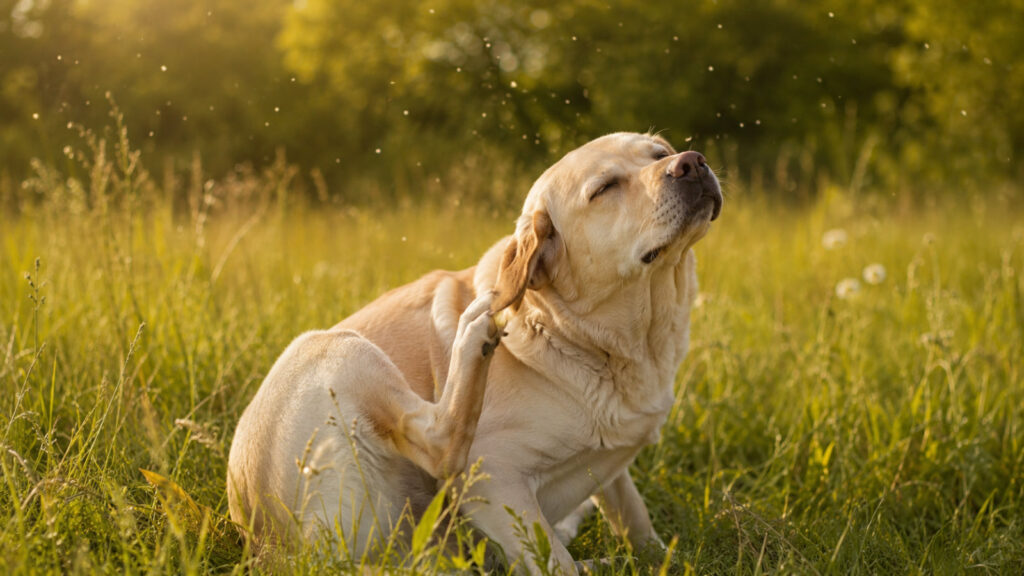
When people have hay fever, they sneeze. When dogs have it, they itch. That single difference explains one of the most misunderstood problems in dog ownership: a dog whose “allergies” show up as paw licking, face rubbing, ear infections, and belly scratching every spring – while their owner looks for a runny nose that never comes. Environmental allergy, which vets call atopic dermatitis or atopy, affects up to about one in ten dogs, and July is its busy season.
Quick answer
Environmental allergy in dogs shows up as itchy skin – paws, face, ears, armpits, and belly – triggered by pollens, grasses, molds, or dust mites. It usually starts young, often seasonal at first and broader with time. It cannot be cured, but it manages well: rinse allergens off, bathe weekly in flare season, treat the secondary infections that amplify the itch, and talk to your vet about the modern anti-itch options when home measures are not enough.
How to recognize the pattern
Atopy has a signature. The itch concentrates where the skin is thin and contact is high: paws (the most common), the face and muzzle, the ears – recurrent ear infections are an allergy sign more often than owners are told – the armpits, the groin, and the belly. It typically appears in young adulthood, and in classic cases it starts seasonally: a spring dog, a fall dog. Over the years the window often widens, until “allergy season” quietly becomes most of the year. If your dog’s itching matches the calendar – worse after mowed grass, better after hard frost – you are probably looking at atopy.
| Season | Common triggers | What owners notice |
|---|---|---|
| Spring | Tree pollens, early grasses | Paw licking resumes, face rubbing on carpet, pink skin in the armpits |
| Summer | Grass pollens, molds after rain, fleas at their peak | The itchiest months for most allergic dogs; ear flare-ups; hot spots |
| Fall | Weed pollens (ragweed country knows), leaf molds | A second wave of paw and belly itching |
| Winter | Dust mites, indoor molds, dry indoor air | If itching continues all winter, think dust mites, fleas, or a food allergy – not “winter pollen” |
Why it gets worse if you wait
Allergic skin does not just itch – it loses its ability to keep microbes out. Bacteria and yeast that live harmlessly on healthy skin overgrow on allergic skin, and those infections itch on top of the allergy. This is the flare cycle: pollen starts it, scratching opens the door, infection turns the volume up. It is why the same dog who was “a little itchy in May” can be miserable by July, and why good allergy management always includes checking for – and treating – the infections. Our guide to yeast and bacterial skin infections covers that half of the problem.
The management plan that actually works
Atopy is managed, not cured, and the dogs who do best get several small things consistently rather than one big thing occasionally:
- Get the allergens off the dog. A rinse or paw-wipe after outdoor time on high-pollen days, and a proper bath weekly to every-other-week during flare season. This is one of the most effective forms of allergen avoidance – see bathing an itchy dog for the how.
- Flea prevention without gaps. Allergic dogs are frequently allergic to flea saliva too, and a single bite can light up a quiet summer.
- Support the skin barrier. Omega-3 fatty acids and vet-recommended skin diets or supplements help the skin do its job; they are support, not standalone treatment.
- Treat flares early. An itchy week deserves a plan; an itchy month deserves a vet visit. Waiting turns allergy into allergy-plus-infection.
- Know the medical options. When home measures are not enough, this is one of the best-served problems in veterinary medicine – from fast-acting tablets to longer-lasting anti-itch injections to allergen immunotherapy built from testing. We walk through them honestly in dog allergy and itch medicine.
For intact itchy skin during a flare, a soothing topical like our Anti-itch & Soothing Spray can help soothe the skin and calm the urge to scratch – comfort alongside management, not instead of it.
When to see your veterinarian
Book a visit if seasonal itching lasts more than a couple of weeks, returns every year, or comes with ear infections, odor, greasy skin, or broken skin from scratching. Recurrent ear trouble plus paw licking is a strong reason to ask your vet whether atopy is part of the picture.
References and further reading
- Merck Veterinary Manual. Atopic dermatitis in dogs.
- dvm360. The multimodal approach to canine atopic dermatitis.
- Merck Veterinary Manual. Otitis externa in animals.
Frequently asked questions
How do I know if my dog has seasonal allergies?
Look for itching – not sneezing – concentrated in the paws, face, ears, armpits, and belly, arriving with a season and returning yearly. Recurrent ear infections alongside paw licking is a classic combination.
What can I give my dog for seasonal allergies?
Start with what removes allergens: rinses after outdoor time and weekly baths in flare season, plus gap-free flea prevention and omega-3 skin support. For medication, see your vet – the modern options work well, and the right one depends on your dog. Antihistamines alone help fewer dogs than people expect.
Do dog allergies get worse with age?
They often broaden – a dog who started with six itchy spring weeks may itch most of the year by middle age as more triggers join in. Early, consistent management keeps the baseline lower.
Can seasonal allergies cause ear infections in dogs?
Yes – allergy is the most common underlying cause of recurring ear infections in dogs. Treating each infection without managing the allergy is why they keep coming back.
Educational content, not a substitute for veterinary advice. If your dog seems unwell, contact your veterinarian.
This guide is educational and is not a substitute for veterinary diagnosis or care. If your dog's skin looks infected or painful, talk to your veterinarian.