

Home Remedies for Itchy Dogs: What Helps, What Is Myth

Search “home remedies for itchy dogs” and you will find everything from oatmeal to essential oils to kitchen vinegar, presented with equal confidence. Your dog deserves a better sort than that. Some home care genuinely helps an itchy dog. Some is harmless but useless. And a few popular suggestions can put a dog in real danger. Here is the honest inventory, with the evidence and the warnings in their right places.
Quick answer
What helps at home: cool colloidal-oatmeal baths, rinsing allergens off after outdoor time, omega-3 fatty acids for the skin barrier, gap-free flea prevention, and keeping the coat clean and dry. What to skip: coconut oil as a fix, vinegar on any irritated skin, and human creams. What is dangerous: tea tree oil – a documented poisoning risk to dogs – and any homemade remedy from a plant. Home care soothes; it does not diagnose. An itch that persists past two weeks needs a cause found.
The honest inventory
| Remedy | Verdict | The truth |
|---|---|---|
| Colloidal oatmeal bath | Helps | Genuinely soothing for hot, itchy skin; use cool-to-lukewarm water, let it sit several minutes, rinse and dry well |
| Rinsing after outdoor time | Helps | For allergic dogs, removing pollen from paws and belly is real allergen avoidance – one of the most effective home measures there is |
| Omega-3 fatty acids (fish oil) | Helps (slowly) | Supports the skin barrier over weeks; a supplement to a plan, not a substitute for one – dose with your vet |
| Regular brushing and drying | Helps | Mats and trapped moisture are how mild itches become hot spots |
| Coconut oil | Mostly myth | Cosmetic shine, some moisturizing, no allergy treatment – and a licking dog eats most of it as pure calories |
| Apple cider vinegar | Skip it | No good evidence for itch, and on scratched or broken skin it burns – hard on the dog, for nothing |
| Human creams (hydrocortisone, zinc oxide) | Risky | Dogs lick creams off; zinc oxide is toxic when ingested, and steroid creams have their own licked-off problems – human products stay on humans unless your vet says otherwise |
| Tea tree oil | DANGEROUS | A 10-year poison-control review documented 443 dog and cat toxicity cases from pure tea tree oil – as little as 7 to 8 drops caused signs, from wobbliness to worse. Never apply concentrated essential oils to a dog |
| Garlic, “natural antibiotic” pastes, plant poultices | DANGEROUS | Garlic is toxic to dogs, and homemade plant remedies are how poisonings happen – see below |
The plant rule: garden chemistry is not skin care
A hard rule worth keeping: never make your own remedy from a plant for your dog. Many common plants are outright toxic to dogs – oleander is a well-known poisonous garden plant that should never be used in any home remedy, and lilies and sago palm round out the infamous list. That toxic-plant warning is about the plant itself and home use; it is entirely separate from properly formulated, tested topical products. Even “gentle” plant oils concentrate compounds a dog’s body handles differently than ours. The tea tree numbers above are what that looks like in practice. If a plant-derived ingredient belongs on a dog’s skin, it belongs there only in a properly formulated, tested product with clear label directions – never as something mixed at the kitchen counter. This is one of the few areas of home care where the downside is not “it did nothing” but a poison-control call.
What a good home-care evening looks like
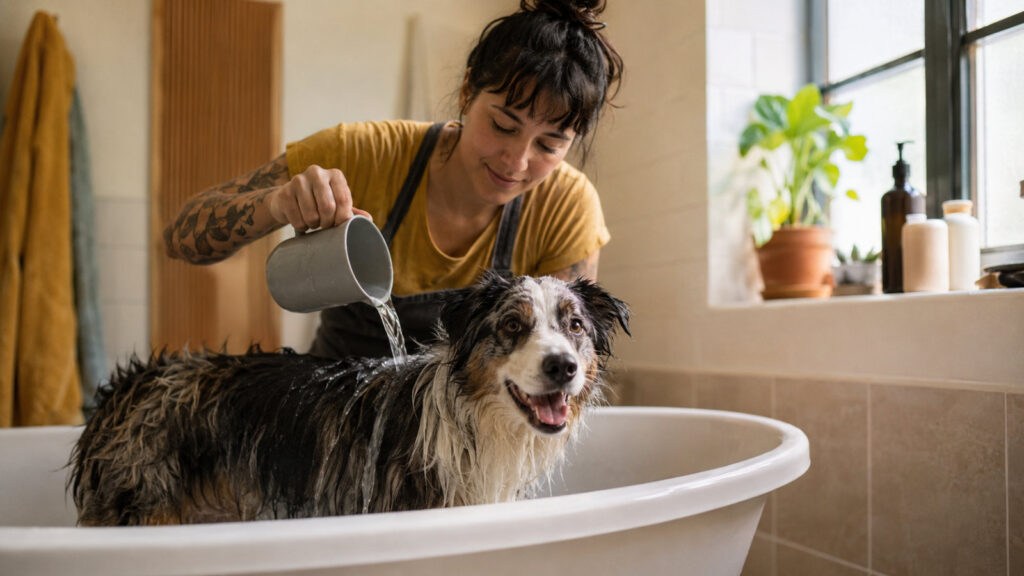
For an itchy-but-intact dog (no broken skin, no smell, no sores): a cool colloidal-oatmeal bath with a proper soak, a thorough towel-dry, a calm brushing to lift debris and check the skin inch by inch, and a paw rinse if pollen season is on. For intact itchy skin, a purpose-made soothing topical such as our Anti-itch & Soothing Spray can help soothe the skin and calm the urge to scratch – comfort support, not a diagnosis or a treatment plan. And through all of it, the two-week rule: home care that is working shows results inside two weeks. An itch that shrugs it off has a cause – allergy, fleas, infection – that soothing cannot fix, and the workup is the actual remedy.
What home care can never do
No bath treats an ear infection, no oil resolves a skin infection, and nothing in the pantry manages true allergy. The skill is knowing which situation you are in – and the sorting signs are simple: smell, grease, sores, broken skin, or misery mean the home-remedy phase is over and the diagnosis phase is overdue.
When to stop home care and call the vet
Two weeks of home care without clear improvement; any broken skin, sores, odor, or greasy discoloration; a dog losing sleep to itching; or any suspected contact with tea tree oil, essential oils, or a toxic plant – for that last one, call your veterinarian or the ASPCA Animal Poison Control Center at (888) 426-4435 right away.
References and further reading
- Khan SA, et al. Concentrated tea tree oil toxicosis in dogs and cats: 443 cases. JAVMA.
- ASPCA. The essentials of essential oils around pets.
- dvm360. The multimodal approach to canine atopic dermatitis.
Frequently asked questions
What can I put on my dog’s itchy skin at home?
A cool colloidal-oatmeal bath is the safest genuinely helpful option, plus rinsing allergens off and keeping the coat dry and brushed. Avoid human creams and anything from the essential-oil shelf.
Is tea tree oil safe for dogs?
No. Concentrated tea tree oil is documented to poison dogs – a 10-year review logged 443 cases, with as little as 7 to 8 drops causing signs. Some labeled pet products contain very low concentrations, often under about 1 to 2 percent, and are generally not considered toxic when used exactly as directed – but that does not make tea tree oil a home remedy, and concentrated oil should never touch a dog.
Does apple cider vinegar help dog itchy skin?
There is no good evidence it helps, and on scratched or broken skin it stings badly. Of all the popular remedies, it is the one most likely to make your dog distrust bath time for nothing.
How long should I try home remedies before seeing a vet?
Two weeks, and only for a dog with intact skin and no smell, sores, or misery. Improvement should be visible inside that window; if not, the itch has a cause that needs diagnosing.
Educational content, not a substitute for veterinary advice. If your dog seems unwell, contact your veterinarian.
This guide is educational and is not a substitute for veterinary diagnosis or care. If your dog's skin looks infected or painful, talk to your veterinarian.