

Flea Allergy Dermatitis: One Bite Is Enough

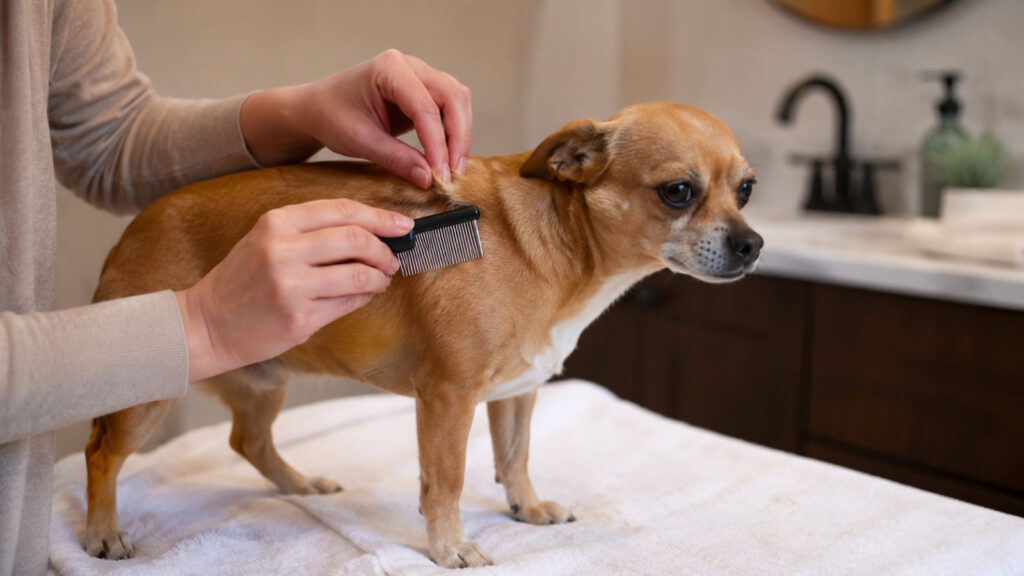
Flea allergy dermatitis is the most common allergic skin disease in dogs – and the most commonly dismissed, usually with the same five words: “but my dog has no fleas.” Here is the uncomfortable truth that resolves thousands of mystery itches every year: a flea-allergic dog does not need fleas. It needs one bite, and the itching that follows can outlast the flea by weeks.
Quick answer
Flea allergy dermatitis (FAD) is an allergy to flea saliva – one or two bites can set off days to weeks of intense itching, and the dog’s own grooming usually removes every trace of the flea. The classic pattern is chewing and hair loss over the tail base, rump, and back of the thighs. The treatment is unglamorous and effective: rigorous, year-round flea prevention for every pet in the home, plus treating the environment and any skin damage already done.
Why you never find the flea
In a non-allergic dog, a flea bite is a brief annoyance; a real infestation is needed before the dog seems bothered. In a flea-allergic dog, the immune system treats flea saliva as a five-alarm emergency. One bite triggers reaction across the whole back end, the dog grooms frantically, and – because dogs are efficient groomers – swallows or dislodges the evidence. What remains is an itchy dog, a suspicious bald patch above the tail, and an owner who has combed everything and found nothing. Absence of fleas is not absence of flea allergy; it is practically part of the diagnosis.
The pattern that gives it away
| Sign | What it looks like |
|---|---|
| The location | Tail base, rump, back of the thighs – the classic FAD triangle; allergy from pollen or food prefers paws and face instead |
| The behavior | Sudden chewing sessions at the back end; whipping around as if bitten (they were) |
| The coat | Broken hair and thinning over the rump; in longer cases, darkened or thickened skin |
| The debris | “Flea dirt” – black pepper specks that stain rust-red on a wet paper towel – is proof of fleas even when no live flea is seen |
| The calendar | Worst in warm months, but indoor heating keeps flea life cycles running all winter – year-round itching does not rule FAD out |
The fix: prevention without gaps, for every pet
FAD is one of the more manageable itch problems in dog dermatology, because the trigger can actually be removed:
- Prescription-grade flea prevention, year-round, no gaps. For a flea-allergic dog, “flea season only” is a plan with a hole in it – one warm week in November is one bite. Modern prescription preventives are a different class of effective than the old shampoos and collars; ask your vet which fits your dog.
- Every animal in the household. The cat who never goes outside is the classic flea reservoir. If one pet is unprotected, the allergic dog keeps getting bitten.
- Treat the home when there is any evidence of fleas. Adult fleas on the dog are 5 percent of the problem; eggs and larvae in carpet, bedding, and floor cracks are the rest. Wash bedding hot, vacuum thoroughly and repeatedly, and give the process a couple of months – new adults keep hatching for weeks after you start.
- Fix the skin damage. Weeks of chewing often leave secondary infection or a hot spot that itches on its own; if the back end is raw or smelly, that needs treating too, or the itch continues after the fleas are long gone.
The mistakes that keep FAD going
Three patterns account for most treatment failures: stopping prevention because “the fleas are gone” (they will be back, and one bite is enough), protecting the itchy dog but not the other pets, and judging the result too early – between the environmental life cycle and the skin healing, allow six to eight weeks of consistent effort before declaring anything. And if the itching truly persists after genuinely airtight flea control, that is meaningful information: it moves the search to the other causes on the diagnostic ladder.
When to see your veterinarian
See your vet for raw or broken skin at the tail base, any smell or oozing, itching that disturbs sleep, or FAD signs that persist after two months of rigorous whole-household prevention. And ask about prescription preventives directly – the difference from store-shelf options is worth the conversation for an allergic dog.
References and further reading
- Merck Veterinary Manual. Flea allergy dermatitis in dogs and cats.
- VCA Animal Hospitals. Hot spots in dogs.
- American Kennel Club. Why is my dog so itchy?
Frequently asked questions
Can my dog have flea allergy if I never see fleas?
Yes – that is the typical presentation. One or two bites trigger the reaction, and grooming removes the evidence. Tail-base and rump itching is the giveaway pattern.
How long does flea allergy itching last after a bite?
Days to a couple of weeks from a single exposure in a sensitized dog – which is why the itch so often outlives the flea, and why year-round prevention matters more than flea-hunting.
What kills fleas on a flea-allergic dog?
Modern prescription preventives from your veterinarian, given without gaps and to every pet in the home, plus environmental cleanup. For an allergic dog, prevention is the foundation of treatment.
Why is my dog still itchy after flea treatment?
Three usual reasons: the environment is still hatching new fleas (allow six to eight weeks), the skin developed a secondary infection that itches on its own, or the flea allergy was only part of the picture – time for the rest of the workup.
Educational content, not a substitute for veterinary advice. If your dog seems unwell, contact your veterinarian.
This guide is educational and is not a substitute for veterinary diagnosis or care. If your dog's skin looks infected or painful, talk to your veterinarian.