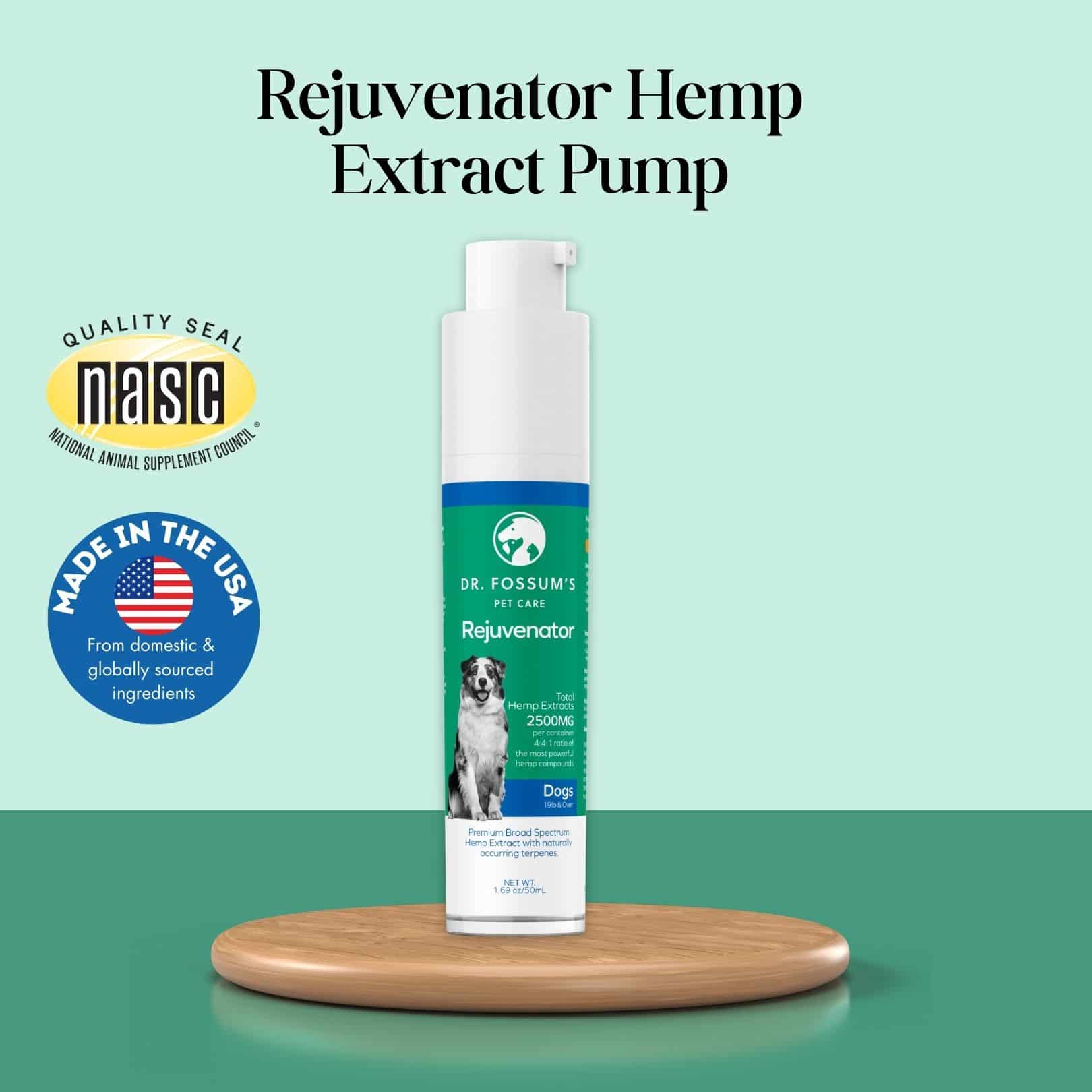
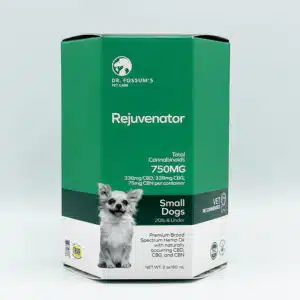
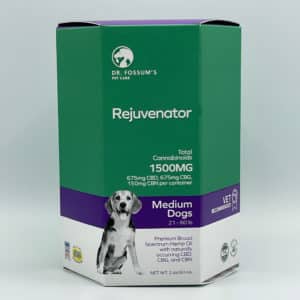
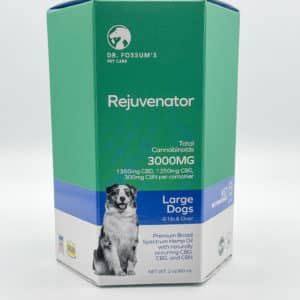
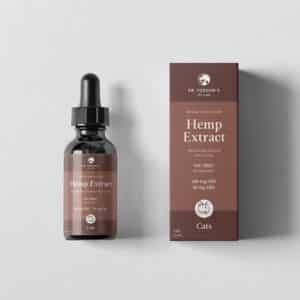
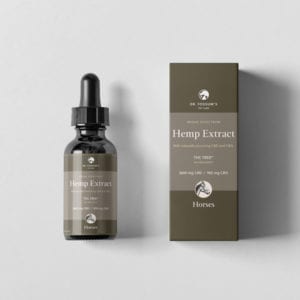
Dose calculations are at the loading dose (first 7 days). Maintenance: After 7 days, you may be able to reduce the number of pumps. *Days Supply: Calculation is based on the maintenance dose, which is half of the loading dose. If you keep your dog at the loading dose, divide the days supply by 2 to get an accurate estimate. Every pet absorbs CBD/CBG/CBN differently. Daily usage may vary between pets.
*Days supply calculation is based on .5 mg of CBD/CBG/CBN per pound, twice daily. Every pet absorbs CBD/CBG/CBN differently. Daily usage may vary between pets.
There is no single "official" dose of CBD for pets. As Cornell University's Riney Canine Health Center puts it plainly, no standard therapeutic dose has been established. What we do have is a growing body of veterinary research, and a sensible, weight-based way to translate it into a starting amount you can actually use.
The calculator above does the math for you in a few seconds. This guide explains where those numbers come from, how to measure a dose, how long a bottle should last, and how to adjust safely. As always, your own veterinarian knows your pet and should have the final word, especially for cats, very small or very large animals, or pets already taking other medications.
The Simple Version: Weight, Twice a Day, Start Low
Most veterinary dosing work points to the same basic approach: dose by body weight, give it twice a day (about every 12 hours), and start low.
The reason for twice a day is biology. In dogs, CBD has a short half-life of roughly four hours, so blood levels rise and then fall within the same day. Splitting the amount into a morning and an evening dose keeps things steadier than one large dose (Gamble et al., Cornell, 2018).
Our calculator uses a two-phase, weight-based schedule:
First 7 days (a gentle "loading" phase): about 2 mg of CBD per kilogram of body weight, per dose, twice daily. This is the same dose used in Cornell's osteoarthritis study, where it was well studied and well tolerated.
Day 8 onward (maintenance): about 1 mg per kilogram, per dose, twice daily. Once your pet has settled in, the steady ongoing amount is half the starting amount.
In pounds, that works out to roughly 0.9 mg per pound for the first week, then about 0.45 mg per pound after that, given morning and night. Many owners find the maintenance amount is all their pet needs; some stay a little higher with their veterinarian's guidance. You can always go up slowly. It is much harder to undo giving too much at once.
CBD Dosage Chart for Dogs (by Weight, in mg and ml)
Amounts are CBD per dose, given twice daily. Use the loading column for the first 7 days, then move to maintenance, which is about half. The milliliter figures are for the size-matched Dr. Fossum's oil. Round to what your dropper or syringe lets you measure cleanly, and confirm with your vet.
Dog weight
First 7 days (loading), twice daily
Day 8 onward (maintenance), twice daily
5 lb
4.5 mg (0.4 ml)
2.25 mg (0.2 ml)
10 lb
9 mg (0.7 ml)
4.5 mg (0.35 ml)
15 lb
13.5 mg (1.1 ml)
6.75 mg (0.55 ml)
20 lb
18 mg (1.4 ml)
9 mg (0.7 ml)
30 lb
27 mg (1.1 ml)
13.5 mg (0.55 ml)
40 lb
36 mg (1.4 ml)
18 mg (0.7 ml)
50 lb
45 mg (1.8 ml)
22.5 mg (0.9 ml)
60 lb
54 mg (2.2 ml)
27 mg (1.1 ml)
75 lb
67.5 mg (1.35 ml)
34 mg (0.7 ml)
100 lb
90 mg (1.8 ml)
45 mg (0.9 ml)
125 lb
112.5 mg (2.25 ml)
56 mg (1.1 ml)
150 lb
135 mg (2.7 ml)
67.5 mg (1.35 ml)
The milliliters are for the size-matched bottle: small dogs (up to 20 lb) use the 12.5 mg/ml oil, medium dogs (21 to 60 lb) the 25 mg/ml, and large dogs (over 60 lb) the 50 mg/ml. Because bigger dogs use a more concentrated oil, the milliliters do not simply rise with weight. For an exact amount and how long a bottle will last, use the calculator above.
As a real-world example, Dr. Fossum gives her own 61-pound Labrador 1.1 ml twice a day for the first week, then reduces to about 0.55 ml twice a day for maintenance. Clear dosing instructions also come on every box.
CBD Dosage Chart for Cats
Cats use the same weight-based approach, but two cautions matter more for cats than for dogs. First, cats absorb or clear CBD differently and reach much lower blood levels than dogs at the same dose, so they are usually given a little more per pound to make up for it, and you should still go slowly. Second, cats are more sensitive to THC and process some compounds slowly, so a cat product should be THC-free and given only with your veterinarian's guidance.
These are the amounts of our feline oil to give per dose, twice a day. The calculator above will fine-tune the exact amount for your cat and show how long a bottle will last.
Cat weight
Amount per dose, twice daily
2 lb
0.1 ml
3 lb
0.2 ml
4 lb
0.3 ml
5 lb
0.3 ml
6 lb
0.4 ml
7 lb
0.5 ml
8 lb
0.5 ml
9 lb
0.6 ml
10 lb
0.7 ml
11 lb
0.7 ml
12 lb
0.8 ml
13 lb
0.9 ml
14 lb
1.0 ml
What About Horses?
Horses are dosed at a much lower amount per pound than dogs and cats, and equine routines vary quite a bit, so the right amount is best set with your veterinarian. As a rough guide, a 1,200-pound horse is often started at about 2 ml twice daily for the first week, then reduced to about 1 ml twice daily. Ask us or your vet for help tailoring an equine routine.
How to Measure a Dose (Turning Milligrams Into Milliliters)
A milligram is an amount of CBD. A milliliter is an amount of liquid. To get from one to the other you need the strength of your oil, which is printed on the bottle.
Strength (mg per ml) = total mg in the bottle divided by the bottle size in ml.
For example, a 30 ml bottle labeled 750 mg is 25 mg per ml. If your dog needs 9 mg, that is 9 divided by 25, which is about 0.36 ml. Measure by the milliliter marks on the dropper rather than counting drops. Drop size varies, and "drops per ml" is only a rough guide (about 20 drops to a milliliter).
If you are using one of our oils, the calculator above already converts everything to the exact milliliters for that bottle, so you can skip the arithmetic.
We suggest measuring with an oral syringe rather than a dropper. Droppers can trap an air bubble, which makes it hard to know how much oil your pet is actually getting. An oral syringe lets you draw the exact milliliters every time.
This is the question we get most, and it is one most calculators ignore. The answer depends on three things: your pet's weight, the strength of the oil, and whether you are in the loading week or on the maintenance amount. Because the maintenance dose is half the loading dose, a bottle stretches much further after the first week.
The calculator above shows your pet's days-supply for each product, so you can see the real monthly cost before you buy and choose the bottle size that fits your routine.
Oil, Chews, or Capsules: Which to Choose
Oil (tincture) is the most flexible and, in head-to-head veterinary testing, gave the most consistent absorption. It lets you fine-tune the amount drop by drop, which is ideal while you are finding the right level. Onset is usually quickest because some is absorbed in the mouth.
Chews and soft treats are the easy, no-measuring option for everyday use. They are pre-portioned and most pets treat them as a reward. They take a little longer to take effect because they have to be digested first.
Capsules are convenient and pre-measured, similar to chews in how they are absorbed.
A common routine is to use oil while titrating to the right amount, then switch to chews for convenience once you know what works.
With Food or on an Empty Stomach?
Either is fine. The most important thing is to be consistent, because consistency is what keeps the effective amount steady from day to day. Giving CBD with a meal that contains some fat tends to increase how much is absorbed; an empty stomach may bring on effects a little faster. Pick one routine and keep to it.
Is It Safe? What the Research Shows
In controlled studies, CBD has been generally well tolerated by healthy pets. Dogs tolerated 4 mg per kg per day for six months, and cats tolerated a THC-free product at a similar level for about six months, without serious problems.
The one consistent laboratory finding worth knowing about is a rise in a single liver enzyme, alkaline phosphatase (ALP), in some dogs. In the six-month study it returned to normal after the product was stopped, and other liver values were unchanged. That is exactly why we recommend looping in your veterinarian and doing periodic bloodwork for any pet on CBD long-term, or on other medications.
True overdoses of pure CBD are uncommon and usually show up as mild stomach upset or sleepiness rather than anything dangerous. More serious reactions almost always trace back to a product contaminated with THC, which is toxic to dogs and cats. This is the single biggest reason to use a broad-spectrum, THC-free product with a current Certificate of Analysis, and to keep all cannabis products well out of your pet's reach.
Talk to Your Veterinarian If
your pet takes other medications (CBD can affect how the liver processes some drugs),
your pet is pregnant, nursing, or has known liver disease,
you are dosing a cat, a very small dog, or a very large dog,
or you simply are not sure where to start. A quick conversation beats guessing.
Frequently Asked Questions
How much CBD should I give my dog per pound?
A common starting point is about 0.9 mg per pound for the first week, then about 0.45 mg per pound for maintenance, given twice a day. There is no official standard dose, so start low and confirm the amount with your veterinarian.
Can I give my pet too much CBD?
CBD has a wide margin of safety, and too much usually causes nothing worse than mild stomach upset or sleepiness. Serious reactions are typically a sign of THC contamination, which is why a THC-free product matters. If you ever see more than mild drowsiness, call your veterinarian or a pet poison helpline.
How often should I give it?
Twice a day, about every 12 hours. CBD clears a dog's system within hours, so two smaller doses keep levels steadier than one large one.
Should I give it with food?
Either works, but be consistent. Giving it with a fatty meal can increase absorption; an empty stomach may act a little faster. The key is to do it the same way each time.
How long until I see a difference?
It varies by pet and by form. Oils tend to act fastest, often within about 15 to 30 minutes, while chews and capsules take longer because they must be digested. For everyday goals, give it consistently and reassess over one to two weeks.
Oil, chews, or capsules: which is best?
Oil absorbs most consistently and lets you fine-tune the amount, which is great while you find the right level. Chews and capsules are easier for daily use. Many owners titrate with oil, then move to chews for convenience.
Is CBD safe for my pet long-term?
In studies, dogs and cats tolerated daily CBD for about six months. The main finding was a reversible rise in one liver enzyme in some dogs, which is why periodic veterinary check-ins and bloodwork are a good idea for long-term use.
Is dosing different for cats?
Yes. Cats reach much lower blood levels than dogs at the same dose and handle some compounds slowly, so go slowly, use a THC-free product, and dose only with your veterinarian's guidance.
Reviewed by Dr. Terry Fossum, DVM, PhD, DACVS - board-certified veterinary surgeon, founder of Dr. Fossum's Pet Care, and author of Small Animal Surgery, a standard veterinary surgical textbook. This guide is educational and is based on the published veterinary research listed below. It is not a substitute for advice from your own veterinarian.
References
Gamble L-J, et al. Pharmacokinetics, Safety, and Clinical Efficacy of Cannabidiol Treatment in Osteoarthritic Dogs. Frontiers in Veterinary Science, 2018 (Cornell). View study
McGrath S, et al. Cannabidiol in dogs with intractable idiopathic epilepsy. JAVMA, 2019 (Colorado State). View study
Bartner LR, et al. Pharmacokinetics of cannabidiol by 3 delivery methods in dogs. Canadian Journal of Veterinary Research, 2018. View study
Bradley S, Bakke AM, et al. Long-term daily feeding of cannabidiol is well tolerated by healthy dogs. Frontiers in Veterinary Science, 2022. View study
Deabold KA, et al. Single-Dose Pharmacokinetics and Safety of CBD in Healthy Dogs and Cats. Animals, 2019. View study
Coltherd JC, et al. Healthy cats tolerate long-term daily feeding of Cannabidiol. Frontiers in Veterinary Science, 2024. View study
Cornell Riney Canine Health Center. CBD: what you need to know about its uses and efficacy. View source
Merck Veterinary Manual. Toxicosis in Dogs and Cats From Cannabidiol (CBD) and From THC. View source
These statements have not been evaluated by the Food and Drug Administration. This product is not intended to diagnose, treat, cure, or prevent any disease. Always consult your veterinarian before starting any new supplement, especially if your pet is on other medications.