

Urinary Cat Food: What It Does, What It Cannot Do

Urinary problems are one of the most common reasons cats see a vet, and “urinary food” is one of the most misunderstood shelves in the store. The truth is a split verdict. For one specific problem, struvite, a magnesium-containing mineral that forms urinary crystals and stones, therapeutic diets are genuinely impressive: in a randomized veterinary trial, dissolution foods cleared most cats’ stones in two to four weeks without surgery. For much of the rest of feline urinary trouble, food is a supporting act behind a cheaper ingredient, water, and behind stress care. This guide sorts which situation you are in, what the labels mean, and the one emergency no cat owner gets to learn slowly.
Quick answer
Urinary diets mainly work by making urine less friendly to crystal formation, controlling the minerals involved and steering urine acidity, and, in wet form, by pushing more water through the bladder. For diagnosed struvite disease they can be a true treatment: in a published randomized trial, dissolution diets fully dissolved stones in 32 of 37 cats, in roughly two to four weeks depending on the food.
The honest limits: calcium oxalate stones, a different common stone mineral, do not dissolve with any diet, stress-driven bladder inflammation needs more than a bag, and store-shelf “urinary” foods are not the same product as veterinary therapeutic diets. And one absolute: a male cat straining and producing little or no urine is a life-threatening emergency measured in hours, not a diet decision.
The emergency that outranks this page
Before any food talk: if a male cat is visiting the litter box again and again, straining, crying, licking beneath the tail, and producing drops or nothing, treat it as a blocked urethra until a veterinarian says otherwise. A fully blocked cat can go from uncomfortable to dying in under two days, and no home measure, no diet, no supplement, buys time. This page is for prevention and for treatment plans made after that visit, never instead of it.
What urinary foods actually change
Therapeutic urinary diets pull three levers. They control the minerals that build crystals, magnesium and phosphorus for struvite. They steer urine pH toward a mildly acidic range that is less favorable for struvite to form. And, decisively in wet form, they dilute: more water per meal means less concentrated urine, and dilute urine is the least crystal-friendly urine there is. Researchers bundle these effects as lowering urine saturation, and the practical summary for owners is simpler: the food’s job is to reduce the urine conditions that favor crystal and stone formation, and water intake helps by keeping urine dilute.
The struvite story: where diet shines
Struvite is one of the two big feline stone types, and it is the one diet can genuinely treat. In a prospective, randomized, multicenter trial published in the Journal of the American Veterinary Medical Association, cats with presumed struvite stones were fed one of two commercial dissolution diets: 32 of 37 cats had complete stone dissolution, with mean dissolution times of roughly two weeks on the faster food and four on the slower.
Just as instructive is who failed: the five non-dissolvers turned out to have stones made of other minerals, ammonium urate or calcium oxalate, which no diet dissolves. The trial’s built-in checkpoint is now standard practice: if X-rays show no shrinkage after about two weeks of strict dissolution feeding, the vet re-checks the presumed stone type and whether the cat has truly been able to eat only the prescribed diet, and the plan changes.
Two practice notes hide in that word “strict.” Dissolution feeding needs to be exclusive: treats or access to another cat’s food can stall it. And after dissolution, prevention continues on your vet’s schedule, because the cat that made struvite once has proven it can.
The oxalate fork, and why diagnosis matters
Calcium oxalate, the other major stone type, is different: existing stones cannot be dissolved with diet, only removed, and prevention afterward is about dilution and vet-guided mineral management rather than acidification. This fork is why guessing at “a urinary food” without a workup can backfire, the acidifying pressure that treats struvite is unhelpful, even counterproductive, for an oxalate former. Which stone, which strategy, is a diagnosis your vet makes with urinalysis and imaging, not a label decision made in an aisle.
Prescription shelf vs store shelf
| Product tier | What it is | Honest use |
|---|---|---|
| Veterinary therapeutic urinary diets | Formulated to dissolution or prevention targets, fed under veterinary direction | The tool for diagnosed struvite disease and for prescribed prevention |
| Retail “urinary health” foods | Regular complete diets adjusted toward urinary-friendly mineral and pH ranges | Reasonable everyday choice for at-risk cats on vet advice; not a dissolution treatment |
| Urinary treats and supplements | Cranberry and similar additions with thin feline evidence | Never a substitute; ask your vet before adding anything to a treatment plan |
For over-the-counter toppers and supplements, the nutritional adequacy statement, the small-print sentence saying whether and for which life stage a food is complete, tells you if a product can be the meal, and marketing words on the front never override it. Veterinary medical foods are the deliberate exception: some carry an intermittent-or-supplemental statement by design and are fed under veterinary direction, the same nuance covered in our low phosphorus guide.
Why water matters in urinary disease
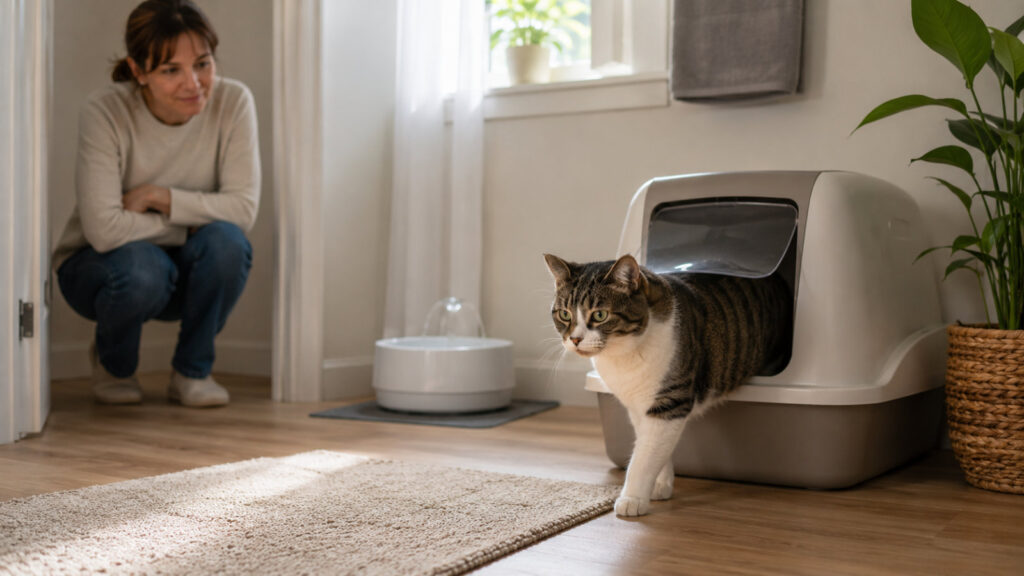
Most urinary prevention strategies include dilution, which makes water intake one of the highest-value habits in this topic. The levers are familiar and they stack: wet food as the base of the diet, which waters every meal from the inside; multiple wide, clean water stations away from litter boxes; a fountain for cats who prefer moving water; and broth-style additions if your vet approves them. A cat that drinks more urinates more, and dilute, frequently passed urine gives crystals and stones the least favorable conditions to form; it supports many bladder-inflammation plans as well. If you change nothing else after reading this page, change the water.
When it is stress, not stones
A large share of recurring feline urinary misery, straining, frequency, blood, with no stones or infection found, is feline idiopathic cystitis, an inflammation tangled up with stress and environment.
Food helps here mainly through moisture, and some therapeutic diets target the condition, but no bag fixes a stressed cat’s world. The environmental half is real medicine: more litter boxes than cats, cleaned daily; quiet, predictable routines; play that burns the anxious energy; and hiding places that let a worried cat opt out. If lower-urinary signs keep returning after your vet has ruled out stones, infection, obstruction, and the other causes, stress and environmental management become a central part of the plan, and that deserves a structured conversation with your vet.
References and further reading
- Lulich JP, et al. Efficacy of two commercially available, low-magnesium, urine-acidifying dry foods for the dissolution of struvite uroliths in cats. Journal of the American Veterinary Medical Association, 2013.
- Cornell University, Cornell Feline Health Center. Feline lower urinary tract disease.
Frequently asked questions
How long does it take urinary food to work?
For struvite dissolution, the published trial saw complete dissolution in roughly two to four weeks depending on the food, with a re-check around two weeks to confirm shrinkage. For prevention, success means fewer episodes over time; your veterinarian may use symptom logs, urine testing, and imaging where the underlying problem calls for it.
Can I feed urinary food without a diagnosis?
For a healthy cat with no current urinary signs, a retail urinary formula can be an ordinary everyday choice worth confirming with your vet; it is not a treatment, and any current straining, frequent attempts, pain, or reduced urine output needs veterinary assessment, not a food experiment. Therapeutic dissolution diets are different again: they are treatments, fed to a diagnosis, because the urine-acidifying strategy that dissolves struvite stones is the wrong strategy for a calcium-oxalate former.
Does dry urinary food work, or must it be wet?
The dissolution trial itself used dry foods successfully, so dry can do the chemical job. Wet adds the dilution lever on top, which is why many vets prefer it or a mix; if dry is what your cat accepts, the water habits above carry more of the load.
Is urinary disease the same as kidney disease?
No, and the diets differ. This page is the lower system, bladder and urethra. Kidney function is its own topic with its own therapeutic targets, covered in our kidney diet guide; some senior cats juggle both, which is exactly when your vet chooses the priority.
My cat had struvite once. Forever on special food?
Often some form of prevention continues long-term, a therapeutic maintenance formula or a moisture-forward plan, because recurrence is common. The specifics, and any step-downs, belong to your vet’s follow-up schedule rather than to a fixed rule.
This guide is educational and is not a substitute for veterinary diagnosis or care. Diet changes for a cat with a medical condition belong in a conversation with your veterinarian.