

Can Dogs Have Heart Attacks?


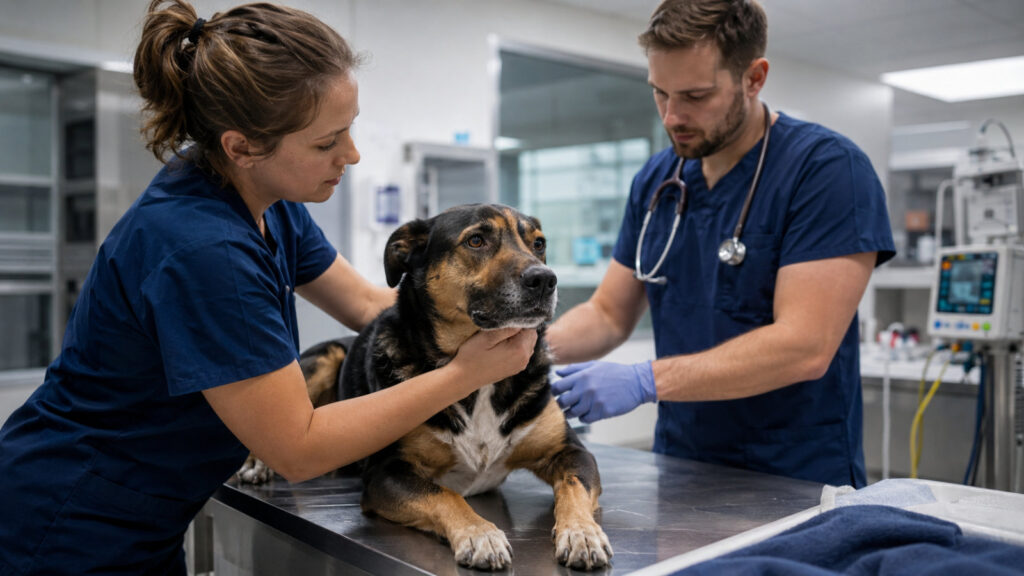
Dogs can have heart attacks, but they are rare. Unlike people, dogs almost never get the clogged coronary arteries that cause classic human heart attacks, so a true heart attack (a myocardial infarction) is uncommon. When an owner thinks their dog has had a heart attack, what usually happened is a fainting episode, a collapse from an abnormal heart rhythm, or another sudden problem. Knowing the difference helps you act fast on the things that truly are emergencies.
Quick answer
What owners call a heart attack is more often fainting, collapse from an abnormal rhythm, a seizure, or another sudden problem. A brief collapse with quick recovery still needs a same-day vet call, especially if it repeats. Trouble breathing, collapse that does not fully resolve, pale, grey, or bluish gums, or extreme weakness should be treated as an emergency.
So what do owners usually see?
Most “heart attack” scares in dogs turn out to be one of these:
| What you see | What it usually is | What to do |
|---|---|---|
| Sudden collapse, then recovers in seconds | A faint (syncope), often from a rhythm problem or poor blood flow | Same-day vet visit; bring a phone video |
| Collapse with trouble breathing, or pale or blue gums | A true emergency | Go to an emergency vet now |
| Weakness or wobbliness, then back to normal | Could be the heart, low blood sugar, or another cause | Prompt vet visit to find the cause |
| You worry it was a classic human-style heart attack | Very rare in dogs | Focus on the signs above, which are far more likely |
- Fainting (syncope). Brief loss of consciousness from a short drop in blood flow to the brain, often during excitement, coughing, or exertion. The dog usually goes limp, comes around within seconds, and seems normal afterward.
- Collapse from an abnormal heart rhythm. Some heart diseases cause the heart to beat too fast, too slow, or chaotically, which can drop a dog suddenly.
- A seizure, which can look similar but usually involves jerking or paddling, drooling, and a confused recovery. See the difference in our guide to collapse and weakness.
Warning signs of a real cardiac emergency
Whatever the label, get to a veterinarian right away if your dog shows:
- Collapse, or fainting that repeats or does not fully recover
- Sudden difficulty breathing, gasping, or open-mouth breathing
- Gums that look pale, grey, or bluish
- Extreme weakness, or an inability to stand
These signal that the heart or lungs are in trouble now, and minutes matter.
What to do in the moment
Stay calm and keep your dog calm, since stress makes everything worse. Keep your dog cool and still, and call the nearest emergency clinic while you head there. Do not give human heart medications, which can be dangerous for dogs. If your dog is unconscious and not breathing normally, call the clinic right away; they may talk you through CPR if it is safe to do, but do not delay getting your dog to care. If you can, note what happened just before, how long it lasted, and how your dog looked, because that information helps the vet a great deal.
Why it matters to find the cause
A faint or collapse is a symptom, not a diagnosis. The job is to find out why it happened, because the underlying cause, often a heart-rhythm problem or heart disease, is what needs treating. Your vet may run an ECG, a heart ultrasound, x-rays, or a Holter monitor that records the rhythm over a day or two. Once the cause is clear, many of these dogs do well with the right treatment.
When to see your veterinarian
Any episode of fainting or collapse deserves a vet visit, even if your dog seems fine afterward. Repeated episodes, breathing trouble, or blue gums are emergencies.
For the fuller pictures behind these signs, see collapse, fainting and weakness and congestive heart failure.
References and further reading
- Merck Veterinary Manual (MSD Manual). Heart disease and heart failure in dogs.
- American College of Veterinary Internal Medicine (ACVIM). 2019 consensus guidelines for the diagnosis and treatment of myxomatous mitral valve disease in dogs. Journal of Veterinary Internal Medicine.
- Cornell University, Riney Canine Health Center. Canine heart health resources.
Frequently asked questions
Can dogs have heart attacks?
Rarely. Dogs almost never develop the clogged coronary arteries behind human heart attacks. What looks like a heart attack is usually fainting, a collapse from a heart-rhythm problem, or a seizure.
What are the signs of a heart attack in a dog?
True heart attacks are uncommon, but signs of a cardiac emergency include sudden collapse, difficulty breathing, pale or bluish gums, and severe weakness. Treat these as emergencies.
What looks like a heart attack in dogs but isn’t?
Fainting (syncope), collapse from an abnormal heart rhythm, and seizures. All three can look alarming and all three deserve a prompt vet check to find the cause.
Can a dog die suddenly from heart problems?
Yes, certain heart-rhythm disorders can cause sudden collapse or death, which is why fainting or collapse should always be investigated, even if the dog recovers quickly.
What should I do if my dog collapses?
Keep calm, keep your dog calm and still, do not give human medications, and get to a veterinarian or emergency clinic right away. Note what happened before and how long it lasted.
What is the difference between a heart attack, cardiac arrest, and fainting?
A heart attack is damaged heart muscle from blocked blood flow, which is rare in dogs. Cardiac arrest is when the heart stops pumping, an immediate emergency that needs CPR. Fainting is a brief loss of consciousness that the dog recovers from. A vet can tell them apart.
Do dogs get clogged arteries like people?
Very rarely. Dogs do not usually develop the cholesterol-clogged coronary arteries that cause most human heart attacks, which is why true heart attacks are uncommon in dogs.
What will the emergency vet do?
Depending on the situation they may give oxygen, run an ECG to check the rhythm, take chest x-rays, run bloodwork, and stabilize the heart and breathing while they find the cause.
This guide is educational and is not a substitute for veterinary care. Collapse, fainting, or breathing trouble is an emergency, so contact your veterinarian right away.
This guide is educational and is not a substitute for veterinary diagnosis or care. If your dog has signs of heart trouble, talk to your veterinarian.