

Normal Dog Heart Rate


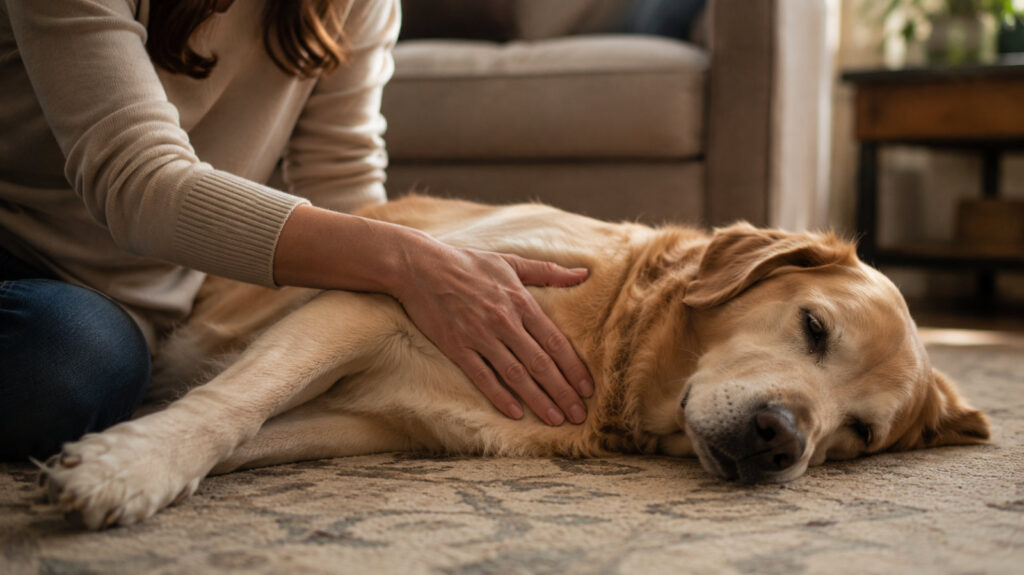
A normal resting heart rate for most adult dogs is roughly 70 to 120 beats per minute, though small dogs often run faster (up to about 140) and large athletic dogs can run slower. Puppies are faster still.
Quick answer
Count your dog’s heart rate only when they are calm and resting, then compare it with what is normal for their size and age. A number that is consistently much higher or lower than your dog’s usual baseline, or a rhythm that feels irregular, is worth a vet call. For dogs with heart disease, resting breathing rate is often the more useful home warning sign.
Normal dog heart rate by size
| Dog | Normal resting heart rate (bpm) |
|---|---|
| Puppies (under 1 year) | about 120 to 160 beats per minute (faster in very young pups) |
| Small dogs (under 30 lb) | about 90 to 140 beats per minute |
| Medium and large dogs (over 30 lb) | about 60 to 100 beats per minute |
Some very fit large dogs may sit in the 50s at rest, and that is normal for that dog as long as it is not paired with weakness, collapse, or poor energy. Excitement, exercise, heat, pain, or fever all push the rate up temporarily, so always count when your dog is calm and at rest. A sleeping dog's heart rate may be lower than when awake. Counting during quiet sleep is fine, and many owners find it the easiest time; there is no need to wake your dog.
Heart rate by situation: sleep, age, and the clinic
Normal dog heart rate while sleeping
During quiet sleep the heart rate drifts noticeably below the waking number, and brief dips and irregular-feeling patterns during deep sleep are normal. That is why sleep is a good time to count a baseline, and why one low reading in a sleeping dog is not a worry on its own. Compare sleeping counts with sleeping counts; a sleeping rate that is suddenly much higher than your dog’s usual sleeping baseline is the more meaningful change, and it often shows up alongside a raised sleeping breathing rate.
Heart rate by age
Puppies run roughly 120 to 160 beats per minute at rest, higher in very young pups, and settle toward the adult range for their size by about a year old. Healthy seniors sit in the same adult range as younger adults; age alone does not raise a resting heart rate, so a senior whose resting number climbs deserves the same attention as any other dog’s change from baseline.
Under sedation or anesthesia
Sedation and anesthesia deliberately lower the heart rate, and the veterinary team monitors it continuously along with breathing, blood pressure, and oxygen; that slower number on the monitor is expected, not a crisis. After a procedure, the rate returns toward normal as the drugs wear off. At home that evening, judge recovery by your dog’s comfort and breathing rather than by counting beats, and use the discharge sheet’s warning signs, which outrank any number on this page.
How to check your dog’s heart rate at home
- Wait until your dog is calm or resting.
- Place your hand flat on the left side of the chest, just behind the front leg where the elbow meets the body. You can usually feel the heartbeat there. (You can also feel the pulse on the inside of the thigh, where the leg meets the body.)
- Count the beats for 15 seconds.
- Multiply by 4 to get the beats per minute.
It helps to know your dog’s normal number when they are healthy, so you have something to compare against if you ever feel worried.
How to take your dog's pulse (no stethoscope needed)
Your dog's pulse is the same number as the heart rate, felt at an artery instead of over the heart. The easiest spot is the femoral artery: slide two fingers along the inside of the thigh, right where the back leg meets the body, and press gently until you feel the beat. Count for 15 seconds, multiply by four, and you have beats per minute. If you cannot find the pulse on a wiggly dog, the flat-hand-on-chest method above works just as well – what matters is a calm dog and a real count.
Also worth tracking: the resting breathing rate
While you are at it, learn your dog’s resting or sleeping breathing rate too. Count the breaths in one minute while your dog is calm or asleep. About 15 to 30 breaths per minute while resting or asleep is reassuring for most dogs. A breathing rate that climbs and stays above 30 to 40 can be an early sign of fluid around the lungs, and it is one of the most useful things you can watch at home if your dog has any heart condition.
Nutritional support for the heart
Owners who already track heart rate and breathing at home sometimes round out that routine with a heart support supplement. CardioChew was developed with veterinary cardiologist Dr. Matthew Miller and lists every active ingredient and amount on its page. It supports normal heart function and does not replace an exam or any medication your veterinarian prescribes.
When a heart rate is too high or too low
A heart rate well above the normal range at rest (tachycardia) can come from pain, fever, dehydration, anemia, or heart disease. A rate well below normal at rest (bradycardia) can come from certain heart-rhythm problems or other illness. A rhythm that feels irregular, skips, or pauses is also worth checking. Any of these, especially alongside fainting, weakness, coughing, or breathing changes, is a reason to call your vet.
What is a dangerously high heart rate for a dog?
There is no single dangerous number, because normal depends on size – the useful line is the top of your dog's range in the chart above, measured at true rest. A dog staying well above the top of its chart range – and above its own usual resting baseline – while genuinely calm, cool, and rested deserves a call to the vet, and it becomes urgent if the racing rate comes with weakness, pale gums, collapse, or labored breathing. A fast heart during play, excitement, heat, or a storm is normal and should settle within a few minutes of resting.
What is a dangerously low heart rate for a dog?
Below the bottom of the size range at rest – for most dogs over 30 lb that means well under 60 bpm, for small dogs under about 90 – matters most when it travels with symptoms: sluggishness, wobbliness, fainting, or exercise intolerance. The exception proves the rule: very fit large dogs can sit in the 50s and be perfectly healthy. A low number on a bright, energetic dog is usually just their normal; a low number with weakness, wobbliness, fainting, collapse, or labored breathing deserves urgent veterinary guidance.
When to see your veterinarian
Book a visit if your dog’s resting heart rate is consistently outside the normal range for their size, if the rhythm feels irregular, or if a heart-rate change comes with fainting, exercise intolerance, or breathing trouble. Sudden collapse or labored breathing is an emergency.
If a racing or irregular rhythm comes with wobbliness or fainting, read collapse and weakness; for the sudden-collapse emergency picture, see heart attacks in dogs.
References and further reading
- Merck Veterinary Manual. Normal physiologic values for dogs.
- Merck Veterinary Manual (MSD Manual). Heart disease and heart failure in dogs.
- Cornell University, Riney Canine Health Center. Canine heart health resources.
Frequently asked questions
What is a normal heart rate for a dog?
About 70 to 120 beats per minute at rest for most adults, with small dogs faster (up to around 140) and large dogs slower. Puppies run around 120 to 160.
How do I check my dog’s heart rate at home?
With your dog calm, place a hand on the left chest just behind the front leg, count the beats for 15 seconds, and multiply by 4.
Is a heart rate of 120 normal for a dog?
For a small dog or a puppy, yes. For a large dog at rest it is on the higher side and worth rechecking when calm, and checking with your vet if it stays there.
What does it mean if my dog’s heart rate is too high?
A high resting rate can come from pain, fever, dehydration, anemia, or heart disease. If it stays high at rest or comes with other signs, see your vet.
What is a dangerous heart rate for a dog?
There is no single number, because it depends on size and situation. A resting rate well outside the normal range for your dog, an irregular rhythm, or a rate change with fainting or breathing trouble all warrant a prompt vet visit.
What is the difference between heart rate and breathing rate?
Heart rate is heartbeats per minute, and breathing (respiratory) rate is breaths per minute. Both are useful, and for dogs with heart disease the resting breathing rate is often the more telling home number.
What if my dog’s heart rhythm feels irregular?
A slight change that comes and goes with breathing can be normal in dogs, but a rhythm that feels truly irregular, skips, or pauses should be checked by your vet, who can confirm it with an ECG.
Why can I not count the heart rate while my dog is panting?
Panting and excitement raise the rate and make counting unreliable. Always count when your dog is calm and at rest, ideally at the same time of day, so you learn their true baseline.
How fast should a dog's heart beat?
For most adult dogs at rest, about 70 to 120 beats per minute is typical. Small dogs often run faster, up to about 140, while medium and large dogs are often closer to 60 to 100. Puppies are faster, usually about 120 to 160 at rest.
What is a normal heart rate for a puppy?
Puppies run faster than adults: roughly 120 to 160 beats per minute at rest, and higher still in very young pups. The rate settles toward the adult range for their size as they approach a year old.
What is a normal pulse rate for a dog?
Pulse and heart rate are the same number: about 60 to 100 beats per minute for dogs over 30 pounds, 90 to 140 for small dogs, and 120 to 160 for puppies. Feel it at the femoral artery inside the thigh, count 15 seconds, multiply by four.
This guide is educational and is not a substitute for veterinary care. If your dog faints, collapses, or struggles to breathe, seek veterinary help right away.
This guide is educational and is not a substitute for veterinary diagnosis or care. If your dog has signs of heart trouble, talk to your veterinarian.